Medically Cited
Kettlebell exercises balance and controlled movement in one workout. A kettlebell has a rounded weight below the handle, as opposed to a dumbbell, which has equal weight on both sides of the handle. This offset design puts your stabilizing muscles to work for every motion and challenges your grip.
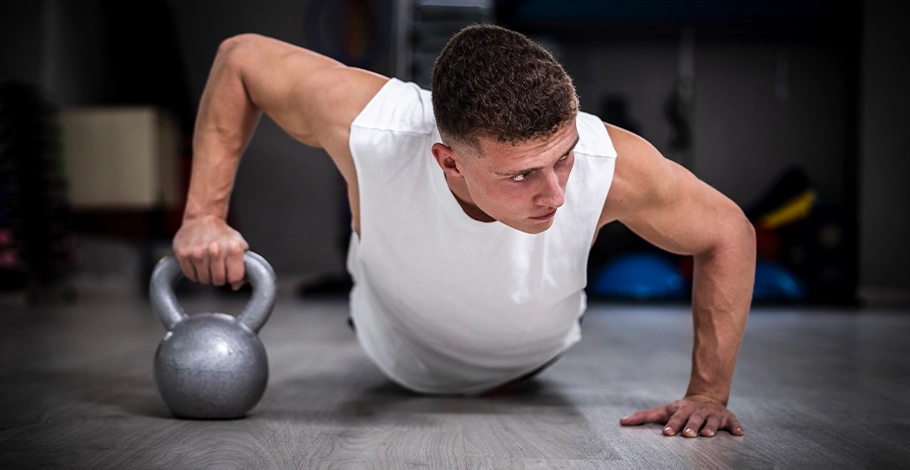
Kettlebell exercises can build strength, endurance, coordination, balance, and fitness. Some workouts also engage multiple muscle groups simultaneously, which makes kettlebells great for multi-joint training. Positive results are associated with regular kettlebell training for strength, power, grip strength, and some aspects of physical function. The best kettlebell exercises to do for your full-body workout and safe tips on how to start.
Key Takeaways
- Kettlebell exercises can strengthen several major muscle groups in one workout.
- The offset weight challenges balance, grip, coordination, and core stability.
- Proper posture and controlled technique are more important than lifting heavy weights.
- Swings, deadlifts, rows, and squats support practical, full-body strength.
- Beginners should start slowly and increase weight only after mastering each movement.
Benefits of Kettlebell Exercises
The majority of kettlebell movements engage several muscle groups in order to be executed, which is beneficial for the whole body. A deadlift doesn’t work only on the glutes and hamstrings but also on the core, back, and grip.
Kettlebell sets also build muscle endurance, allowing your muscles to hold up the weight for longer. The kettlebell is dynamic, and the body must coordinate and balance the passing, swinging, or holding of the kettlebell.
Keep hands and forearms active at the handle, which can help grip strength. The kettlebell exercises are also excellent for achieving functional fitness by utilizing movement patterns such as squatting, hinging, lifting, carrying, and rotating. These patterns can be used to prepare for physical activity in exercising, sport, and in daily living.
There are benefits reported regarding grip strength, postural coordination, muscular strength, and physical fitness as a result of structured kettlebell training. Results will be different depending on exercises done, training intensity, experience, and consistency. Sculpt Your Body Exercises
Around-the-Body Pass
Stand with your feet equal to the width of your shoulders and hold the kettlebell. Transfer the weight across the front or back of the body. Squeeze your chest up, slightly flex the legs, and tighten the core.
After a few laps in one direction, reverse the direction of the laps. Keep your hips and upper part of your body as still as possible but don’t be so constrained that you can’t breathe or move your arms.
The move works the muscles of the shoulders, arms, forearms, and core. Hand off from one hand to another develops grip strength, while your core muscles support you keep steady.
Bent-Over Kettlebell Row
Stand with your feet hip-width apart and hold the kettlebell in one hand. Keep your back flat, bend your knees slightly, and push your hips backwards. Place your free hand on your thigh or firm surface if necessary.
The kettlebell is pulled towards the ribs with the elbow close to the body. Wait for a few moments before carefully putting it down. Do all of the reps on one side before changing hands.
The bent-over row targets the upper back, shoulders, arms, and core. Don’t round or turn your body. Select a weight so that you can keep the same position for the entire set.
Kettlebell Deadlift
Place the kettlebell on the floor between your feet. Stand with your feet approximately shoulder-width apart. Push your hips backward, slightly bend your knees, and reach down to hold the handle with both hands.
Brace your core and keep your spine in a comfortable, neutral position. Push through your feet and drive your hips forward to stand tall. Squeeze your glutes at the top without leaning backward. Reverse the movement by sending your hips behind you and lowering the weight with control.
The deadlift works the glutes, hamstrings, thighs, back, core, and grip. Learning the hip hinge is essential because the movement should come mainly from the hips rather than excessive bending through the lower back. Maintaining a stable spine and controlled hip hinge is widely emphasized during lifting exercises. ass
Stand with your feet wider than shoulder-width apart. Lower into a shallow squat or hip-hinge position while keeping your chest lifted. Pass the kettlebell between your legs and around one leg, transferring it to the opposite hand. Continue the movement around the other leg to create a figure-eight pattern.
Move slowly until the hand-to-hand transfer feels comfortable. Keep your feet planted and avoid allowing your knees to collapse inward.
The figure eight challenges coordination, grip strength, and core stability. Your hips and legs also remain active as you hold the lowered position.
Half Turkish Get-Up
Position yourself on your back with your right knee bent and the kettlebell in your right hand. Hold the kettlebell overhead with a straight arm. Stretch out your arm by the side of your body at a slight angle.
Keep your eyes on the kettlebell as you press through your right foot and roll onto your left elbow. From this position, extend your left arm and raise your upper body into a supported sitting position. Stop, then slowly back down to the floor.
Complete the repetitions before changing sides. This exercise tones and builds strength in the shoulders and core and enhances control of the body. Beginners should start without weight or with an extremely light kettlebell as the proper shoulder position and a controlled transition are more critical than speed.
Kettlebell Swing
Place the kettlebell slightly in front of you and stand with your feet around shoulder-width apart. Hinge at your hips and hold the handle with both hands. Pull the kettlebell backward between your legs, then quickly drive your hips forward.
The power produced by your hips should allow the kettlebell to swing forward naturally. Your arms guide the weight but should not actively lift it. At the top, stand tall with your core and glutes engaged. Allow the kettlebell to return between your legs as you hinge again.
The swing mainly works the glutes, hamstrings, hips, core, back, and grip. It can also raise your heart rate, making it useful for strength and conditioning. Research has found that kettlebell swing training can improve maximum and explosive strength. Hold the sides or horns of the kettlebell close to your chest. Stand with your feet approximately shoulder-width apart, and your toes turned slightly outward.
Brace your core, bend your knees, and lower your hips as though sitting into a chair. Keep your chest lifted, heels planted, and knees moving in the same direction as your toes. Lower only as far as you can while maintaining control, then push through your feet to stand.
Goblet squats strengthen the quadriceps, glutes, hamstrings, core, and upper back. Holding the weight close to your chest can also encourage a more upright posture.
Kettlebell Windmill
Bend your legs and place your feet wider than your hips, and raise the kettlebell in one arm overhead. Rotate both feet away from the lifted arm. Use a straight, stable wrist and watch the kettlebell.
In the kettlebell position, push your hips to the side. Lower the opposite hand slowly towards the shin or floor, with the opposite arm extended. Stop at the point that you feel like you are in a comfortable stretch and then tighten your core and stand up again.
The windmill requires hamstring flexibility and hip flexibility, as well as stability of the shoulder and balance and core stability. When practicing the move, use a light weight to learn the move and don’t force your hand into the floor.
Tips for Performing Kettlebell Exercises Safely
Warm up for five to ten minutes before beginning. Light cardio, bodyweight squats, hip hinges, shoulder circles, and dynamic stretches can prepare your muscles and joints for movement.
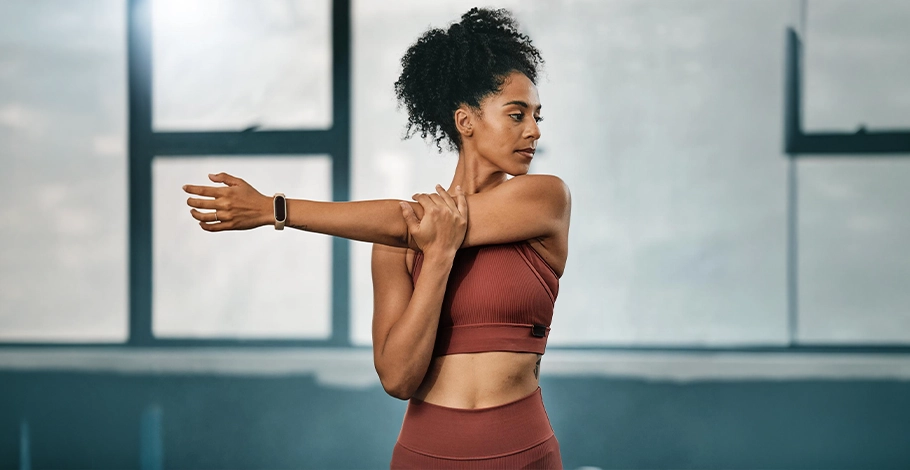
Warm up
Start with a weight you can control comfortably. You should be able to complete every repetition without losing your balance, rounding your back, or holding your breath.
Practice slower exercises, such as deadlifts and goblet squats, before progressing to dynamic movements such as swings. Keep your core engaged and maintain stable posture throughout each exercise. Increase the weight, repetitions, or workout length gradually as your strength and technique improve.
Leave enough space around you, especially when performing swings or overhead movements. Stop the set when your form begins to break down.
Common Mistakes to Avoid
The biggest pitfall is selecting a kettlebell that is too heavy. Being overweight can make it more challenging to stay in control and may lead one to adjust their posture to compensate.
A common mistake is to round the back when performing deadlifts, rows, and swings. Hinge from the hips and maintain stability of the spine.
When swinging, do not raise the kettlebell on your shoulders and arms. This motion should come primarily from the hips. Other errors are haste during the reps, knees falling in toward each other during a squat, and back pitching on a deadlift or swing.
Failing to warm up, training through sharp pain, and not allowing for proper recovery can also hinder progress.
Sample Beginner Kettlebell Workout
Complete the following routine two times. Rest for 30 to 60 seconds between exercises and one to two minutes between rounds.
- Around-the-Body Pass: 8 circles in each direction
- Kettlebell Deadlift: 10 repetitions
- Bent-Over Kettlebell Row: 8 repetitions per side
- Goblet Squat: 8 to 10 repetitions
- Figure Eight Pass: 6 to 8 passes in each direction
- Half Turkish Get-Up: 3 repetitions per side
Once you can perform these movements confidently, add 10 to 12 kettlebell swings. Practice the windmill separately with no weight or a light kettlebell before including it in the circuit.
Beginners can complete this workout two days per week, leaving at least one recovery day between sessions.
Conclusion
Kettlebell exercises offer a practical way to train your legs, hips, back, shoulders, arms, grip, and core with a single piece of equipment. They can support strength, endurance, balance, coordination, and functional movement when performed consistently.
Good technique should always come before heavier weight or faster repetitions. Begin with simple movements such as deadlifts, rows, and goblet squats before progressing to swings, get-ups, and windmills. With gradual progression and regular practice, kettlebell training can become an effective part of a balanced full-body fitness routine.
FAQs
Are kettlebell exercises suitable for beginners?
Yes. Beginners can start with basic exercises such as deadlifts, rows, around-the-body passes, and goblet squats. Using a manageable weight and learning proper technique should come first.
How often should I perform kettlebell exercises?
Most beginners can start with two sessions per week and leave recovery time between workouts. Frequency can gradually increase depending on fitness level, workout intensity, and overall training plan.
Can kettlebell exercises help tone the body?
Kettlebell exercises can build strength and muscular endurance while increasing overall physical activity. A more defined appearance also depends on nutrition, body composition, genetics, and training consistency.
What kettlebell weight should a beginner use?
Choose a weight that feels challenging but still allows controlled repetitions and proper posture. The correct weight may vary between exercises, so lighter weights are often better for overhead or technical movements.
Are kettlebell swings a squat exercise?
No. The kettlebell swing is primarily a hip-hinge exercise. The hips move backward and then drive forward to create momentum, while the knees bend only as much as needed.
Was this article helpful?
3 Sources
We review published medical research in respected scientific journals to arrive at our conclusions about a product or health topic. This ensures the highest standard of scientific accuracy.
[2] Kettlebell training in clinical practice: a scoping review - PMC: https://pmc.ncbi.nlm.nih.gov/articles/PMC6719359/
[3]Core Muscle Activity during Physical Fitness Exercises: A Systematic Review - PMC: : https://pmc.ncbi.nlm.nih.gov/articles/PMC7345922/








 This article changed my life!
 This article was informative.
 I have a medical question.
 This article contains incorrect information.
 This article doesn’t have the information I’m looking for.