Medically Cited
Introduction
The physical, emotional, and psychological well-being of women in their sexual lives is included in the category of female sexual health. Understanding the mechanics of pleasure, the significance of sexual satisfaction, and the cultural attitudes that influence our discussions about it are all included in this wide topic. Comprehending this field not only improves individual welfare but also promotes close relationships.

It’s critical to comprehend the nuances of female sexual wellness. It enables women to confidently embrace their sexuality to the fullest and fosters closer relationships between partners. It also dispels antiquated stereotypes and encourages a constructive conversation about the needs and desires of women.
Understanding the Female Orgasm
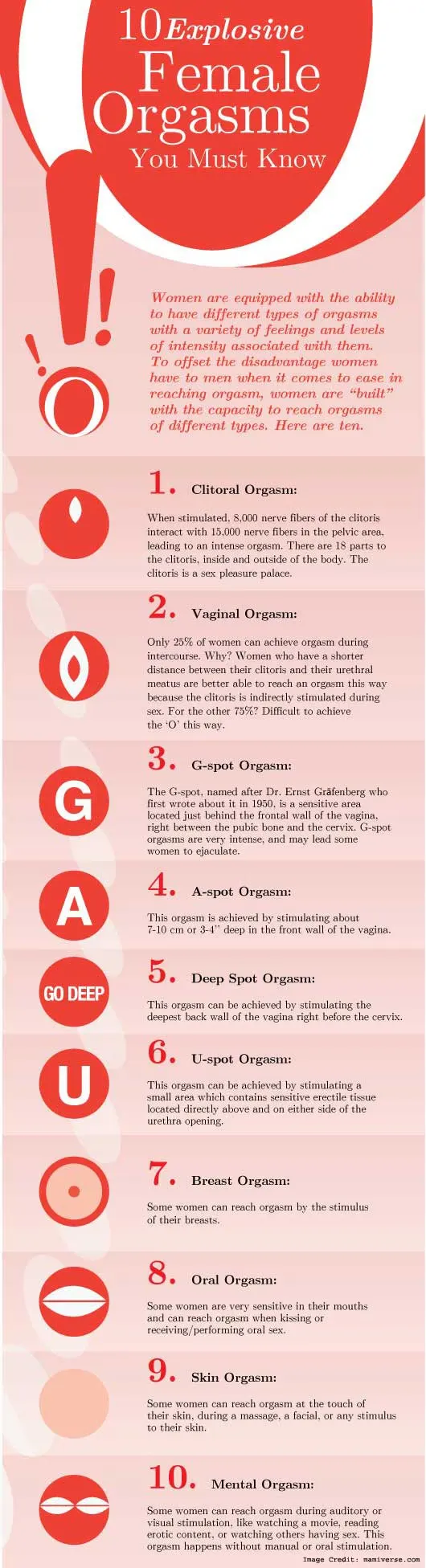
Understanding the Female Orgasm. Shutterstock Image
A strong, satisfying peak of sexual excitement is known as an orgasm. It’s a personal and distinct experience that differs significantly among women. While some may experience slow-building waves of pleasure, others may experience swift, powerful climaxes.
This fluctuation is entirely typical. In terms of biology, the clitoris is primarily responsible for female orgasms. When aroused, this tiny, delicate bundle of nerve endings can produce intense pleasure. [1]
The G-spot, which is situated inside the vagina and can cause strong feelings, is another noteworthy location. Beyond these, stimulation of a wide range of body parts can provide women with erotic pleasure and enhance their sexual experience.
Historical Perspective
Views on female sexuality in society have historically ranged from oppressive to liberating. Although these views have changed over the ages, some historical fallacies continue to exist in modern society.
In the past, misconceptions and prejudices around female sexuality sometimes eclipsed scientific knowledge, which prevented women’s demands for sexual health from being acknowledged. [2]
These antiquated viewpoints have occasionally prevented candid debates, but as we gain knowledge, we are better equipped to encourage constructive, knowledgeable dialogue.
The Role of Communication
In any relationship, but especially in close ones, communication is essential. Intimate moments can be more profoundly connected and result in increased sexual satisfaction when partners talk about likes, dislikes, desires, and boundaries. [3]
Discussing sexual expectations and preferences honestly and openly can greatly increase intimacy. Richer, more frequent orgasms are among the more pleasurable and meaningful sexual experiences that can result from fostering mutual understanding.
Understanding female sexual health and pleasure involves more than just having better sex; it also entails building inclusive societies that value women’s health needs and cultivating happier, healthier relationships. Let’s continue talking and picking up tips from one another!
Psychological Factors
Sexual satisfaction is strongly influenced by mental wellness. Anxiety, depression, and stress can reduce libido and make it harder to enjoy sex. A healthy, satisfying sex life is facilitated by having a happy mental condition. Sexual well-being heavily depends on one’s perception of oneself and one’s physique.
Positive body image can increase confidence and sexual desire, while negative self-image might cause obstacles. A fulfilling experience also depends on psychological preparedness or feeling emotionally and psychologically ready for sexual engagement. [4]
Cultural Influences
Diverse cultural viewpoints exist on female orgasm. Certain cultures view female sexual pleasure as an essential component of well-being, while others may discourage discussion of it because of ingrained gender norms or religious convictions.
These societal perceptions have a significant impact on women’s autonomy and sexual health. Positive acknowledgment can enable women to safely explore and express their sexuality, whereas negative attitudes may cause feelings of guilt or shame that prevent women from engaging in sexual activity.
Challenges and Misconceptions.
There are several misconceptions about female orgasms, like the notion that vaginal sex alone should be the source of a woman’s climax or that orgasms are invariably spectacular and loud. Dispelling these rumors is essential to having reasonable and healthy expectations.
“Orgasm gap” describes the differences in the frequency of orgasms experienced during sexual encounters between genders. To address this, it is necessary to identify and cure sexual dysfunctions as well as promote a more egalitarian method of mutual enjoyment in close partnerships.
The Importance of Education
Comprehensive sexual education that encompasses female pleasure is desperately needed. A lot of teaching programs don’t address the whole range of what constitutes healthy, consensual sex for people of all genders. [5]
Relationships that are healthier and more respectful can result from educating others on the subtleties of female sexual health. People with more knowledge are better able to communicate and make decisions regarding their sexual health.
Conclusion
We have discussed the complex relationship between female sexual health and culture, psychology, and biology, as well as the biological underpinnings of orgasms and sexual satisfaction. We’ve dispelled many misconceptions and emphasized the value of education and communication.
It’s critical to keep up the conversation regarding female sexual health and step up educational initiatives. We can ensure that everyone has the chance to have satisfying and healthful sexual encounters by encouraging an honest and educated dialogue. To better understand and appreciate female sexual health and pleasure, let’s continue our education and dialogue.
Was this article helpful?
5 Sources
We review published medical research in respected scientific journals to arrive at our conclusions about a product or health topic. This ensures the highest standard of scientific accuracy.
[1] Basanta S, Nuño de la Rosa L. The female orgasm and the homology concept in evolutionary biology. J Morphol. 2023 Jan;284(1):e21544. doi: 10.1002/jmor.21544. PMID: 36533733; PMCID: PMC10108237.[2] Korda JB, Goldstein SW, Sommer F. The history of female ejaculation. J Sex Med. 2010 May;7(5):1965-75. doi: 10.1111/j.1743-6109.2010.01720.x. Epub 2010 Mar 2. PMID: 20233286.
[3] Kontula O, Miettinen A. Determinants of female sexual orgasms. Socioaffect Neurosci Psychol. 2016 Oct 25;6:31624. doi: 10.3402/snp.v6.31624. PMID: 27799078; PMCID: PMC5087699.
[4] Mah K, Binik YM. Are orgasms in the mind or the body? Psychosocial versus physiological correlates of orgasmic pleasure and satisfaction. J Sex Marital Ther. 2005 May-Jun;31(3):187-200. doi: 10.1080/00926230590513401. PMID: 16020138.
[5] Kilmann PR, Mills KH, Bella B, Caid C, Davidson E, Drose G, Wanlass R. The effects of sex education on women with secondary orgasmic dysfunction. J Sex Marital Ther. 1983 Spring;9(1):79-87. doi: 10.1080/00926238308405835. PMID: 6663641.




 This article changed my life!
 This article was informative.
 I have a medical question.
 This article contains incorrect information.
 This article doesn’t have the information I’m looking for.