

 Medically Cited
 0 Reviews
  Specs
Specs Ask a Question
 Write a Review
Overview
Your vision is one of those things you don’t think much about until it starts to change. Colors look a little different from what they used to. Reading feels like more effort. Your eyes tire out faster in the evening. These things happen gradually, which is part of what makes them easy to dismiss until you can’t.
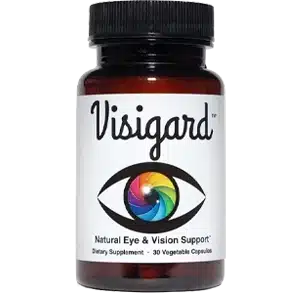
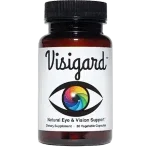
Visigard, made by Nutreance, is marketed as a natural eye health supplement aimed at preserving vision clarity, color perception, and overall ocular health. Its formula brings together 7 antioxidants: vitamin C, vitamin E, zinc, copper, lutein, zeaxanthin, and bilberry extract that the brand says are “clinically proven” to defend against the free radical damage behind age-related vision decline.
But do the ingredients hold up? Is the dosing in line with what the research actually studied? And is it worth paying $39.95 a month for?
We’ve gone through the supplement facts, the ingredient science, and what customers have said, to give you a straight answer.
What is Visigard?
Visigard is a vegetable capsule supplement manufactured by Nutreance, a Greenwich, CT-based company. The product is positioned specifically for adults over 40 who are concerned about age-related changes to their vision, particularly oxidative damage to the macula, the part of the eye responsible for central vision, fine detail, and color.
The company claims the formula is made in a GMP-certified, FDA-inspected facility in New York, and that every batch is tested before bottling to confirm it’s non-GMO, vegan, and gluten-free. Those are reasonable quality markers, though Nutreance doesn’t publish third-party Certificates of Analysis, so independent verification isn’t available to consumers.
One point worth noting upfront: Nutreance claims over 95% of customers saw improvements after 30 days. That figure comes from self-reported customer data, not a controlled trial, and should be weighed accordingly.
How Does It Rate?
 Visigard


Brand Highlights
- Manufactured in a GMP-certified, FDA-inspected facility in New York
- Non-GMO, vegan, and gluten-free
- Backed by a 30-day money-back guarantee
- Sold direct-to-consumer through the Nutreance website
Key Ingredients
- Vitamin C
- Vitamin E
- Zinc
- Copper
Pros
- Uses Albion® chelated minerals for better absorption
- Clean excipient list, no fillers beyond capsule shell
- Covers the core AREDS2-adjacent ingredient set
Cons
- Bilberry at 25 mg is below the effective doses in clinical studies
- No third-party lab testing or public Certificates of Analysis
- “95% improvement” claim is self-reported, not trial-backed
- The 30-day refund window is shorter than most competing products
- No Omega-3s, which feature in the modern AREDS2-adjacent approach
About the Manufacturer
Nutreance LLC is based in Greenwich, CT and appears to operate primarily through its own branded product line on nutreance.com. The company doesn’t share information about its founding team, scientific advisory board, or formulation research process, which is fairly common among mid-tier supplement brands, but it does limit transparency for buyers trying to evaluate credibility.
What Nutreance does communicate clearly: a New York manufacturing facility with GMP certification and FDA inspection status. Those two things mean the facility meets manufacturing practice standards; they don’t mean the FDA has reviewed or approved Visigard specifically. Dietary supplements bypass the pre-market approval process that pharmaceutical drugs go through, and Visigard is no exception.
The brand’s customer service has received positive mentions in reviews as a real differentiator, but not a substitute for more detailed quality documentation.
How Does Visigard Work?
The mechanism behind Visigard is rooted in the oxidative stress hypothesis of age-related macular degeneration (AMD). As the body ages, its natural antioxidant defenses weaken, and the photoreceptor cells in the macula become increasingly vulnerable to damage from free radicals, unstable molecules produced during normal metabolism and amplified by UV light exposure.
By supplying a concentrated dose of antioxidants, the formula aims to replenish the protective shield around those cells. Lutein and zeaxanthin, specifically, accumulate in the macula and serve as a kind of internal filter against harmful blue light. Vitamin C and E work as broader antioxidant reinforcements. Zinc helps activate antioxidant enzymes in the eye. Copper accompanies zinc to prevent zinc-induced copper depletion. Bilberry is included for microcirculation and retinal support.
The approach has plausible science behind it, and several ingredients in this formula have meaningful clinical research at their back. The question is whether the amounts used in Visigard match what those studies actually tested, and, in a few key areas, that gap is noticeable.
Key Ingredients in Visigard
Visigard publishes its supplement facts label, which is a positive step. Dosages are disclosed for all seven ingredients, unlike many competing formulas that hide behind proprietary blends. That said, the label raises some questions about how the amounts compare to clinical research standards.
Vitamin C (250 mg as ascorbic acid)
Vitamin C is found naturally in the aqueous humor of the human eye and plays a well-documented role as an antioxidant in ocular tissue. It’s a core component of the AREDS formula studied by the National Eye Institute, where it was used at 500 mg daily as part of the combination shown to reduce AMD progression risk by approximately 25% in high-risk individuals. (AREDS Report No. 8 — PMC) At 250 mg, Visigard provides half the AREDS dose — which may still offer meaningful antioxidant support for general prevention, but is below what the landmark trial used.
Vitamin E (67 mg as d-?-tocopherol succinate)
Vitamin E is a fat-soluble antioxidant that protects the retina’s lipid-rich cell membranes from oxidative damage. The AREDS trial used 400 IU of vitamin E as part of its combination formula. Visigard’s 67 mg is equivalent to approximately 100 IU, which falls short of that benchmark. The d-?-tocopherol succinate form is the natural, more bioavailable form — a meaningful formulation choice — but the dose remains below what large clinical trials studied. (Nutrients for the Aging Eye — PMC)
Zinc (22 mg as zinc bisglycinate, Albion®)
Zinc is an essential component of the AREDS/AREDS2 formula, present in the retinal pigment epithelium and critical to antioxidant enzyme activity there. Research in PMC has linked zinc supplementation to slowed AMD progression, with the AREDS original trial using 80 mg zinc oxide daily. (Zinc and Autophagy in AMD — PMC) More recent expert opinion has moved toward lower doses (25 mg) as sufficient for most users. Visigard’s 22 mg is consistent with this updated thinking, and the Albion® bisglycinate chelate form has superior absorption compared to zinc oxide.
Copper (1 mg as copper bisglycinate, Albion®)
Copper is included in AREDS/AREDS2 specifically to offset the copper depletion that can result from high zinc intake — the two minerals compete for absorption. The AREDS studies used 2 mg copper; Visigard uses 1 mg. At its zinc dose (22 mg), the depletion risk is lower than at 80 mg zinc, so 1 mg may be sufficient — but it’s worth knowing the dose is half what the clinical trials paired with zinc supplementation. (AREDS/AREDS2 FAQ — National Eye Institute)
How to Use Visigard
The product label recommends 1 capsule per day, taken in the morning with or without food. The website expands on this, suggesting 1–2 capsules once per day for general maintenance or 1–2 capsules twice per day for more advanced cases. The maximum stated dose is 6 capsules daily.
The discrepancy between the label (1 capsule/day) and the website’s guidance (up to 4 capsules/day for advanced use) creates some ambiguity about what the intended effective dose actually is.
Benefits of Visigard
Taken at face value, the ingredient research points to a few areas where Visigard may offer genuine, if partial, support:
- Antioxidant defense against free radical damage. Vitamin C and E are well-established ocular antioxidants with meaningful research behind them, even if Visigard’s doses are below AREDS benchmarks.
- Macular pigment support. Lutein and zeaxanthin are the right ingredients for this, and even at 5 mg / 1 mg, they contribute to macular pigment density for users with low dietary intake.
- Zinc-mediated retinal enzyme support. The chelated zinc form is a genuine quality differentiator.
Side Effects of Visigard
Visigard uses ingredients with well-established safety profiles, and no stimulants are included. At the stated doses, serious side effects are unlikely for most healthy adults.
Possible mild effects:
- Digestive discomfort from copper or zinc on an empty stomach
- High vitamin E intake may interact with blood-thinning medications at larger doses
- Vitamin C above 500 mg daily can cause loose stools in some individuals Visigard at a single-capsule is below that threshold
The caution note on the label is standard and appropriate: do not use if pregnant or nursing, consult a physician if you have pre-existing conditions or take prescription medications.
Safety
Visigard’s ingredient profile is generally safe for most healthy adults. The Albion® chelated forms of zinc and copper are well-tolerated and carry a lower GI irritation profile than oxide forms. GMP and FDA inspection credentials offer baseline manufacturing assurance.
Concerns that do remain:
- No third-party testing certifications from NSF, USP, or similar bodies
- No publicly available Certificates of Analysis
- The “over 95% improvement” marketing claim is not backed by a published study
None of these factors make the product unsafe, but they do make it harder for informed buyers to independently verify quality and consistency beyond the company’s own representations.
Visigard Pricing & Value
Visigard is sold through nutreance.com:
- 1 Bottle ( 30 Day Supply ) – $39.95
Free shipping kicks in at 3 bottles. The 30-day money-back guarantee is shorter than the 60-day window most comparable eye supplements offer. Buyers who need more than one month to evaluate results may find that a limitation.
What Do Visigard Reviews Say?
Here’s what some of the users had to say regarding Visigard:
I’ve barely had time to form an opinion in 30 days, let alone see real results. Most eye supplements I’ve looked at give you 60 or 90 days. Not saying it doesn’t work, just not enough time to know for sure before the guarantee runs out. – Mark L.
I wanted something to support my eyes long term and this checked a lot of boxes US made, clean label, no artificial stuff. What I couldn’t find was any independent lab testing to confirm what’s actually in each batch. For a supplement I’m planning to take every day, that matters to me. – Nathan J.
I’ve been taking one capsule daily for about six weeks. Nothing dramatic to report, no side effects, but no noticeable change in how my eyes feel either. Ingredient quality seems fine, just wish the amounts were stronger out of the gate. – Rachel K.
FAQs
Q: Is Visigard FDA-approved?
A: No, Dietary supplements are not FDA-approved before sale. Nutreance states the product is manufactured in an FDA-inspected facility, which refers to the manufacturing site’s compliance status, not product approval.
Q: Does Visigard contain lutein and zeaxanthin?
A: Yes, 5 mg lutein and 1 mg zeaxanthin per capsule. The AREDS2 clinical trial used 10 mg lutein and 2 mg zeaxanthin, so these doses are at half the studied level unless two capsules are taken daily.
Q: Is Visigard vegan?
A: Yes, the capsule uses a vegetable shell, and Nutreance states the formula is vegan, gluten-free, and non-GMO.
Q: What is the return policy?
A: Nutreance offers a 30-day money-back guarantee from the date of purchase, even on opened or fully consumed bottles.
Q: Can I take Visigard with other supplements?
A: The company states that Visigard can be taken alongside most supplements. However, if you take a multivitamin containing vitamin C, E, or zinc, check total daily amounts to avoid excessive intake.
Q: How long before I see results?
A: The website doesn’t specify a clear timeframe for typical users. Eye antioxidant supplements generally need consistent use over several months for meaningful effects on long-term ocular health.
Visigard Review — Conclusion
Visigard isn’t a bad eye supplement. The core formula is built on ingredients with real research behind them, the chelated mineral forms are a genuine quality upgrade, and the manufacturing credentials check out at a basic level. For buyers who prioritize a clean, vegan, US-made capsule with no questionable fillers, Visigard has legitimate appeal in that category.
The problems are in the details. Lutein and zeaxanthin, arguably the most important ingredients in a modern eye health formula, come in at half the clinically studied doses at the default single-capsule serving. Bilberry at 25 mg is almost certainly too low to do much of anything, based on the studies cited in its favor. And the brand’s own “95% improvement” headline is not the kind of claim that belongs in a product marketed to people making serious decisions about their ocular health.
At $39.95 a month, buyers are paying a mid-to-premium price for a formula that underdelivers on its two most important active ingredients unless they double up to two capsules a day, that supply runs out in 15 days. We’d want to see more dosing transparency, a longer guarantee period, and independent lab verification before placing this in the top tier of eye health supplements.
Below you’ll find some of the most effective eye health supplements formulations on the market today, in our opinion.

Verdict on Claimed Benefits: Below is our summary of the available evidence for the claimed benefits of below mentioned eye health supplements based on the available research:

Product reviews are provided for informational purposes only and reflect solely the views and opinions expressed by the contributors and not those of Consumer Health Digest. We do not verify or endorse any claims made in these reviews. Please read the full product reviews disclaimer. *All individuals are unique. Your results can and will vary.
 Ask a Question
Have a Question? Please Tell Us What We Are Missing Here!
Upload Your Video Review
How to record video?
- Prepare your device, ensuring it's charged and has enough storage.
- Find a quiet, well-lit space with natural or good indoor lighting.
- Position your device and frame yourself in the center with head and shoulders visible.
- Introduce yourself, the product, and why you chose it.
- Share your experience, including positives, negatives, and recommendations.
- Test audio and video to ensure they're working properly.
- Keep the video concise, aiming for 1-3 minutes.
- Review your recording for quality and clarity.
- Upload your video.
Video recording details:
- Video duration: 1 - 3 minutes
- Video Quality: Full HD (1080p and above)
- Video format: MP4
- Audio Quality: Clear without background noise
4 Sources
We review published medical research in respected scientific journals to arrive at our conclusions about a product or health topic. This ensures the highest standard of scientific accuracy.
[1] A Randomized, Placebo-Controlled, Clinical Trial of High-Dose Supplementation With Vitamins C and E, Beta Carotene, and Zinc for Age-Related Macular Degeneration and Vision Loss https://pmc.ncbi.nlm.nih.gov/articles/PMC1462955/
[2] Nutrients for the aging eye https://pmc.ncbi.nlm.nih.gov/articles/PMC3693724/
[3] Zinc and Autophagy in Age-Related Macular Degeneration https://pmc.ncbi.nlm.nih.gov/articles/PMC7404247/
[4] AREDS/AREDS2 Frequently Asked Questions https://www.nei.nih.gov/eye-health-information/clinical-trials/age-related-eye-disease-studies-aredsareds2/aredsareds2-frequently-asked-questions
**This is a subjective assessment based on the strength of the available informations and our estimation of efficacy.
*Result may vary. The information contained in this website is provided for general informational purpose. No medical claims are implied in this content, and the information herein is not intended to be used for self diagnosis or self treatment of any condition.
*Disclosure of Material connection: Some of the links in the post above are "associate sales links." This means if you can click on the link and purchase an item, we will receive a commission. Regardless, we only recommend products or services which we use personally and/or believe will add value to our readers. We are disclosing this in accordance with the Federal Trade Commission's 16 CFR, Part 255: "Guides Concerning the Use of Endorsements and Testimonials."












Customer Reviews & Ratings
1 out of 5Review this Product
Leave a review and share your experience with others.
Write a Review
How to Upload your Proof of Purchase:
Please follow the instructions listed below to upload your electronic proof of purchase.
If you are still not able to upload your proof of purchase, please contact us for further assistance (take a moment to look over the sample bill below).