Medically Cited
Almonds don’t need much of an introduction. We are already familiar with the benefits of most of these healthy fats, protein, fiber, vitamin E, magnesium, and the rest. But soaking them? That’s the part that doesn’t get nearly as much attention and should.
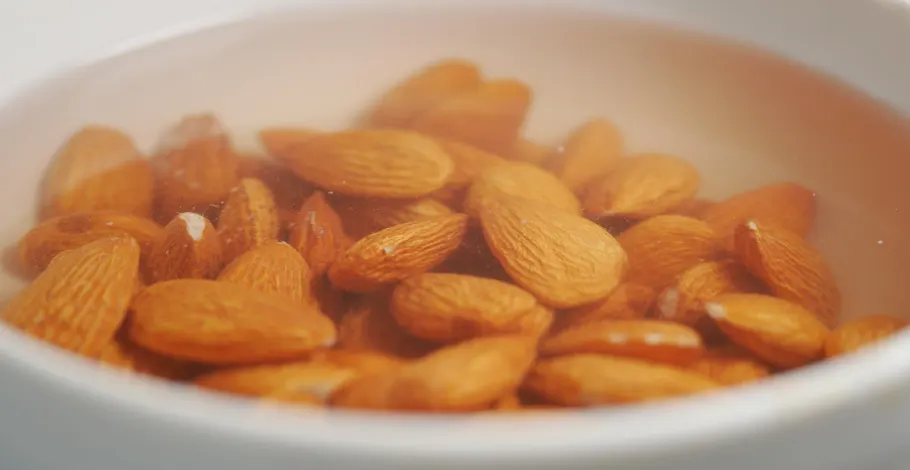
The habit is simple. You put a few inside a bowl of water before bed, leave them overnight and peel off the skin in the morning. Takes around 30 seconds of real effort.
Some people do it because they grew up watching their parents do it. Others found it by chance and realized that their tummy became better.
In any case, almonds soaked in water have been utilized for ages in traditional cooking in South Asia and the Middle East, and there are genuine reasons for this.
This article explores the purpose of soaking, the advantages to be aware of, and whether or not raw almonds are “bad” in some way. Spoiler: they’re not. However, there are a number of benefits that make soaked almonds the better option for many.
Why Do People Soak Almonds Before Eating?
Leave an almond in water for 8-12 hours and a few things change. The skin softens and loosens; it practically slides off. The feel changes from hard and crunchy to something much softer. And the taste softens a little; particularly the raw almond bitterness.
What soaking doesn’t do, and this is worth being upfront about, is dramatically rewrite their nutritional profile. The fat, protein and fibre content remains essentially unchanged.
For a lot of people, however, that softer feel, the peeled skin, the ease of chew – that’s all they’re looking for.
It is a small adjustment in the preparation that produces a big change in the texture of the almond. Sometimes one thing is enough to make you change a meal that you sometimes eat into one that you eat regularly.
7 Benefits of Eating Soaked Almonds
1. May Be Easier to Digest
Soaking is what makes almonds feel so much gentler on the stomach. Raw almond skin contains tannins, compounds that can slow down digestion and interfere a bit with nutrient absorption for some people. Peel that skin off after soaking, and most of those tannins go with it.
But that’s not all. Some research backs points to soaking activating lipase, an enzyme that helps break down dietary fat. Whether that’s a dramatic shift in how your body processes the almond is still being looked into, but it’s a plausible reason why so many people report that soaked almonds just sit easier.
If you’ve ever felt a bit heavy after a handful of raw almonds, it might be worth trying the soaked version for a week and seeing how you feel.
2. Supports Heart Health
Almonds soaked or raw are genuinely good for your heart. They’re rich in monounsaturated fats, the kind that can help lower LDL cholesterol (the type you don’t want too much of) while keeping HDL levels in a healthier range.
Fiber chips in too, and vitamin E is what gives almonds a lot of their cardiovascular value; it helps protect cells from the kind of oxidative damage that contributes to heart disease over time.
The American Heart Association includes nuts like almonds in their heart-healthy dietary recommendations. And the research backs that up: a small handful a day, as part of a balanced diet, can make a real contribution to long-term heart health. Soaking doesn’t change any of that; it’s built into the nut itself.
3. Helps Keep You Full Longer
Here’s something a lot of snack foods can’t claim: almonds actually keep hunger at bay for a while. It’s the fat-protein-fiber combination that does it, each one contributes to satiety on its own, and together they’re a pretty solid team. You eat a small portion and genuinely don’t feel the need to reach for something else an hour later.
A study in the American Journal of Clinical Nutrition found that people who regularly ate nuts didn’t compensate by eating more later in the day, which matters more than it might sound.
It suggests that almonds work as a real appetite tool, not just a snack that fills a gap. For weight management, that kind of steady fullness is what actually helps day to day.
4. May Support Healthy Blood Sugar Levels
Almonds are a low-glycaemic food, which means that they don’t cause the blood sugar surge associated with refined carbohydrates or sugary snack foods. What’s notable, though, is the amount of magnesium they have.
Insulin sensitivity is one of the many processes in which magnesium plays a role and a surprising number of people with blood sugar issues are low on magnesium.
Research in Nutrients has linked regular almond consumption to more stable glucose levels over time.
This benefit does not depend upon soaking and is due to the composition of the almond. If you’re consuming almonds for blood sugar management, it helps to know that both soaked and raw almonds have a similar effect.
5. Provides Antioxidants for Overall Health
Vitamin E is what really sets almonds apart in the antioxidant department. Antioxidants are important because free radicals, unstable molecules generated by normal metabolism and environmental factors, can cause damage if they are not counteracted over the long-term. That damage correlates with inflammation, accelerated ageing and various chronic diseases.
Some of these nutrients will be absorbed better if they are soaked and the skin is removed – no radical change for the better, but a significant one.
Folic acid is another player in the mix, and it’s found in almonds, as well, and used for various other health benefits, including cell growth and repair. Not such a dramatic change from raw eating but if you’re already soaking, then that’s a good addition to the mix.
6. Softer Texture Makes Them Easier to Eat
This might sound like a minor point, but honestly, it matters more than people give it credit for. Soaked almonds are noticeably softer. That makes them a much more practical option for kids, older adults, or anyone dealing with dental sensitivity.
You don’t need a clinical reason to prefer a softer texture; ease of eating is a completely valid reason on its own.
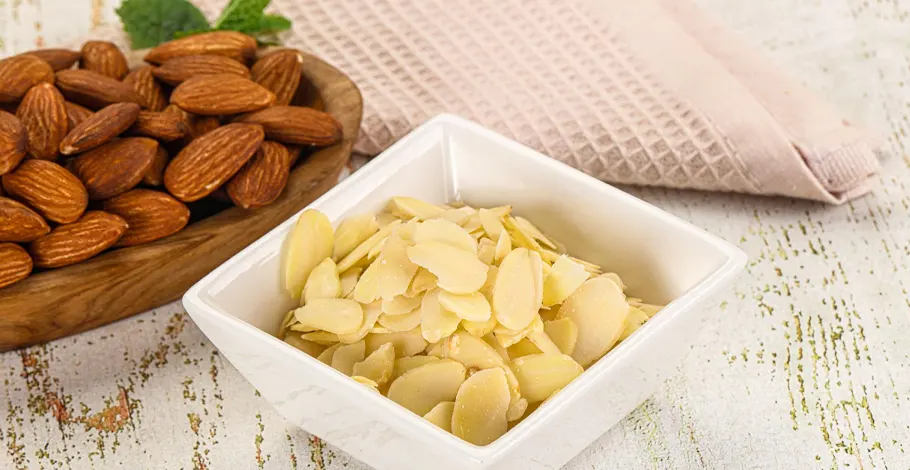
Softer texture makes them easier to eat
And the flavor shift is real too. Once that bitter outer skin is gone, the almond tastes cleaner and milder, which makes them easier to enjoy consistently. Because the only habit that actually works is one you stick to. If soaking almonds makes them more pleasant to eat every morning, that’s not a small thing.
7. Easy to Include in a Healthy Diet
Soaked almonds are probably one of the lowest-effort additions you can make to your daily routine. Eat them as a snack on their own. Throw them into morning oatmeal. Blend them into a smoothie. Chop them over yogurt or a salad. They fit into almost any meal without disrupting anything.
The prep itself is barely prep: rinse a handful, cover with water, leave overnight, peel in the morning. That’s genuinely it. And once it becomes part of your kitchen routine, you’ll stop thinking about it at all. For something that takes so little, the payoff in comfort and consistency is well worth it.
Soaked Almonds vs. Raw Almonds
Both are healthy. That’s the honest starting point. But they’re not identical experiences — and depending on what you’re looking for, one might suit you better than the other.
| Feature | Soaked Almonds | Raw Almonds |
|---|---|---|
| Texture | Soft, easy to chew | Firm and crunchy |
| Taste | Milder, less bitter | Stronger, nuttier |
| Skin | Easy to peel off | Intact |
| Ease of chewing | Better for sensitive teeth | Requires more chewing |
| Digestibility | Potentially easier for some | Fine for most people |
| Nutritional value | Very similar | Very similar |
| Preparation time | 8–12 hours overnight | None |
| Best for | Children, older adults, sensitive digestion | Quick snacking, convenience |
If you want grab-and-go convenience, raw almonds win. If you want something gentler, more pleasant to eat, and easier on your digestion, soaked almonds are worth the minimal extra effort. Neither is wrong. It really just comes down to what actually fits your life.
Final Thoughts
Soaked almonds aren’t magic. They’re not going to transform your health overnight, but then again, no single food does. What they are is a genuinely practical, easy habit that makes an already-healthy food a bit more enjoyable and comfortable to eat regularly.
The core nutritional benefits like heart health, satiety, blood sugar support, and antioxidants are built into almonds themselves, soaked or not.
But the softer texture, the peeled skin, and the milder flavor make soaked almonds a better fit for a lot of people, especially those who find raw almonds a bit hard on the stomach or the teeth.
Give it a week. The prep is almost nothing, and you might find you actually prefer them this way.
FAQs
How long should I soak almonds?
Overnight is the standard, 8 to 12 hours in plain water at room temperature. Short on time? Even 4 hours makes a noticeable difference in how soft they get.
Should I peel soaked almonds before eating?
You don’t have to, but most people do. Peeling removes the tannins in the skin and gives you a softer, milder almond. Once you try them peeled, it’s hard to go back.
How many soaked almonds should I eat per day?
A small handful, roughly 10 to 15 almonds, is a reasonable daily amount. They’re calorie-dense, so a moderate portion is usually all you need to get the benefits without going overboard.
Can I store soaked almonds?
Yes, easily. Once soaked and peeled, keep them in an airtight container in the fridge; they’ll stay fresh for up to a week. Prep a batch on Sunday and you’re set for the whole week.
Are soaked almonds better than raw almonds?
Not objectively; it really comes down to preference. Both offer very similar nutrition. Soaked almonds are gentler to chew and may be easier to digest; raw almonds are quicker and more convenient. Neither choice is wrong.
Can soaked almonds help with weight loss?
They can support it, but they’re not a standalone solution. What almonds do well is keep you full, which makes it easier to avoid unnecessary snacking. As part of a balanced, calorie-aware diet, that kind of steady satiety does add up over time.
Was this article helpful?
3 Sources
We review published medical research in respected scientific journals to arrive at our conclusions about a product or health topic. This ensures the highest standard of scientific accuracy.
[2] Long-term associations of nut consumption with body weight and obesity1 - PMC: https://pmc.ncbi.nlm.nih.gov/articles/PMC4144111/
[3]The Effects of Almond Consumption on Cardiovascular Health and Gut Microbiome: A Comprehensive Review - PMC: : https://pmc.ncbi.nlm.nih.gov/articles/PMC11207051/







 This article changed my life!
 This article was informative.
 I have a medical question.

 This article contains incorrect information.
 This article doesn’t have the information I’m looking for.