Medically Cited
Honey is one of those rare things that actually earns its reputation. Made by bees that collect nectar from flowers, concentrate it in the hive, and seal it away with beeswax, this golden liquid has been used as food, medicine, and preservative for thousands of years. Ancient Egyptian texts reference it as a wound treatment. Traditional medicine systems across Asia and the Middle East relied on it long before pharmacology was even a word.

But here’s what’s interesting: modern research has backed up quite a few of those traditional uses. Studies now support honey’s role in soothing coughs, helping with wound recovery, and delivering real antioxidant activity. It’s not just folklore. What’s making honey worth paying attention to today is the science that’s finally catching up with what people have known for centuries.
Key Takeaways
- Honey is a natural sweetener made by bees from flower nectar, rich in antioxidants, trace minerals, and bioactive plant compounds.
- Research supports its use for soothing coughs and sore throats, particularly in children over 12 months.
- Medical-grade honey has demonstrated genuine antibacterial and wound-healing properties in clinical settings.
- Its flavonoids and phenolic compounds can help lower oxidative stress and support heart health.
- Honey can be a smarter swap for refined sugar when used in moderation, but it’s still a source of natural sugars and calories.
- Never give honey to infants under one year old due to the risk of infant botulism.
What Is Honey?
Honey starts as flower nectar, a thin, watery liquid worker bees collect and carry back to the hive. Inside, they process it through repeated enzymatic activity and slow evaporation until the water content drops low enough for long-term storage. What’s left is what we know as honey: dense, sweet, and stable enough to last a remarkably long time.
Its natural composition is what gives it that edge over ordinary sugar. Low water activity and natural hydrogen peroxide production create an environment where most bacteria genuinely can’t survive. The variety, clover, manuka, buckwheat, wildflower, is what determines the color, flavor intensity, and nutrient concentration in each jar. Darker honeys tend to pack in more antioxidants, though all varieties share the same basic character.
What Nutrients Are Found in Honey?
Honey is mostly carbohydrates, primarily fructose and glucose, but it also has trace amounts of B vitamins, vitamin C, and minerals including potassium, calcium, and magnesium. Its most nutritionally interesting components, though, are the bioactive plant compounds: flavonoids and phenolic acids that carry antioxidant and anti-inflammatory properties.
| Nutrient | Amount (per 1 tbsp / 21g) |
|---|---|
| Calories | ~64 |
| Total Carbohydrates | ~17g |
| Sugars (fructose + glucose) | ~16g |
| Protein | <1g |
| Potassium | ~11mg |
| Antioxidants | Flavonoids, phenolic acids |
| Vitamins | Trace B vitamins, Vitamin C |
10 Science-Backed Health Benefits of Honey
1. Helps Soothe Coughs and Sore Throats
If you’ve ever stirred honey into hot tea at the first sign of a scratchy throat, that instinct turns out to be well-founded. Honey coats the throat and creates a soothing layer that can ease irritation, and it’s not just anecdotal. A randomized controlled trial on PubMed found that honey significantly reduced cough frequency and severity in children with upper respiratory tract infections, outperforming a commonly used antihistamine. [1] That’s a pretty solid endorsement for something you probably already have in your kitchen.

Helps soothe coughs and sore throats
One thing worth knowing: honey should never be given to infants under 12 months. Their digestive systems aren’t yet equipped to handle Clostridium botulinum spores, which can be present in honey and may cause infant botulism.
2. Rich in Antioxidants
Honey is what you’d call a genuinely functional food, not just a sweetener. Its phenolic compounds and flavonoids, including quercetin, kaempferol, and caffeic acid, help neutralize free radicals that would otherwise contribute to oxidative stress. A comprehensive PMC review in Nutrients confirmed that these compounds actively protect cells from oxidative damage and may reduce the risk of several chronic diseases. [2]
And the variety matters here. Darker honeys, buckwheat especially, consistently rank among the highest in antioxidant concentration; lighter varieties like clover still have activity, just at lower levels.
3. Supports Wound Healing
This is probably the area where honey’s traditional reputation has gotten the strongest modern backup. Medical-grade honey, sterilized and formulated for clinical use, has been shown to fight bacteria, retain moisture, and encourage tissue regeneration in ways that standard dressings sometimes can’t match. A PMC clinical case series showed it was safe, easy to apply, and effective in treating severe pediatric wounds including burns and ulcers. [3]
At home, though, this doesn’t mean reaching for your kitchen jar every time you get a cut. Medical-grade preparations are very different from grocery store honey, and any significant wound really should be assessed by a healthcare professional first.
4. Provides a Natural Source of Energy
Honey’s glucose and fructose are absorbed at slightly different rates, glucose enters the bloodstream quickly, while fructose offers a slower release. That combination can make it a decent option before a workout or as a quick pick-me-up after physical activity. Stir it into oatmeal before a run or add it to a recovery smoothie afterward. It’s a very simple swap from refined sugar, and it brings a few extra nutrients along with it.
5. May Support Heart Health
The antioxidants in honey, its flavonoid content especially, can lower oxidative stress in ways that may benefit cardiovascular health over time. A PMC review on honey’s phenolic compounds found evidence that flavonoids like quercetin and kaempferol may support healthier cholesterol balance and reduce platelet activation. [2] That said, honey’s benefits for the heart are best understood as one piece of a bigger dietary picture. It’s not a standalone intervention; it’s a useful part of a genuinely balanced diet.
6. May Support Digestive Health
Honey has small amounts of oligosaccharides, compounds that can act as prebiotics, helping support the growth of beneficial gut bacteria. At the same time, its natural antibacterial activity may help keep harmful bacteria in check without the disruption that pharmaceutical interventions can sometimes cause. It’s not a cure for digestive conditions by any stretch, but as part of a generally varied, whole-food diet, honey can be a really reasonable thing to include.
7. May Help Reduce Inflammation
Chronic inflammation sits at the root of a long list of health problems, joint pain, cardiovascular disease, and more. Honey’s flavonoids and phenolic acids are what give it mild anti-inflammatory potential; they work by inhibiting the enzymes that drive certain inflammatory pathways in the body. Research in this area is still developing, but the direction of the evidence is consistent: honey appears to dampen certain inflammatory markers under controlled conditions.
8. May Benefit Skin Health
Honey has earned its spot in skincare, and not just as a marketing trend. Its antibacterial activity can help calm minor breakouts, while its hygroscopic properties mean it draws moisture toward the skin and helps keep it there. Applied as a simple face mask or blended into a homemade cleanser, honey can genuinely soothe dry or irritated skin. And honestly, it’s one of the few ingredients that works well for most skin types without triggering reactions, which is rarer than it sounds.
9. May Help Maintain Healthy Blood Sugar Compared With Refined Sugar
Let’s be upfront about this one: honey is still sugar. But it does behave a little differently in the body than refined white sugar does. The combination of fructose and glucose, along with honey’s minor bioactive compounds, gives it a slightly lower glycemic impact in many situations. For anyone managing blood sugar carefully, the difference is modest and honey still needs to be consumed with real care. But as a day-to-day swap in cooking or beverages, it’s a reasonable upgrade from the refined stuff.
10. A Natural Alternative to Refined Sugar
Swapping honey for refined sugar in recipes means you’re not just trading sweetness, you’re also bringing antioxidants, trace minerals, and bioactive plant compounds into the equation. Baked goods, salad dressings, marinades, and hot drinks can all work well with honey as the sweetener. A little goes a long way too, since honey is naturally sweeter by volume than white sugar. The key is still moderation; the benefits are real, but the calories and sugar content can add up quickly if portions get out of hand.
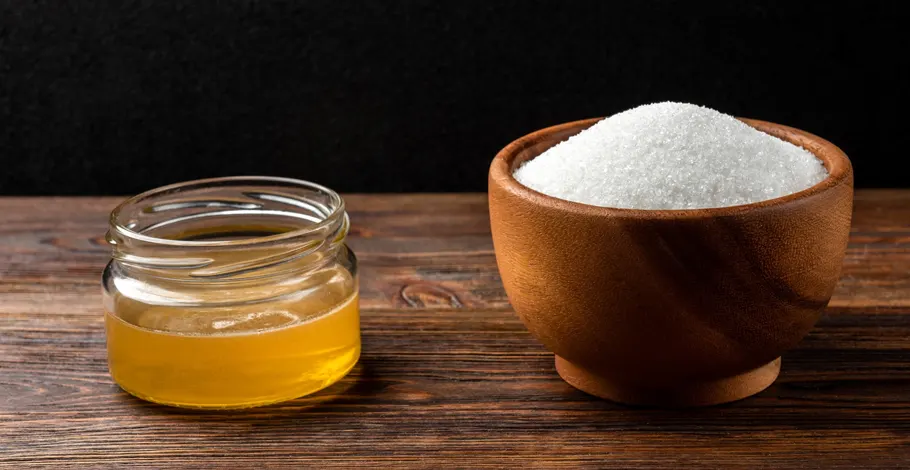
A natural alternative to refined sugar
Are There Any Risks of Eating Honey?
Honey is safe for most people when eaten in sensible amounts, but a few things are worth knowing before you start spooning it into everything.
The sugar and calorie content can be meaningful. One tablespoon carries around 64 calories and 17 grams of carbohydrates, which isn’t nothing if you’re adding several spoonfuls throughout the day. Anyone with diabetes or blood sugar concerns should account for this carefully and talk to their doctor.
Some individuals may also be allergic to certain honey varieties, particularly those made from specific flowers. If you’ve had reactions to bee products before, it’s worth checking with a healthcare provider first.
And again, no honey for infants under 12 months. That’s a firm safety rule, not a suggestion.
How to Include Honey in Your Diet
Honey is genuinely versatile, which makes it easy to work with. Try stirring a teaspoon into hot tea or warm lemon water in the morning. Drizzle it over plain Greek yogurt with fruit. Mix it into oatmeal instead of reaching for brown sugar. Blend it into smoothies for a touch of natural sweetness. Use it in homemade salad dressings, a simple lemon-honey vinaigrette takes about two minutes and tastes noticeably better than most bottled options.
Whole-grain toast with a light spread of nut butter and a drizzle of honey is also worth trying as a pre-workout snack. Keep portions to around a teaspoon or two at a time, and let the quality of the honey do the work.
Conclusion
Honey isn’t a superfood in the exaggerated marketing sense, but it is a genuinely useful, well-researched natural ingredient with more going for it than plain sugar ever could. Its antioxidant content, antibacterial properties, and capacity to soothe coughs and support wound healing give it a real place in both the kitchen and, in medical-grade form, the clinic.
Used in moderation as part of a balanced diet, honey can be a smarter choice than refined sugar, one that brings actual nutritional value alongside the sweetness. Just keep portions sensible, keep it away from very young infants, and let the research guide your expectations rather than the hype.
Was this article helpful?
3 Sources
We review published medical research in respected scientific journals to arrive at our conclusions about a product or health topic. This ensures the highest standard of scientific accuracy.
[2] Honey and Its Phenolic Compounds as an Effective Natural Medicine for Cardiovascular Diseases in Humans? - PMC: https://pmc.ncbi.nlm.nih.gov/articles/PMC7070389/
[3]Treating severe wounds in pediatrics with medical grade honey: A case series - PMC : https://pmc.ncbi.nlm.nih.gov/articles/PMC7069864/







 This article changed my life!
 This article was informative.
 I have a medical question.
 This article contains incorrect information.
 This article doesn’t have the information I’m looking for.