Medically Cited
Round ligament pain may improve with rest, slower movements, comfortable side-lying positions, gentle stretching, a warm bath, and pregnancy support when needed.
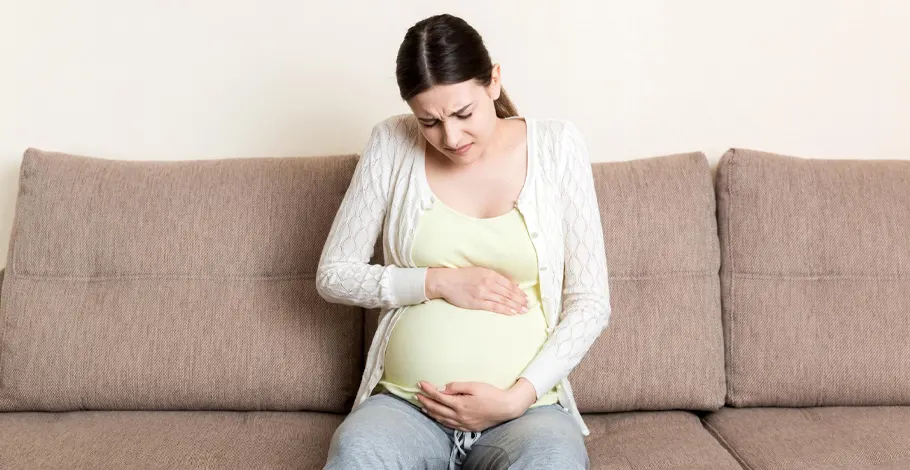
Avoid movements that repeatedly trigger the pain. Severe, persistent, or unusual abdominal pain, especially with bleeding, contractions, fever, or other symptoms, should be medically evaluated.
Introduction
Round ligament pain is one of those pregnancy aches almost nobody warns you about until it happens. One second you’re fine, the next there’s a sharp pull or cramp low in your belly, hip, or groin usually right after you move a certain way.
It’s most common in the second trimester, somewhere around weeks 14 to 27, when the uterus is growing fast and tugging on the ligaments that hold it in place. Sharp as it feels in the moment, it’s almost always brief and harmless.
Still, it helps to know your triggers, what actually eases it, and, just as important, which symptoms mean something else is going on.
Key Takeaways
- Round ligament pain comes from the stretching of the ligaments that support the growing uterus.
- It usually feels like a sudden sharp, pulling, or cramping sensation in the lower belly or groin.
- Rest, slow movements, comfortable positions, gentle warmth, and support can ease it.
- Standing up quickly, rolling over, coughing, sneezing, laughing, or exercise can trigger it.
- Severe or lasting pain, bleeding, contractions, fever, fluid leakage, or other unusual symptoms need medical attention.
What Is Round Ligament Pain?
The round ligaments are bands of tissue that help anchor the uterus, running from the uterus down into the lower abdomen and groin. As the uterus grows, those ligaments have to stretch to keep pace, and a quick, sudden movement can tug on them just enough to trigger that sharp, familiar jolt.
The second trimester is when most people first notice it, though the timing isn’t fixed it can show up earlier or stick around longer.
What Does Round Ligament Pain Feel Like?
Everyone describes it a little differently: a quick stab, a hard pull, a cramp, a brief spasm. It typically feels low in the belly, in the pelvis, hip, or groin, sometimes on one side, sometimes both, and it rarely sticks around longer than a few minutes.
It tends to catch you off guard, right after a fast movement: standing up, rolling over, a cough, a sneeze, a laugh, a workout, a twist. A longer walk or a long stretch on your feet can also leave a duller ache behind.
How Can You Relieve Round Ligament Pain?
Most cases can be managed with simple changes in movement and positioning. What works best can vary, so it may take some trial and error to find the most comfortable approach.
1. Rest and Change Positions Slowly
When it hits, stop. Sit or lie down and give yourself a minute. That’s often all it takes.
Past that, just slow down in general. Roll onto your side before you sit up in bed. Lean forward and rise gradually out of a chair instead of popping straight up.
2. Use Comfortable Pregnancy Positions
Lying on your side usually beats lying flat. Bend your knees a little, put a pillow between them, and tuck another under your belly. If one side hurts more, switch to the other.
3. Try Gentle Warmth
A warm bath can help you unwind and ease things a bit — just keep the water warm, not hot. Not sure if a heating pad or product is safe while you’re pregnant? Ask your provider first.
4. Reduce Activities That Trigger Pain
Notice the pain shows up after a busier day? Ease off for a bit. You don’t have to stop moving completely — just pay attention to what sets it off, adjust, and build back up slowly once it settles. Long stretches on your feet and sudden movements are usually the culprits.
5. Consider a Pregnancy Support Belt
A maternity belt or belly band can take some of the strain off your round ligaments by holding your belly up for you. Get the fit right — snug but not tight — and check with your provider, midwife, or physio about whether it’s a good idea for your pregnancy.
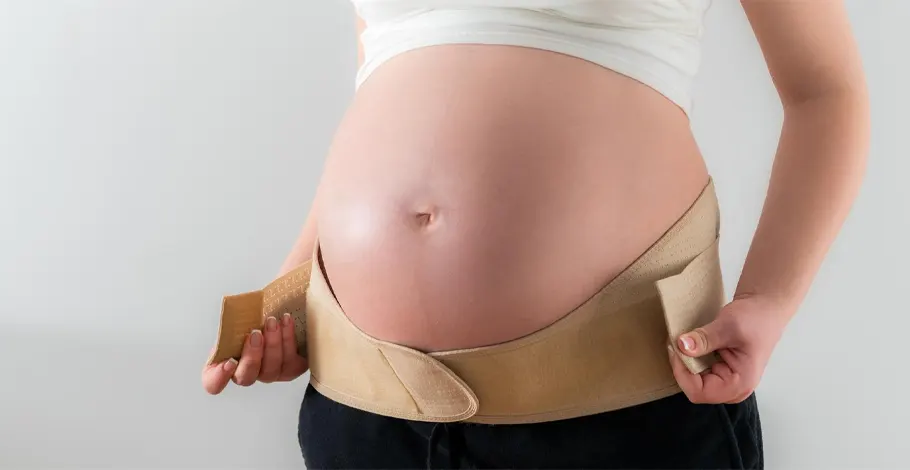
Consider a Pregnancy Support Belt
6. Try Gentle Stretching
Some people swear by pregnancy-safe stretches. One to try: hands and knees, hips up, head lowered gently. Keep it slow and controlled, and mention it to your provider if the pain keeps coming back.
How Can You Prevent Round Ligament Pain?
Round ligament pain cannot always be prevented because the ligaments naturally stretch as the uterus grows. However, changing the way you move may reduce how often it happens.
Move slowly when standing up, sitting down, rolling over, or getting out of bed. Avoid sudden twisting whenever possible.
If you need to cough, sneeze, or laugh, lean forward slightly or support your belly to reduce ligament strain. Also note triggers like long standing, heavy lifting, or exercise, and modify activities; consult your healthcare provider for guidance.
When Should You Call a Healthcare Provider?
Round ligament pain doesn’t linger; that’s part of what makes it round ligament pain. So pain that’s severe, that keeps coming back with no relief, or that just feels different from what you’re used to deserves a second look.

When Should You Call a Healthcare Provider?
Call if abdominal pain shows up with vaginal bleeding or spotting, regular contractions, cramping or tightening, or pelvic pressure and lower back pain that’s building. The same goes for fever, chills, dizziness, faintness, nausea, vomiting, burning when you urinate, fluid leakage, a change in discharge, or pain that simply won’t ease with rest.
None of that automatically means something’s wrong. But because so many pregnancy complications can look like abdominal pain at first, it’s worth having it checked rather than guessing.
What Else Can Cause Abdominal Pain During Pregnancy?
Round ligament pain isn’t the only explanation for a sore belly. Constipation, trapped gas, and ordinary tissue stretching are common and harmless. Other times, though, there’s more going on.
Pre-term labor and placental abruption are two pregnancy-specific possibilities. A urinary tract infection can cause stomach or pelvic pain too, often with burning during urination. And some causes have nothing to do with pregnancy at all appendicitis, for one. Given how much overlap there is, pain that’s severe, persistent, or just doesn’t sit right is worth a medical opinion rather than a guess.
Round Ligament Pain vs. Other Pregnancy Pain
| Round Ligament Pain | Symptoms That May Need Medical Attention |
|---|---|
| Sudden sharp, pulling, or cramping feeling | Severe or steadily worsening pain |
| Usually in the lower belly, hip, or groin | Pain with vaginal bleeding |
| May occur on one side or both | Regular contractions or tightening |
| Often triggered by standing, turning, coughing, or sneezing | Fluid leakage or unusual vaginal discharge |
| Usually lasts seconds or a few minutes | Fever, chills, dizziness, or vomiting |
| Often improves with rest or changing position | Pain or burning during urination |
| No other concerning symptoms | Pain that does not improve after resting |
FAQs
Q. When does round ligament pain usually start?
A. It is most common during the second trimester, particularly from around 14 to 27 weeks, although it may begin earlier or continue later in pregnancy.
Q. How long does round ligament pain last?
A. A typical episode usually lasts only a few seconds or minutes. If pain continues for hours, becomes severe, or does not improve with rest, contact your healthcare provider.
Q. Is round ligament pain dangerous?
A. Round ligament pain itself is generally considered a normal part of pregnancy. However, other conditions can cause similar abdominal pain, so unusual or persistent symptoms should not be ignored.
Q. What is the best sleeping position for round ligament pain?
A. Side-lying may feel more comfortable, especially with a pillow between the knees and another supporting the belly. Lying on the side opposite the pain may also help.
Q. Can a pregnancy support belt help?
A. A properly fitted pregnancy support belt may help support the abdomen and reduce strain for some women. Talk with your healthcare provider about whether one would be useful for you.
Conclusion
Round ligament pain is just part of what happens as the uterus grows and the tissue around it stretches to keep up. It can genuinely startle you in the moment, but a few habits go a long way: resting, moving slowly, finding a comfortable position, supporting your belly, warming up gently, easing off whatever triggers it, and trying a stretch or two made for pregnancy.
The bigger point is knowing when something doesn’t fit the pattern. Severe or ongoing abdominal pain, especially alongside bleeding, contractions, pelvic pressure, fever, fluid leakage, urinary pain, vomiting, dizziness, or unusual discharge is worth a call to your provider, not a guess.
Was this article helpful?
2 Sources
We review published medical research in respected scientific journals to arrive at our conclusions about a product or health topic. This ensures the highest standard of scientific accuracy.
[2]Urinary tract infections in pregnancy: old and new unresolved diagnostic and therapeutic problems - PMC : https://pmc.ncbi.nlm.nih.gov/articles/PMC4379362/





 This article changed my life!
 This article was informative.
 I have a medical question.
 This article contains incorrect information.
 This article doesn’t have the information I’m looking for.