Medically Cited
Menopause night sweats are episodes of intense sweating during sleep triggered by hormonal changes, mainly declining estrogen levels. And they’re common: up to 80% of women deal with this during the menopause transition, and it can disrupt sleep in a big way.

The good news is symptoms often improve with lifestyle adjustments, spotting and avoiding your own personal triggers, and medical treatment when it’s needed.
Waking up at 2 a.m., sheets drenched, heart racing then feeling cold again a few minutes later. For a lot of women, this becomes a regular part of the menopause experience. And honestly, it’s more disruptive than most people expect going in.
Night sweats are one of the hallmark symptoms of the transition, yet they’re still widely misunderstood. Many women blame warm weather or stress, never realizing hormones are actually driving the whole thing.
Understanding what’s really happening what makes symptoms worse, and what genuinely helps takes a lot of the uncertainty out of it.
Key Takeaways
- Night sweats are a common menopause symptom, caused by hormonal fluctuations mainly declining estrogen.
- They often show up alongside hot flashes, sleep disruption, and fatigue.
- Lifestyle changes and figuring out your personal triggers can reduce frequency and severity for a lot of women.
- Medical treatments, including hormone therapy, are available for cases that are persistent or severe.
- See a healthcare provider if symptoms are severe, unusual, or genuinely affecting your daily life.
What Are Menopause Night Sweats?
Menopause night sweats clinically known as nocturnal hyperhidrosis are episodes of sudden, intense sweating that hit during sleep.
They’re not the same as just feeling warm at night. These episodes can get severe enough to soak nightwear and bedding, wake you up fully, and make it genuinely hard to fall back asleep.
The connection to menopause is direct. During the transition, the body produces a lot less estrogen and progesterone. These hormones regulate far more than the menstrual cycle they’re also part of how the body manages temperature.
When their levels drop and fluctuate, the hypothalamus — the body’s internal thermostat gets oversensitive. Hot flashes are basically the daytime version of this temperature misfire. And when they hit during sleep, they become night sweats.
Women experience vasomotor symptoms hot flashes and night sweats during the menopause transition. And for many women, symptoms stick around well beyond when their periods actually stop.
What Causes Night Sweats During Menopause?
The core mechanism is this: declining estrogen disrupts the hypothalamus, the brain region that regulates body temperature. Normally, it keeps things in a stable range. But without enough estrogen to keep it calibrated, it overreacts to even small changes in body heat.
Blood vessels dilate suddenly, the body sweats heavily trying to cool itself down and that’s a night sweat episode.
Several factors push this already-reactive system over the edge more often. A warm sleeping environment gives the hypothalamus less room for error before it fires —it’s already primed to overreact, so heat just tips it over.
Stress activates the sympathetic nervous system, which destabilizes temperature regulation even further. Alcohol and caffeine affect hormone levels and how blood vessels behave. Spicy food raises core temperature right after eating.
Smoking is consistently linked to more frequent and more severe hot flashes in menopausal women. And excess body weight contributes to heat retention, since fat tissue basically acts as insulation.
A Women’s Health Initiative study of 17,473 postmenopausal women found that women who lost 10 pounds or more were significantly more likely to reduce or eliminate hot flashes and night sweats, compared to women who kept their weight the same.
Figuring out your own triggers is often the most immediate — and practical — step you can take.
Common Symptoms of Menopause Night Sweats
Night sweats rarely show up alone. They usually come as part of a wider cluster of menopause symptoms and recognizing the full picture makes it easier to understand what’s actually driving things:
- Hot flashes: The daytime counterpart to night sweats — a sudden wave of heat that spreads through the chest, neck, and face. Up to 80% of women experience these during the menopause transition.
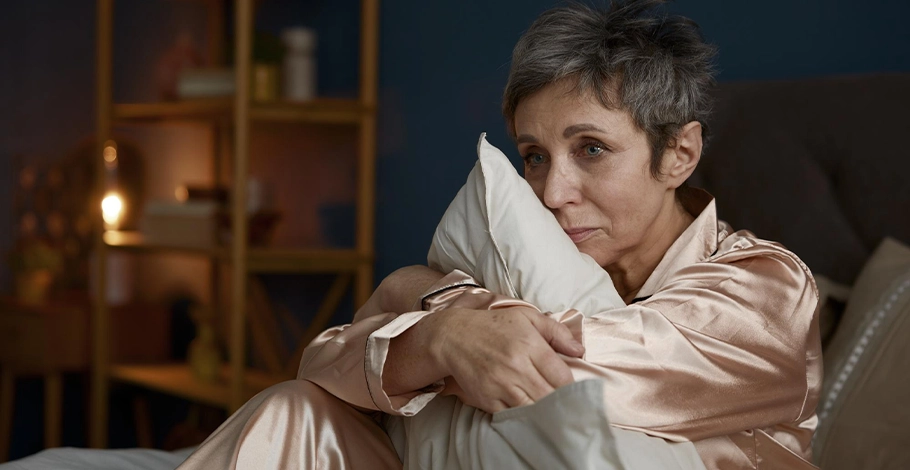
- Sleep disruption and insomnia: Being jolted awake by intense sweating makes falling back asleep genuinely hard. And repeated interruptions, night after night, create a cycle of chronic sleep deprivation.
- Chills after sweating: Once sweat cools on the skin, a rapid chill often follows. These cold flashes come from the same hormonal disruption that caused the heat in the first place.
- Fatigue: Weeks of broken sleep add up fast. The exhaustion affects mood, motivation, and physical energy in ways that compound quickly.
- Heart palpitations: A racing or irregular heartbeat often comes along with heat episodes. Usually harmless but disorienting, especially at 3 a.m.
- Difficulty concentrating: Sleep deprivation from night sweats directly affects cognitive function. Memory lapses and trouble focusing are common complaints during this period.
Insomnia
How to Manage Menopause Night Sweats
Lifestyle Changes
Managing your environment and daily habits is the most accessible place to start and for some women, it makes a real difference before any medical intervention is even needed.
Keep the bedroom cooler than usual. Temperatures between 60 and 67°F work well for most women dealing with night sweats. Switch to breathable, lightweight sleepwear made from natural cotton or moisture-wicking fabric. And use layered bedding instead of one heavy duvet, so you can adjust without fully waking up.
Cutting back on alcohol and caffeine, eating less sodium, and managing daily stress all lower how reactive your temperature regulation system is to begin with. Regular exercise is linked to fewer, less severe vasomotor symptoms over time.
Maintaining a healthy weight helps too body fat contributes directly to heat retention during episodes.
Medical Treatment Options
For women whose menopause night sweats are seriously disrupting sleep or quality of life, medical treatment is worth a real conversation with a healthcare provider.
Hormone therapy (HT) remains the most effective medical option for menopause-related night sweats. It stabilizes estrogen levels, which reduces the hypothalamus sensitivity that’s driving the temperature spikes in the first place. Mayo Clinic notes that the decision to use hormone therapy should be based on a full review of your individual health history, including risk factors for breast cancer and cardiovascular disease.
For women who’d rather not use hormone therapy, or for whom it isn’t appropriate, non-hormonal medications offer a proven alternative.
Certain antidepressants (SSRIs and SNRIs), gabapentin, and oxybutynin have all shown effectiveness at reducing hot flash and night sweat frequency in clinical research.
A healthcare provider can help identify the right fit based on your overall health profile.
When Should You See a Doctor?
Most menopause night sweats are an expected if unwelcome part of the transition. But some situations do call for medical evaluation.
Seek advice if night sweats happen frequently throughout the night, consistently prevent restful sleep, or don’t improve after several weeks of lifestyle adjustments.
Also see a doctor if sweating episodes come with fever, unexplained weight loss, or unusual pain these can point to causes unrelated to menopause that need proper diagnosis.
Night sweats that show up before age 40, or without other obvious menopausal signs, are also worth looking into. Addressing symptoms earlier rather than later tends to make them a lot easier to manage.
Conclusion
Menopause night sweats are common, genuinely disruptive, and often longer-lasting than most women expect. Research published in JAMA Internal Medicine found that frequent hot flashes and night sweats lasted a median of 7.4 years, with some women dealing with symptoms considerably longer than that.
That’s not meant to be discouraging. It’s meant to show why taking symptoms seriously and actually acting on them matters.
Cooling your sleep environment, figuring out your triggers, and making consistent lifestyle changes can reduce episodes in a meaningful way. And when that’s not enough, medical options are available and they work.
The goal is better sleep and a better quality of life, and both are genuinely within reach.
Frequently Asked Questions
How long do menopause night sweats typically last?
Longer than most women expect. Research from the SWAN study found that the median total duration of frequent hot flashes and night sweats was 7.4 years, with some women experiencing symptoms for over a decade. Symptoms that start earlier in perimenopause tend to last longer overall.
Can night sweats begin before menopause officially starts?
Yes. Night sweats frequently begin during perimenopause, which can start several years before periods actually stop. Estrogen fluctuates irregularly during this phase and that’s enough on its own to trigger episodes in many women.
Is hormone therapy the only effective treatment?
No. Non-hormonal medications including SSRIs, SNRIs, and gabapentin have solid evidence behind them. Lifestyle changes targeting sleep environment, diet, weight, and stress reduction can also meaningfully reduce symptom frequency for a lot of women.
Why do I feel cold right after a night sweat?
Once sweat evaporates from your skin, it cools the body fast. These cold flashes come from the same hormonal disruption that caused the heat in the first place. Keeping a light extra layer nearby helps you manage that rapid swing.
Should I worry about heart palpitations during night sweats?
Palpitations during hot flashes and night sweats are common and usually harmless, driven by the same sudden blood vessel changes as the heat episode itself. If they’re intense, frequent, or happen outside of heat episodes, mention it to a doctor.
Was this article helpful?
3 Sources
We review published medical research in respected scientific journals to arrive at our conclusions about a product or health topic. This ensures the highest standard of scientific accuracy.
[2] Menopause - Symptoms and causes - Mayo Clinic: https://www.mayoclinic.org/diseases-conditions/menopause/symptoms-causes/syc-20353397
[3]Duration of Menopausal Vasomotor Symptoms Over the Menopause Transition - PMC: https://pmc.ncbi.nlm.nih.gov/articles/PMC4433164/



 This article changed my life!
 This article was informative.
 I have a medical question.
 This article contains incorrect information.
 This article doesn’t have the information I’m looking for.