Medically Cited
Male pattern baldness, also called male androgenetic alopecia, is the most common form of hair loss in men. It usually appears as a receding hairline, thinning at the crown, or gradual loss across the top of the scalp. It is mainly driven by genetics and sensitivity to androgens, especially dihydrotestosterone, often shortened to DHT.
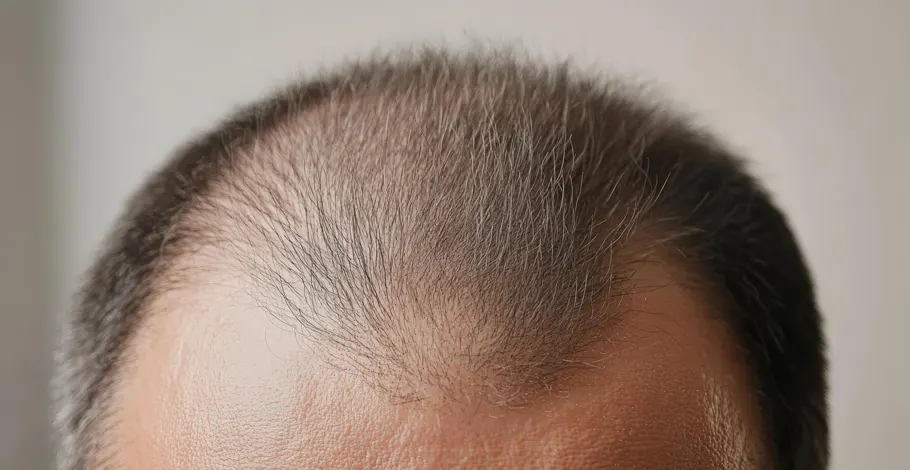
The encouraging part is that male pattern baldness can often be managed, especially when addressed early. Treatments such as topical minoxidil and oral finasteride are FDA-approved options for male pattern hair loss, and dermatologists may also discuss low-level laser devices, platelet-rich plasma, hair transplantation, and supportive scalp-care routines depending on the person.
Key Takeaways
- Male pattern baldness usually develops slowly over years.
- It often begins with temple recession, crown thinning, or both.
- Genetics and DHT sensitivity are the main drivers.
- It can start as early as the late teens or twenties.
- Early treatment usually gives the best chance of maintaining hair.
- A dermatologist can confirm the cause and guide the best treatment plan.
What is Male Pattern Baldness?
This condition is medically called androgenetic alopecia, is a type of patterned hair loss seen in men. This occurs as a result of a progressive shrinkage of the genetically sensitive hair follicles over time, which is known as follicular miniaturisation. The thicker terminal hairs become finer, shorter and lighter over time and the scalp appears thin in the affected areas.
It is recognised through the pattern. The initial signs of hair loss are often seen at the temples, at the top of the forehead, on the crown, or on top of the scalp. The sides and back of the scalp are typically not involved as much, allowing men to keep a horseshoe style even when the crown becomes quite thin.
It’s not just “hair falling out.” It’s a gradual transformation in the actions of the hair follicle. The length of the growth phase of the hair cycle shortens, the individual hairs get finer, and the amount of visible coverage gradually diminishes.
How Common Is It?
Male pattern baldness is a common condition. Male androgenetic alopecia is the most prevalent type of hair loss among men, and approximately 30-50% of men will develop it by the age of 50.
Furthermore, male pattern hair loss may start early – in the late teens or early twenties – though it sometimes is not as apparent until later in life. At the age of 50, over 50% of white men will have some degree of visible hair loss (thinning, balding, and/or hair recession).
Don’t underestimate the emotional aspect either. Many people see hair as a symbol of identity, confidence, style and age. Male pattern baldness can have a negative impact on self-esteem and body image, so it’s vital to consider emotional health as well as treatment options.
Male Pattern Baldness vs. Female Pattern Hair Loss
Male and female pattern hair loss are linked and tend to manifest themselves in different ways.
Thinning usually happens at the crown, hairline, temples and top of the scalp in men. The hairline can recede back into an “M” and the crown can become thinner until these two areas merge together slowly.
Pattern hair loss tends to be more diffuse in women. The part line may widen, and thinning is usually seen all over the top of the scalp – the front line is usually left intact. Women don’t often get as severe a balding as some men do with female pattern hair loss.
That’s important because treatment choices, hormonal testing, and cosmetic objectives can vary.
Symptoms and Early Signs
Male pattern balding tends to progress slowly. Maybe no pain, no redness, and no big flaking. Many men just observe that their hair no longer complements their style as before.
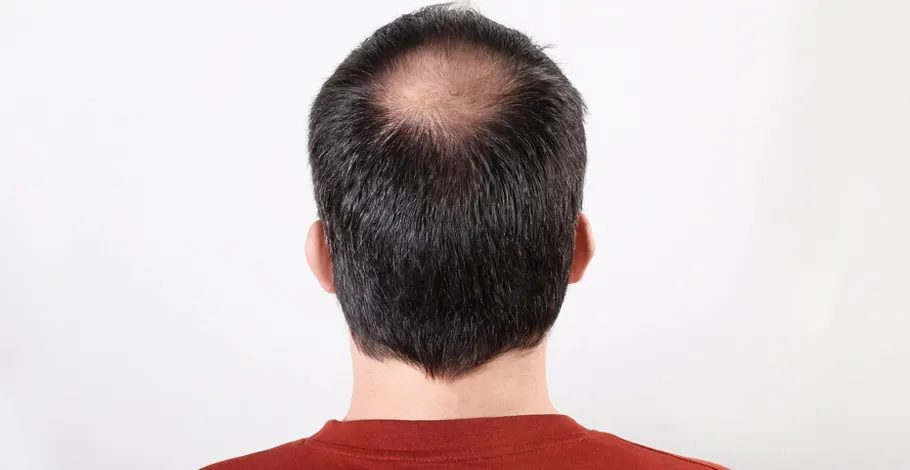
Symptoms and early signs
The first symptoms are:
- A gradually receding hairline.
- Hair loss in these areas.
- An elevated crown.
- Thinner hair in the crown area.
- Seeing more scalp in bright light or photos.
- Diminished or altered coarseness or strength of hair in some places.
- Backward progression of the front line of hair and thinning crown.
Some men may observe more hair in the shower or on their pillow, but often male pattern baldness is more of a gradual thinning.
One great way to make early detection of change is to take pictures under comparable lighting conditions on a monthly basis. It is less obvious to notice the hairline or crown changes from day-to-day self-examination than it would be from a series of photos.
Causes & Risk Factors
Male pattern hair loss is primarily caused by the combination of genes and androgen sensitivity. This is because DHT, an androgen that comes from testosterone, is extremely important in reducing sensitive hair follicles over time.
Family history is important but not always foretold. More than 190 genes have been identified that contribute to male pattern baldness, and they can be passed on from either parent, making people’s relatives have varying patterns, ages of onset and severity.
Some of the key risk factors are:
- Age: Risk increases as age goes up, but can start early after puberty.
- Patterned hair loss runs in the family: If a close family member has patterned hair loss, there is a greater risk of developing patterned hair loss.
- Genetic sensitivity: Even though the androgen level is normal, genetic sensitivity can cause hair loss in genetically sensitive follicles.
- Early onset: Hair loss that begins when people are younger tends to get worse over time.
Other forms of balding may be caused by lifestyle issues, including stress, diet, scalp inflammation, harsh grooming or illness, but these are generally not the cause of classic female or male pattern balding.
When to See a Dermatologist and How Doctors Diagnose It
It may be helpful to see a dermatologist if the hair loss is new, is occurring rapidly, is emotionally upsetting, or is hard to recognize. If thinning hair is localized, sudden, accompanied by redness, flaking, pain, severe itching or loss of hair from other parts of the body, it is particularly important to get checked.
Your dermatologist might ask you about any changes in your health, medications, diet, grooming habits, family history, stress, and the time of your hair loss. They can check the scalp and examine the nails, conduct a slight hair pull test, and use a dermatoscope to get a closer look at the scalp. If a deficiency, infection, hormonal imbalance or other cause is suspected, blood tests or scalp biopsy may be indicated.
In most men with the pattern of alopecia, the diagnosis is made by history, the pattern itself, and a normal-looking scalp.
Treatment Options
Treatment is personal. Some men want to slow thinning early. Some want visible regrowth. Some want a fuller-looking hairstyle. Others simply want clarity and reassurance. A good plan depends on age, pattern, goals, budget, tolerance, and consistency.
Topical Minoxidil
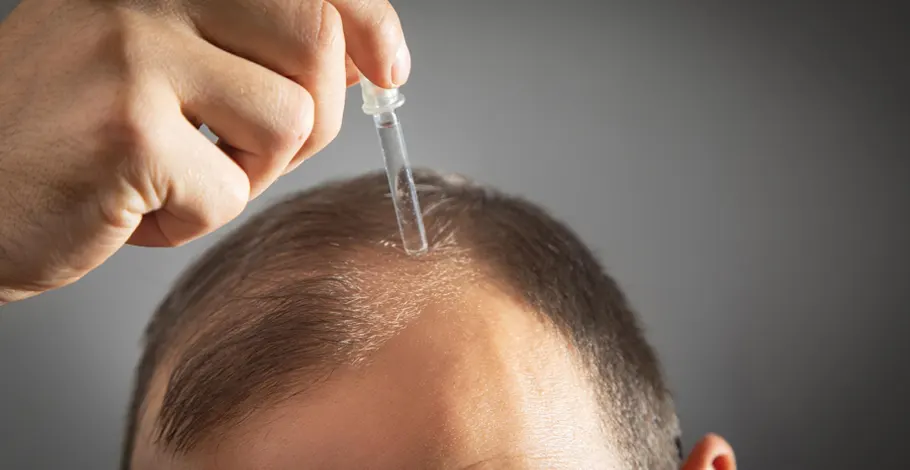
One of the most popular treatments for male pattern baldness is topical minoxidil. It is applied straight to the scalp, and can be bought over the counter in many countries. Research has revealed that minoxidil can actually slow down the rate of hair loss, promote hair growth and strengthen existing hair, but it is not likely to regrow hair that has already fallen out. The outcome can take 6 – 12 months and treatment should be continued for benefit.
Topical minoxidil
Oral Finasteride
Finasteride is a prescription drug that lowers the DHT level. Research has found finasteride to be effective in slowing additional hair loss.
Talk to a healthcare provider prior to starting finasteride, as there are potential benefits, suitability, and possible side effects. The FDA has also added that there is no FDA-approved topical finasteride formulation but there are FDA-approved oral finasteride products for specific uses.
Low-Level Laser Therapy
Some dermatologists may also talk about low-level laser therapy devices. These are basically light technology gadgets that will promote hair action inside the scalp. Low-level laser therapy is on the list of possible treatments that can be adjusted to meet the specific needs of each patient suffering from androgenetic alopecia.
Platelet-Rich Plasma
Also known as PRP, platelet-rich plasma is a platelet concentrate that is a component of a person’s own blood and is applied to the scalp under medical supervision.
PRP is typically not used as a first treatment choice, but rather as a clinical treatment and is best performed under the supervision of a trained medical practitioner.
Hair Transplantation
Hair transplantation can be an option when hair loss is more established and donor hair at the back or sides of the scalp is suitable. The goal is to move follicles from fuller areas to thinning areas. It can create natural-looking improvement when performed well, but it requires careful planning, realistic expectations, and often ongoing medical maintenance to protect existing hair.
Scalp and Hair Care Support
Healthy hair care will not reverse inherited follicle sensitivity, but it can help protect the hair you have. It is recommended to choose products suited to hair type and washing based on how oily or dry the scalp and hair are. Gentle handling, treating dandruff or scalp irritation, and avoiding unnecessary breakage can all support better-looking hair.
Can It Be Prevented?
Male pattern baldness is a genetic condition that can’t be prevented. Medical treatments can help to maintain, improve and optimise hair growth, but hereditary hair loss can’t be prevented.
It is most important to start treatment with evidence-based treatments as early as possible after changes are noticed, as this maximizes the chances of follicles responding to treatment. A supportive regimen is also helpful: Shield the scalp from the sun when hair is sparse, steer clear of harsh pulling or tight styles, combat dandruff or scalp inflammation, consume sufficient amounts of protein and important nutrients, and consult a dermatologist before adopting drastic measures.
The objective is not to be perfect. The aim is to maintain a healthy scalp, do as much as possible and ensure a method that is sustainable.
Conclusion
Male pattern baldness is common, gradual, and deeply personal. It is caused mainly by genetics and androgen sensitivity, not by poor grooming or lack of effort. For many men, the first signs are subtle: a changing hairline, a thinner crown, or hair that no longer has the same density.
The good news is that there are real options. Topical minoxidil and oral finasteride are established treatments, and dermatologists may also recommend additional approaches such as laser devices, PRP, or hair transplantation depending on the stage and goals. The best results usually come from early evaluation, consistent use, and realistic expectations.
Hair changes can affect confidence, but they do not have to define it. Whether someone chooses treatment, a new hairstyle, a transplant plan, or simply a more confident way to wear thinning hair, the right choice is the one that supports both scalp health and self-confidence.
Frequently Asked Questions
What age does male pattern baldness usually start?
It can start any time after puberty. Some men notice early changes in their late teens or twenties, while others do not see visible thinning until later adulthood.
Is male pattern baldness inherited from the mother’s side?
Not only from the mother’s side. It can be inherited from either or both parents, and many genes are involved.
Can hair grow back after male pattern baldness?
Some men see regrowth with treatment, especially when they begin early. However, treatments are usually better at slowing progression and improving density than restoring a full head of hair.
Is minoxidil enough on its own?
It can be helpful, particularly for early hair loss, but some men respond better when it is part of a broader dermatologist-guided plan.
Does finasteride work for everyone?
No treatment works for everyone. Finasteride slows further hair loss in many men who take it consistently.
How long before treatment results appear?
Minoxidil may take 6 to 12 months to show visible results. Finasteride also requires long-term daily use, and improvement tends to build gradually rather than immediately.
Should I see a doctor before starting treatment?
Yes, especially if the hair loss is sudden, patchy, itchy, scaly, painful, or emotionally distressing. A dermatologist can confirm whether it is male pattern baldness or another type of hair loss.
Was this article helpful?
2 Sources
We review published medical research in respected scientific journals to arrive at our conclusions about a product or health topic. This ensures the highest standard of scientific accuracy.
[2] Finasteride in the treatment of men with androgenetic alopecia. Finasteride Male Pattern Hair Loss Study Group : https://pubmed.ncbi.nlm.nih.gov/9777765/







 This article changed my life!
 This article was informative.
 I have a medical question.
 This article contains incorrect information.
 This article doesn’t have the information I’m looking for.