Medically Cited
Introduction
Nearly half of surveyed CBD consumers in England, Wales and Northern Ireland cannot say how much cannabidiol they typically consume in a day. That finding raises an important question: why is CBD intake so difficult to track when products often display their strength in milligrams?
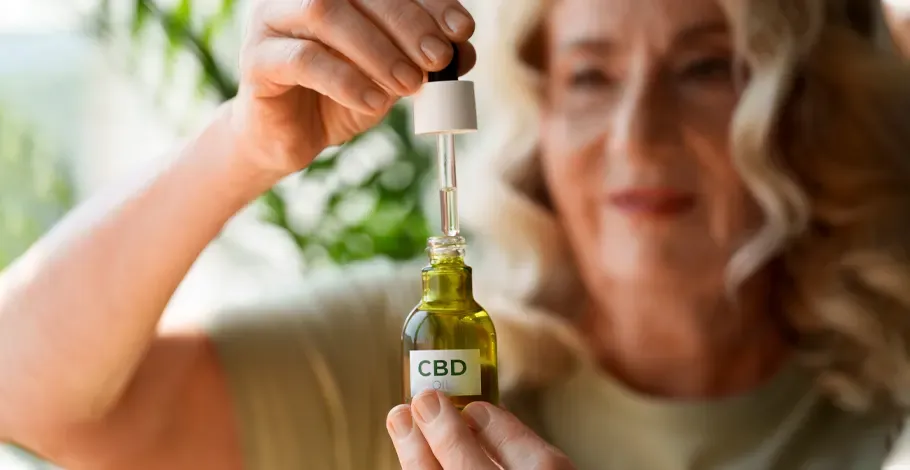
Research from the UK’s Food Standards Agency (FSA) highlights a gap between having dosage information available and understanding what those numbers actually mean. The distinction matters, particularly when consumers use different CBD products or rely on packaging to judge their intake.
What the Latest UK Consumer Survey Reveals
In December 2025, the FSA surveyed 2,171 adults, including 210 respondents who reported consuming CBD within the previous six months.
Among those CBD consumers:
- 44% did not know how much CBD they typically consumed in a day.
- 32% reported consuming between 1 and 10 mg.
- 24% reported consuming more than 10 mg.
The survey also found that 48% relied on packaging instructions to determine a suitable amount, while 21% said dosage was not something they considered.
These findings reveal a potential consumer knowledge gap, although they do not establish why people were uncertain about their intake. The figures are self-reported and come from a relatively small subgroup, so they should not be treated as precise measurements of CBD consumption across the entire UK.
Why CBD Intake Is Harder to Calculate Than It Appears
CBD labels often display quantities in milligrams, but these figures don’t always make daily intake easy to understand. Differences in concentration, serving size and product format can make it difficult to determine how much CBD someone actually consumes.
Total CBD Content Is Not the Same as a Serving
Consider a hypothetical 10 ml bottle containing 1,000 mg of CBD.
That represents a concentration of 100 mg per millilitre. If someone measures out 0.1 ml, that portion theoretically contains 10 mg of CBD.
The calculation is straightforward:
- 1,000 mg ÷ 10 ml = 100 mg/ml
However, a label displaying only “1,000 mg CBD” does not immediately tell consumers how much is present in an individual serving.
The distinction becomes particularly relevant when comparing product formats.
Online retailers, including the CBD brand Mama Kana, offer different types of CBD products, such as oils and other preparations. Because cannabinoid quantities may be displayed differently across these formats, consumers need to distinguish between total CBD content, concentration and the amount contained in an individual serving.
Understanding these differences is especially important when comparing products with different strengths or serving sizes.
Different Formats Present Different Challenges
| CBD format | Information to check |
|---|---|
| Oil | CBD concentration per ml and volume measured |
| Capsules | CBD content per capsule |
| Drinks | CBD content per bottle or serving |
| Edibles | CBD content per individual piece or portion |
Someone consuming more than one CBD-containing product on the same day must also consider their combined intake. The amount listed on a single package does not necessarily represent their total daily consumption.
For additional background, Consumer Health Digest provides an overview of CBD dosing and possible side effects.
What Does the UK’s 10mg CBD Guidance Mean?
The FSA recommends that healthy adults limit their consumption of CBD from food to 10 mg per day.
This is precautionary guidance based on available safety evidence, not a recommended amount that people should aim to consume. It also does not guarantee that CBD is risk-free below that level.
According to the FSA’s official consumer advice on CBD, certain groups should avoid consuming CBD, including children, people who are pregnant or breastfeeding, and those trying to conceive. People taking medication should seek advice from a healthcare professional before considering CBD.
The agency also highlights concerns about potential long-term effects, including effects on the liver and thyroid.
Understanding actual intake is therefore relevant to informed decisions about exposure, rather than simply comparing product strengths.
How to Understand CBD Quantities More Accurately
Three practical checks can help consumers interpret product information:
- Identify the total CBD content. Establish whether the milligram figure refers to the entire container or one serving.
- Check the concentration. For oils, look for mg/ml rather than relying exclusively on percentages.
- Consider combined consumption. Account for CBD from different products used during the same day.
If a product does not provide enough information to determine its CBD content per serving, guessing is not a reliable alternative. Consumers can request clarification from the manufacturer or retailer.
Importantly, calculating the quantity on a label does not independently verify the product’s actual cannabinoid content or establish its safety.
Conclusion: Clearer Information Matters More Than Bigger Numbers
The FSA’s findings highlight an overlooked aspect of CBD consumption: understanding the amount being consumed is not necessarily as simple as reading the label.
Milligrams, concentrations and serving sizes describe different things. Without understanding how they relate, consumers may struggle to interpret their daily intake accurately.
Clearer product information, basic measurement literacy and awareness of official safety guidance can help people make better-informed decisions. The starting point is simple: know what the numbers represent before relying on them.
Was this article helpful?






 This article changed my life!
 This article was informative.
 I have a medical question.

 This article contains incorrect information.
 This article doesn’t have the information I’m looking for.