

 Medically Cited
 2 Reviews
  Specs
Specs Ask a Question
 Write a Review
In This Review
Overview
Many people who struggle with Tinnitus also struggle against the peripheral effects. Tinnitus is simply a ringing or din in the ear that is constant or near-constant. But the peripheral effects can detrimentally affect your sleep quality, your concentration, and your quality of life.
Lenire is a unique product because it is not a supplement, capsule, liquid, or anything like that. Instead, it is a dual-mode system that involves auditory stimulation combined with electrical stimulation that is supposed to rewire the nerve impulses involved with sending sound signals caused by Tinnitus.
So essentially, Lenire is supposed to work by helping the user become less aware of the sounds that their ears are making as a result of Tinnitus. As this is a rather new technology, we wanted to review it in full for our readers. Will Lenire help with your Tinnitus? Let’s find out.
What Is Lenire?
Again, it’s very important to note that Lenire is not a supplement. Rather, it is a device that is supposed to provide electrical stimulation and auditory stimulation that alternates nerve activity, which changes the way parts of the body respond to certain conditions like Tinnitus.
So essentially, Lenire is a system that may help rewire your brain and nerves to treat Tinnitus in a different way. In fact, the makers of Lenire never make the claim that their system will cure Tinnitus or even reduce it. Instead, they claim that the Lenire system will simply help you pay less attention to Tinnitus.
The Lenire system works via a consultation at a clinic. The service is also administered at approved clinics. The makers of Lenire also claim that the treatment has been FDA-approved. For the most part, people use Lenire to reduce the disruptive nature of their Tinnitus symptoms.
How Does Lenire Rate According To Our Experts?
Here is how our team rated the Lenire system
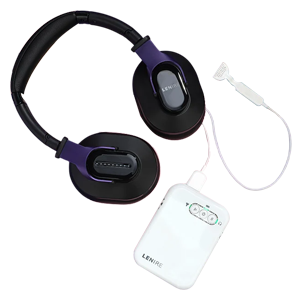 Lenire


Brand Highlights
- They offer scientific evidence regarding the technology they use.
- They work with clinics at the local level.
- They specialize in Tinnitus treatments.
Pros
- It’s a unique Tinnitus treatment
- Can be used by men and women
- Utilizes new technology
Cons
- The system involves electrical stimulation via the tongue
- Some users may find the system uncomfortable
- Not everyone will qualify for Lenire treatment
- You can only receive the treatment at a clinic
- There may not be a Lenire-approved clinic near you
Who Is The Manufacturer Of Lenire?
The company behind this system claims that they have done extensive research into the safety and efficacy of its system. The company says on its official website that they have conducted three clinical trials that validate its claims.
They have also claimed that licensed clinicians have supported their treatments and back up the claims made about the system. They make the treatment available through a network of approved clinics.
How Does Lenire Work?
The way that Lenire is supposed to work is very intriguing, as it relies on a relatively new treatment called bimodal neuromodulation. Bimodal neuromodulation is a type of treatment that involves two kinds of stimuli for the purpose of changing the way the brain processes signals from conditions like Tinnitus.
The Lenire system is supposed to work through this bimodal neuromodulation system by sending electrical impulses through the tongue that are supposed to essentially rewire the brain. Secondly, there is auditory stimulation delivered by a set of headphones that play scientifically developed sounds that are supposed to change the way your ears hear Tinnitus noise pollution.
The makers of Lenire claim that their system is more effective than auditory stimulation alone, which has been used by some to reduce Tinnitus symptoms for some time now. However, this is a relatively new technology that certainly needs longer-term testing to confirm its efficacy.
Method Of Action Of Lenire
In the following section, we will talk about what science has said about the main method of action of the Lenire system:
Bimodal Neuromodulation
The particular Bimodal Neuromodulation used in the Lenire system involves electrical stimulus via the tongue and auditory stimulus delivered by a set of headphones that feed sound directly into the ears. The goal of this kind of treatment, as it pertains to Tinnitus, is to minimize the annoyance of Tinnitus sounds for the user.
It should be noted, though, that at the current stage of development, Bimodal Neuromodulation is still very much considered an experimental treatment. Though there has been some promising research on the subject, the treatment is still in its infancy and requires more testing. The National Institutes of Health has stated that:
Experimental approaches using different Neuromodulation techniques have demonstrated some promising results in reducing Tinnitus-related complaints, but have mostly failed in terms of a complete extinction of the Tinnitus percept.
From this quote, we can see that Bimodal Neuromodulation may improve the perceived level of noise pollution caused by Tinnitus but might not actually do anything to reduce the frequency or severity of the symptoms. But how does Bimodal Neuromodulation work on a practical level?
For that, we turn to the following quote from the American Association of Retired Persons, taken from a report on the function of Bimodal Neuromodulation:
Bimodal Neuromodulation forces the brain to pay attention to other sounds, driving attention away from Tinnitus.
So this type of treatment was never meant to reduce overall Tinnitus symptoms or even improve the health of the ears. Instead, it just teaches your brain how to pay less attention to Tinnitus symptoms.
Furthermore, the National Institutes of Health studied the effects of Neuromodulation on Tinnitus and had the following to say about it:
The stimulation was well tolerated, but did not lead to a clinically significant improvement in Tinnitus complaints.
So while this type of treatment may be safe, the likelihood that it will actually improve Tinnitus conditions is minimal.
How To Use Lenire?
The Lenire system can only be administered by licensed clinicians at approved clinics selected by Lenire.
Benefits Of Lenire
- Reduced Tinnitus Symptoms: While Lenire won’t actually reduce objective Tinnitus symptoms, the claim is that it will help your brain pay less attention to them.
- Non-invasive Treatment: The Lenire system is being hailed as a quick, comfortable, and non-invasive treatment for Tinnitus. Still, the efficacy of the treatment itself is still in question.
Side Effects Of Lenire
While the Lenire treatment is relatively new, it has been held to be generally well-tolerated. You should still ask your physician or specialist if Lenire is right for you.
Safety Of Lenire
There are no injections or questionable ingredients involved in the Lenire system. However, anyone considering using the Lenire system should discuss it at length with their healthcare practitioner.
Lenire Price
The price for the Lenire treatment will vary depending on which clinic you go to, the nature of your treatment, and your health insurance coverage.
What Do The Lenire Reviews Say?
The only Lenire reviews available come from the official company website. Needless to say, they are all positive, but they may have been filtered to make the system look more favorable to prospective users. Here’s one review taken from the official website:
The Lenire Device is a powerhouse of treatment for me.
Lenire Review – FAQs
Q: What is Bimodal Neuromodulation?
A: Bimodal Neuromodulation is a system of using two kinds of stimuli to alter the way the brain perceives certain signals.
Q: Is Lenire effective?
A: Some people have said that the Lenire system helped improve their Tinnitus symptoms. But it will not work for everyone.
Q: How long before I see results from Lenire?
A: It is claimed that most Lenire users will experience relief after 12 weeks. Your experience may vary.
Q: Where can I buy Lenire?
A: Lenire is available for purchase on popular online platforms such as Amazon and Walmart. Both retailers offer a convenient shopping experience.
Lenire Review – Conclusion
The Lenire system is supposed to work to reduce the level of disruption caused by Tinnitus symptoms. So it may help to teach your brain how to simply pay less attention to the noises generated by Tinnitus.
However, not everyone who wants to try Lenire will qualify for the treatment. Some may find that there is no Lenire clinic near them. Still others may find that the Lenire system simply doesn’t work for them.
That’s why we recommend taking a look at other kinds of treatment or a natural supplement before diving in with Lenire.
Product reviews are provided for informational purposes only and reflect solely the views and opinions expressed by the contributors and not those of Consumer Health Digest. We do not verify or endorse any claims made in these reviews. Please read the full product reviews disclaimer. *All individuals are unique. Your results can and will vary.
2 Customer Reviews for Lenire
Customer Reviews & Ratings
2.6 out of 5Review this Product
Leave a review and share your experience with others.
Write a Review
 Ask a Question
Have a Question? Please Tell Us What We Are Missing Here!
Upload Your Video Review
How to record video?
- Prepare your device, ensuring it's charged and has enough storage.
- Find a quiet, well-lit space with natural or good indoor lighting.
- Position your device and frame yourself in the center with head and shoulders visible.
- Introduce yourself, the product, and why you chose it.
- Share your experience, including positives, negatives, and recommendations.
- Test audio and video to ensure they're working properly.
- Keep the video concise, aiming for 1-3 minutes.
- Review your recording for quality and clarity.
- Upload your video.
Video recording details:
- Video duration: 1 - 3 minutes
- Video Quality: Full HD (1080p and above)
- Video format: MP4
- Audio Quality: Clear without background noise
3 Sources
We review published medical research in respected scientific journals to arrive at our conclusions about a product or health topic. This ensures the highest standard of scientific accuracy.
[2] Neuromodulation for Tinnitus treatment: an overview of invasive and non-invasive techniques. Link: https://pmc.ncbi.nlm.nih.gov/articles/PMC6380997/
[3] Non-Invasive Neuromodulation for Tinnitus. Link: https://pmc.ncbi.nlm.nih.gov/articles/PMC7364190/

 This article changed my life!
 This article was informative.
 I have a medical question.
 This article contains incorrect information.
 This article doesn’t have the information I’m looking for.










Teagan F.
Aspen Calloway