Medically Cited
There’s a version of “date night” that skips the candlelit table and the movie theater; it’s sweat, a little friendly competition, and maybe a few laughs when one of you loses balance mid-squat.
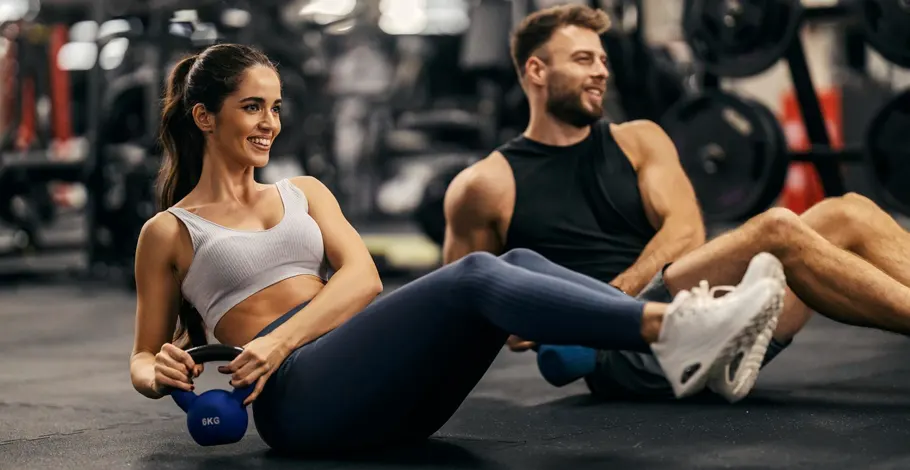
Working out together isn’t just about burning calories side by side, honestly. It’s what turns a relationship into something closer to a team sport. And that’s the real point you show up for each other on the hard reps the same way you’d show up for anything else that actually matters.
Here’s the good part, though you don’t need matching gym memberships or the same fitness level for any of this to work. One of you might be training for a 10K while the other’s just getting back into movement after a long break, and that’s genuinely fine.
Couple workouts are flexible by nature; you adjust pace, intensity, and equipment to fit where each person actually is, not where you think you should be.
Key Takeaways
- Exercising together builds physical fitness and emotional connection at the same time two goals moving in one direction.
- You don’t need a gym or pricey equipment; a lot of these workouts use nothing but body weight.
- Workouts can be scaled individually, so mismatched fitness levels really aren’t a dealbreaker.
- Variety keeps things interesting; mix cardio, strength, and flexibility sessions throughout the week.
- Communication and proper form matter more than speed or intensity, especially in the beginning.
10 Best Couple Workouts
1. Partner Circuit Workout
Set a timer for five-minute intervals and rotate through squats, push-ups, lunges, and planks. No equipment needed, just your body weight and a bit of competitive spirit. Turn it into a mini contest to see who racks up more reps before the timer runs out.
And honestly, there’s real science behind that friendly rivalry. Research on the “Köhler effect” found that people push harder and keep effort up longer when their performance is tied to a partner’s, compared to working out solo.
2. Walking or Running Together
Simple, free, and surprisingly bonding, that’s walking or running together in a nutshell. Beginners can start with brisk walks and build toward light jogging intervals, while more experienced runners push the pace. Either way, you get fresh air, conversation, and a shared sense of progress.
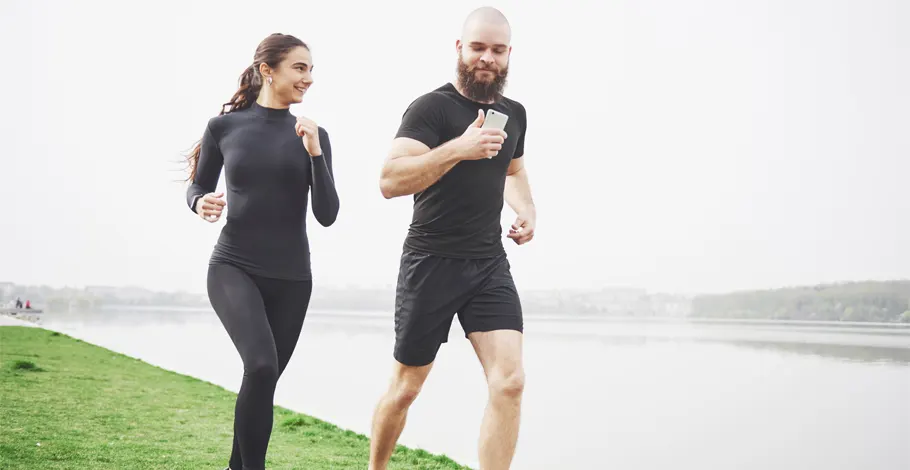
Walking or Running Together
It’s also one of the easiest ways to actually stick with a routine, and that matters more than people think. A study following older married couples through a walking program found that those who attended sessions together kept up their walking habit for months longer than those who went it alone.
3. Hiking
Trade the treadmill for a trail. Hiking is what makes uneven fitness levels a non-issue; pick a moderate trail and let the terrain do the challenging for you. Want more intensity? Add a weighted vest or choose a steeper route.
4. Medicine Ball Partner Pass
Stand a few feet apart, knees soft, core engaged. Pass the ball side to side with controlled, deliberate throws rather than fast tosses. This one’s sneaky effective for the obliques and core, and it forces you to stay locked into your partner’s rhythm.
5. Dance or Salsa
Not every workout needs to feel like a workout. Salsa gets your heart rate climbing while sneaking in coordination and rhythm, and let’s be honest a lot of eye contact and laughing at missed steps. It’s basically cardio in disguise.
6. Cycling Together
Whether you’re pedaling through hilly outdoor terrain or sitting on stationary bikes side by side, cycling is what makes matching effort levels easy while you still get a solid aerobic session in. And outdoor rides add the bonus of new scenery to explore together.
7. Strength Training
Squats, lunges, rows, presses pick your combination and work through it together. Having a partner nearby means built-in spotting, encouragement when the last rep feels genuinely impossible, and someone to make sure your form doesn’t slip when you’re pushing weight.
Training as a team, taking turns coaching each other through sets is the same principle behind the Exercising Together© program, a partnered strength-training model shown to support both physical health and relationship quality in couples who train side by side.
8. Partner Yoga
This is where flexibility meets trust. Start with simple, grounded poses: seated spinal twists and double forward folds before attempting anything that involves lifting or balancing on each other. Partner yoga is what builds both physical stability and a genuine sense of connection.
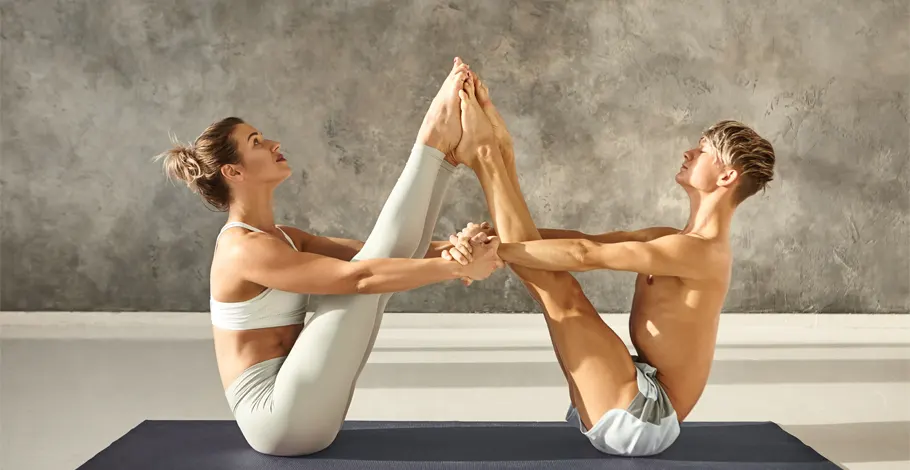
Partner Yoga
9. Resistance-Band Exercises
Bands are cheap, portable, and versatile. Try banded rows facing each other, or squats with the band anchored under both sets of feet. It’s low-impact but still builds real strength, and that’s exactly what makes it such a solid option on recovery days.
10. Synchronized Squats
Face your partner, hold hands or a light object between you for balance, and squat down together in rhythm. It sounds simple, and it is, but staying synced actually takes more coordination than people expect.
How to Choose the Right Couple Workout
Match the workout to what you’re actually after.
Chasing cardio? Running, cycling, or dance will get your heart rate up the fastest.
Want strength? Weight training and resistance bands build muscle over time.
After flexibility and calm? Partner yoga’s your best bet.
Brand new to exercise? Walking, bodyweight circuits, and synchronized squats are gentle, no-equipment starting points that won’t overwhelm either of you.
20-Minute Beginner Couple Workout
Warm-Up (3 minutes): March in place, do some arm circles, and add light bodyweight squats to get the blood flowing.
Workout (12 minutes): Rotate through four exercises, squats, push-ups (knee or full), walking lunges, and plank holds, spending 90 seconds on each and resting 30 seconds between. Repeat the full circuit twice.
Cooldown (5 minutes): Gentle stretching for the hamstrings, shoulders, and lower back, finishing with a few slow, shared breaths.
Safety Tips
Form matters more than speed; slow down before you lose it. Choose resistance and pace that suit your current fitness, not your partner’s. Talk to each other throughout; if something feels off, just say so. Build intensity gradually rather than jumping in at full effort. And if you feel sharp pain, dizziness, or anything that doesn’t sit right, stop the session and rest.
FAQs
Do we need a gym membership to start?
Not at all. Several of these workout circuits, walking, and synchronized squats need nothing but a bit of floor space.
What if our fitness levels are really different?
That’s completely normal, and most of these workouts flex around it. Hiking and cycling especially let each partner set their own pace.
How often should we work out together?
Two to three times a week is a solid starting point, with rest days or lighter activity worked in between.
Is partner yoga safe for beginners?
Yes, as long as you start with simple, grounded poses and skip anything involving lifting until you’re both comfortable.
Can these workouts replace a full fitness routine?
They’re a great foundation, but pairing them with individual training on off days rounds things out even more.
Conclusion
At the end of the day, the “best” couple workout is simply the one you’ll both actually stick with. Whether that’s a sweaty circuit in the living room, a quiet hike through the woods, or a few clumsy salsa steps in the kitchen, what matters is that you’re showing up together.
So pick a few options from this list, try them out, and build a rhythm that fits your life, not someone else’s idea of what fitness should look like.
Was this article helpful?
3 Sources
We review published medical research in respected scientific journals to arrive at our conclusions about a product or health topic. This ensures the highest standard of scientific accuracy.
[2]Does attending an exercise class with a spouse improve long-term exercise adherence among people aged 65 years and older: a 6-month prospective follow-up study - PubMed : https://pubmed.ncbi.nlm.nih.gov/28760148/
[3]Study protocol for the Exercising Together© trial: a randomized, controlled trial of partnered exercise for couples coping with cancer - PubMed: https://pubmed.ncbi.nlm.nih.gov/34461975/







 This article changed my life!
 This article was informative.
 I have a medical question.

 This article contains incorrect information.
 This article doesn’t have the information I’m looking for.