Medically Cited
Introduction
Most people reach for a face serum with a few simple goals in mind: skin that feels hydrated, looks a little brighter, and stays smooth. The tricky part is that the market is crowded with new products, and not all of them make it easy to tell what you are actually buying or whether it suits your skin.
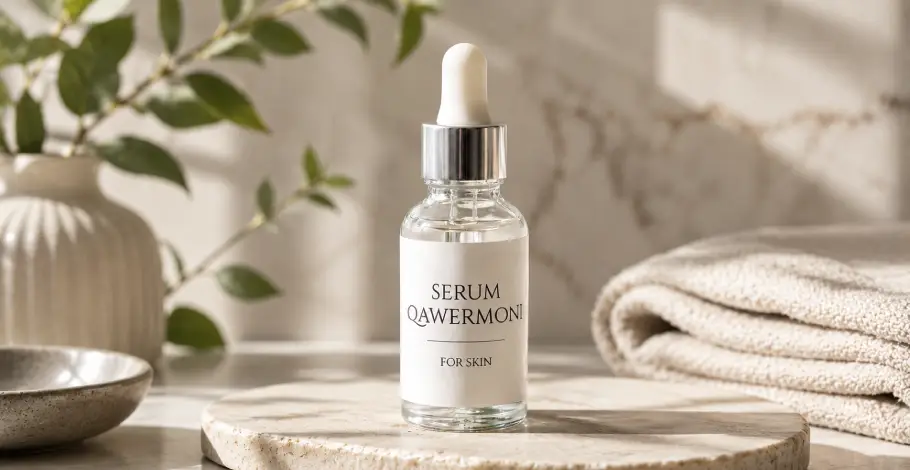
Serum Qawermoni for Skin is one of the newer names getting attention in that space. It is promoted for hydration, glow, and a smoother finish, and its main selling point is a light, fast-absorbing texture that skips the heavy feel of thicker creams. The catch is that the full ingredient list is not clearly available, which makes it harder to judge on facts alone.
This review breaks down what the serum is meant to do, the ingredients worth checking for, its possible benefits, key safety points, and whether it is worth trying.
What Is Serum Qawermoni for Skin?
Serum Qawermoni for Skin is a lightweight facial serum promoted for hydration, brightness, and smoother-looking skin. Serums like this are thinner than creams and absorb quickly, which is part of the appeal for anyone who wants a simple, non-greasy step in their routine.
The problem is that its exact formula is not clearly established. There is a lot of discussion about this product online, but there is limited information about the ingredients, concentrations, and independent testing of the product. It doesn’t mean it’s unsafe, but shoppers should approach the glow and dark-spot claims cautiously and not believe that a serum can cure pigmentation, acne or fine lines without any other products.
It is best viewed as general skincare support, not a proven treatment, until clearer labeling and testing are available.
Pros & Cons
Pros
- Lightweight, fast-absorbing texture
- Simple to add to a daily routine
- Non-greasy finish suits most skin types
Cons
- The full ingredient formula is not clearly verified
- Concentrations and testing details are limited
- Results depend entirely on unconfirmed ingredients
- Independent feedback is limited
Key Ingredients to Check
With any serum, the ingredients are what really matter, and this one has most of its ingredients hidden. The label doesn’t tell you much, so it’s good to know what ingredients are effective. This way, you will have something to compare the bottle’s claims to.
Hyaluronic acid
Helps the skin hold on to moisture, which can make it look softer, fuller, and less dry with regular use.
Niacinamide
A form of vitamin B3 that is often used to support the skin barrier and even out uneven tone.
Vitamin C
An antioxidant commonly used to brighten dull skin and reduce the look of dark spots over time.
Retinol or peptides
Linked to firmer-looking skin and can help soften the appearance of fine lines with steady use.
Aloe vera
A gentle ingredient known for soothing sensitive skin and calming minor redness.
Before you buy, check that the packaging clearly shows the ingredient list, who makes it, and an expiry date. If those basics are missing, it is fair to be a little careful about what you are actually getting.
Benefits of Serum Qawermoni for Skin
Serum Qawermoni for Skin is sold as an easy addition to your daily routine, but what you get out of it really depends on its ingredients and how often you use it.
- May Keep Skin Hydrated: The main draw is moisture. Used regularly, it may help your skin feel softer and stay comfortable rather than dry and tight.
- May Give Skin a Brighter Look: It is promoted to freshen up dull, tired skin over time, so your face may look a little more awake and even.
- May Smooth Rough Texture: With steady use, it may help your skin feel smoother to the touch, though this kind of change usually shows up slowly.
- May Suit a Simple Routine: Because it is light and absorbs fast, it fits easily into your day and layers well under a moisturizer.
- May Soften Fine Lines: It is marketed to support firmer-looking skin, which can make small lines appear a bit less noticeable.
How to Use Serum Qawermoni for Skin
Getting the most out of any serum comes down to using it the right way, and this one is simple enough to fit into a normal routine. Here is a basic step-by-step:
- Clean your face: Wash with a gentle cleanser and pat your skin dry, since serums absorb better when your face is fresh.
- Apply a small amount: A few drops is enough. Press it gently across your face, avoiding your eyes, lips, and any broken or irritated areas.
- Seal it in: Follow with your moisturizer to hold in the serum, then add sunscreen if it is daytime.
If you are new to serums, start with a couple of times a week and use it more often once your skin adjusts. Serums with stronger ingredients like retinol are usually better at night, and a quick patch test before your first use is always worth it.
Common Mistakes to Avoid
Skincare results build slowly, so a few simple habits make a real difference with any serum:
- Using too much when a few drops is enough.
- Skipping a patch test before applying it everywhere.
- Mixing too many strong actives at once.
- Applying it on broken or irritated skin.
- Expecting results in days instead of weeks.
- Forgetting sunscreen during the day.
Most serums need consistent use for several weeks before any visible change appears, so patience matters more than layering on extra product.
What to Avoid Mixing It With
Pairing a serum with the wrong products often causes more irritation than benefit. Be cautious about combining it with:
- Exfoliating acids (AHAs or BHAs), which can leave skin raw.
- Retinol, since doubling up often causes dryness and peeling.
- Benzoyl peroxide, which can dry skin and cancel out some actives.
- Strong vitamin C, which may sting when layered with other potent ingredients.
If the serum already has active ingredients, adding more can weaken your skin barrier. Introduce one active at a time and space them across your day.
Possible Side Effects of Serum Qawermoni for Skin
Like most serums, it can cause side effects, though how your skin reacts really depends on the person and what the formula holds. For a lot of people, a new serum brings nothing more than a short settling-in phase. You might notice a bit of dryness, some light redness, or the odd breakout at first, and these usually fade as your skin gets used to it.
The reactions worth keeping an eye on are the ones that stick around or get worse. Stinging that does not calm down, itching that keeps going, or skin that feels tight and sore is a sign to stop and give it a rest. Less often, things like swelling, a spreading rash, or hives can mean an allergic reaction, and those are better checked by a professional than ignored.
Is Serum Qawermoni for Skin Safe?
If used wisely, a light serum applied to clean skin is low risk for most healthy adults and this serum probably is. However, when the label does not specify the ingredients or their potency, it can be difficult to determine safety.
Extra care should be taken by some. If you have highly sensitive skin, suffer from skin diseases such as eczema or rosacea, or are already using prescription skin care products, you may want to consult your dermatologist before introducing this product to your skin. The same applies if you are pregnant or breastfeeding – some actives should be avoided at that time. In this situation, it’s just better to let a pro take the advice.
FAQs
Q: Is the full ingredient list for Serum Qawermoni for Skin available?
A: Clear, verified details are hard to find, which makes it difficult to know exactly what the serum contains before you use it.
Q: Can it replace a moisturizer?
A: A serum and a moisturizer do different jobs. The serum adds lightweight benefits, while the moisturizer locks them in and keeps skin hydrated.
Q: How soon might I see a difference?
A: Skincare rarely works overnight. If it suits your skin, changes tend to appear gradually over several weeks of steady use.
Q: Is it fine to use morning and night?
A: A gentle serum may sit fine twice a day, though stronger actives like retinol usually work better in the evening only.
Q: Should sensitive skin avoid it?
A: Caution helps more than avoidance. With the formula unconfirmed, a patch test first shows how your skin is likely to respond.
Serum Qawermoni for Skin Review – Conclusion
Serum Qawermoni for Skin offers a lightweight, fast-absorbing format that fits easily into a simple daily routine. If it contains proven ingredients like hyaluronic acid, niacinamide, or vitamin C, it may support hydration, brightness, and smoother-looking skin over time.
The primary worry is transparency. There is no easy proof of the complete formula, little independent information about the composition of the product or its brand and little information about whether the product contains concentrations of ingredients. That makes it difficult to guarantee results as it’s totally possible that it’s no advantage whatsoever.
If you read labels attentively and have realistic expectations, it ought to be worth a try. If people prefer to examine it with known components and details, they might prefer to compare it with better-established serums first.
Was this article helpful?
6 Sources
We review published medical research in respected scientific journals to arrive at our conclusions about a product or health topic. This ensures the highest standard of scientific accuracy.
[2] Nicotinic acid/niacinamide and the skin - PubMed https://pubmed.ncbi.nlm.nih.gov/17147561/
[3] Efficacy of topical vitamin C in melasma and photoaging: A systematic review - PubMed https://pubmed.ncbi.nlm.nih.gov/37128827/
[4] A double-blind randomized study comparing the association of Retinol and LR2412 with tretinoin 0.025% in photoaged skin - PubMed https://pubmed.ncbi.nlm.nih.gov/25603890/
[5] The Clinical Evidence-Based Paradigm of Topical Anti-Aging Skincare Formulations Enriched with Bio-Active Peptide SA1-III (KP1) as Collagen Modulator - PMC https://pmc.ncbi.nlm.nih.gov/articles/PMC9760069/
[6] Aloe vera: A Medicinal Plant Used in Skin Wound Healing - PubMed https://pubmed.ncbi.nlm.nih.gov/33066720/







 This article changed my life!
 This article was informative.
 I have a medical question.
 This article contains incorrect information.
 This article doesn’t have the information I’m looking for.