Medically Cited
Your skin is one of the biggest organs in your body and it is much more likely to show signs of what’s going on on the inside than any of the huge skincare products you could apply to it from the outside.

When the skin becomes dry, dull or acneic, it can influence a person’s confidence in their encounters and lives, which can vary from dating others to merely looking in the mirror.
Fortunately, radiant and flawless skin begins long before you start treating it. Your every day diet and lifestyle habits are highly important in their effect on how you produce collagen in your skin, keep it hydrated and maintain the natural repair process.
This guide explains the types of food and other activities which help the skin to maintain its healthy appearance and the commonplace or everyday choices that are harmful to skin health.
Key Takeaways
- Diet directly supports collagen production, hydration, and skin repair, not just topical skincare.
- Vitamin C, omega-3s, polyphenols, and zinc are among the most research-backed nutrients for skin health.
- Daily habits like sleep, exercise, stress management, and sun protection work alongside diet, not separately from it.
- Sugar, processed foods, smoking, and alcohol can actively work against skin health.
- Visible improvements typically take three to four weeks to start, with fuller results by eight to twelve weeks.
Why Diet and Daily Habits Matter for Healthy Skin
Your skin is continuously shed and regenerated, and this is a process that depends a lot on some nutrition your body is able to provide.
Collagen is a protein that provides skin with its firmness and elasticity, and it needs building blocks—such as protein nutrients and amino acids—that can be obtained from foods—like protein—to build up properly.
When these nutrients are inadequate in the skin, over time it becomes less firm and structured.
What you eat and how you live your life have an impact on how well your skin is able to repair itself and to retain moisture.
Antioxidants neutralize the oxidative stress from pollution, sun damage and other environmental stressors, healthy fats help maintain the natural barrier of the skin that prevents skin dryness and entry of irritants. With regards to other factors, sleep, drinking enough water, and stress come in as supporting factors, and not the primary factor in this instance.
Best Foods That Help Your Skin Glow Naturally
The right foods can do more for your skin than any product applied on top of it.
Nutrient-dense choices supply the vitamins, minerals, and healthy fats your skin needs to repair itself, stay hydrated, and resist the toll of stress, sun exposure, and time.
Here are some of the most effective foods to add to your plate:
Berries
Berries like blueberries, strawberries, and raspberries are rich in antioxidants and vitamin C, both of which help protect skin cells from oxidative stress caused by sun exposure and pollution.
A 2025 dietary intervention study using a different vitamin-C-rich fruit found that raising vitamin C intake through food for eight weeks increased vitamin C levels in the skin itself and was linked to measurable gains in skin density and cell renewal — direct evidence for vitamin C’s role in collagen production from any vitamin-C-rich food, berries included.
Nuts and Seeds
Nuts and seeds, such as almonds, walnuts, and flaxseeds, provide healthy fats and vitamin E, both of which help maintain the skin’s protective barrier. This barrier keeps moisture locked in and irritants out, while minerals like selenium and magnesium support overall skin resilience and a smoother, more even texture.
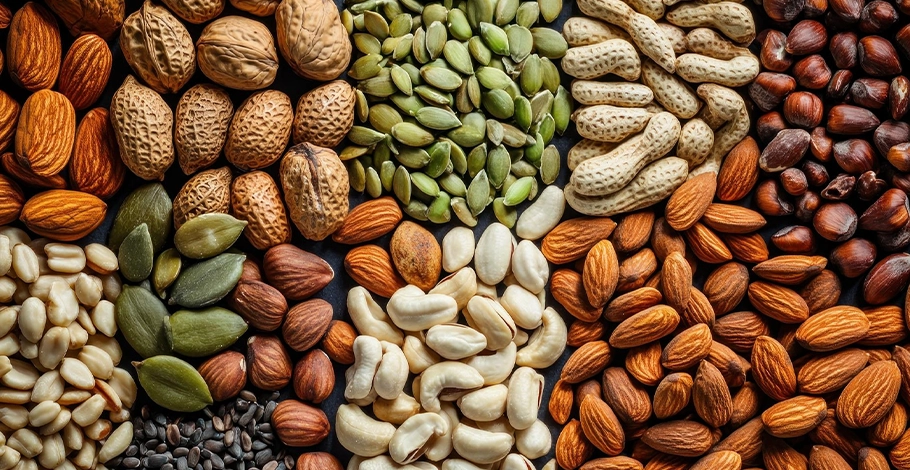
Nuts and seeds
Fatty Fish and Omega-3-Rich Foods
Fatty fish like salmon, mackerel, and sardines are packed with omega-3 fatty acids, which help calm inflammation that can contribute to redness, breakouts, and sensitivity.
A 10-week supplementation study in healthy adults found that dietary omega-3s measurably changed the skin’s own inflammatory compounds, including reducing some of the reactive byproducts triggered by UV exposure. Omega-3s also support the skin’s lipid barrier, helping it retain moisture and stay hydrated from within.
Greek Yogurt and Probiotics
Greek yogurt contains probiotics that support a healthy gut microbiome, which research increasingly links to clearer, calmer-looking skin. It is also a good source of protein, which supports the skin’s structural repair, though people prone to breakouts may want to choose low-fat or fat-free options.
Green Tea
Green tea is rich in polyphenols, a group of antioxidants that help protect skin cells from oxidative stress caused by sun exposure and environmental pollutants.
In a 12-week clinical trial, women who drank a green tea catechin beverage daily showed significantly less UV-induced redness by the end of the study, along with improvements in skin elasticity and hydration.
Zinc-Rich Foods
Zinc plays an important role in skin repair and wound healing, helping skin recover more efficiently from everyday damage.
A 2020 systematic review and meta-analysis found that people with acne tend to have lower zinc levels than those without it and that zinc treatment meaningfully reduced inflammatory breakouts.
Foods like pumpkin seeds, oysters, and lean meats are natural, food-based ways to support healthy zinc levels.
Water-Rich Fruits and Vegetables
Fruits and vegetables like cucumber, watermelon, and celery have high water content, helping support hydration from within while also delivering vitamins and antioxidants. Adding a variety of these to your diet is an easy way to support both hydration and overall skin health.
Healthy Habits That Help Your Skin Glow Naturally
Diet lays the foundation for healthy skin, but daily habits determine how well your body can actually use those nutrients. The following habits work alongside a nutrient-rich diet to support hydration, repair, and protection from everyday stressors:
Stay Hydrated
Water is essential for maintaining the skin’s elasticity and supporting its natural barrier function. Without enough fluids, skin can look duller and feel tighter or flakier.
Aiming for consistent water intake throughout the day, rather than large amounts all at once, helps keep skin cells properly hydrated from within.
Get Enough Sleep
Skin repairs and regenerates itself most actively during sleep, when cell turnover increases and blood flow to the skin rises. Consistently skimping on sleep can show up as dullness, under-eye puffiness, and a slower healing response to everyday irritation or breakouts.
Exercise Regularly
Physical activity increases blood circulation, which helps deliver oxygen and nutrients to skin cells more efficiently. Regular movement also supports the body’s natural detoxification processes and can improve overall skin tone and texture over time, as long as sweat is cleansed off afterward to avoid clogged pores.

Stay physically active
Manage Stress
Chronic stress raises cortisol levels, which can increase oil production and inflammation, both of which contribute to breakouts and a dull, uneven complexion. Simple stress-management practices, like regular movement, deep breathing, or adequate sleep, can help reduce this hidden strain on your skin.
Protect Your Skin from the Sun
Daily sunscreen use is one of the most effective habits for preventing premature aging, since UV exposure is a leading cause of fine lines, wrinkles, and uneven pigmentation over time. Applying a broad-spectrum sunscreen every morning, rain or shine, protects the collagen and elastin that keep skin firm.
Follow a Consistent Skincare Routine
A simple, consistent routine — cleansing, moisturizing, and applying sunscreen — does more for skin health than switching products frequently or adding excessive steps. Choosing products suited to your specific skin type, whether oily, dry, or sensitive, helps avoid irritation while supporting the skin’s natural barrier.
Foods and Habits That Can Affect Skin Health
Some foods and habits are helpful to maintaining skin health, while others can contribute to the degradation of skin health. Too much added sugar or a diet too low in fiber can lead to glycation which can make your skin tight and may be a cause of acne breakout and skin ageing.
Processed food typically contains little nutritional value and can cause inflammation in the body that can affect the skin.
Smoking narrows the blood capillaries which leads to quicker breakdown of collagen and elastin, and also causes a dehydrating effect on the skin, whereas excessive alcohol usage causes the skin to appear dull and puffy.
These are exacerbated by poor sleeping habits and a lack of sufficient fluids through the day and night, which make it more difficult for skin to keep functioning and hydrated an entire 24 hours.
How Long Does It Take to See Naturally Glowing Skin?
In younger adults, the skin cells turn over every 4-6 weeks by itself, and this rate will slightly decline with age.
That means for at least 3-4 weeks of going through the proper lifestyle and good eating habits, there will be no differences noticed in your skin with respect to either texture, tone or shine.
For example, a firmer texture or less damage caused by the sun may not be noticeable for 8 – 12 weeks or more. Be consistent, not perfect: it’s okay with some errors if you are going ahead with a steady pace.
Conclusion
Glowing skin isn’t a miracle that appears after a single food or product is added to your diet, it is a byproduct of your daily selections. All of these elements contribute to supporting a healthy skin from the inside out and facilitate the repair process.
Plan them in and give them time; plus, you’ll need to be patient with the process. Any key to better skin health and appearance that requires a short period of time won’t work as well as any small, sustainable change you can implement over weeks and months.
Frequently Asked Questions
What foods help skin glow naturally?
Foods rich in antioxidants, vitamin C, omega-3s, and zinc, like berries, fatty fish, nuts, and leafy greens, support collagen production, hydration, and skin repair from within.
How much water should I drink for healthy skin?
General guidance suggests around 8 cups a day for most adults, though individual needs vary by activity level, climate, and body size. Consistency matters more than hitting an exact number.
Can supplements replace a healthy diet for skin health?
Supplements can help fill specific gaps, but whole foods provide a broader mix of nutrients and are generally the better foundation for long-term skin health.
Do I need a strict skincare routine to see results?
No — a simple routine of cleansing, moisturizing, and daily sunscreen is usually enough. Consistency with the basics matters more than using many products.
How long does it take to see results from diet and lifestyle changes?
Most people notice subtle changes within three to four weeks, with more visible improvements in skin texture and tone appearing after eight to twelve weeks of consistent habits.
Was this article helpful?
4 Sources
We review published medical research in respected scientific journals to arrive at our conclusions about a product or health topic. This ensures the highest standard of scientific accuracy.
[2] Dynamics of the human skin mediator lipidome in response to dietary ?-3 fatty acid supplementation - PMC: https://pmc.ncbi.nlm.nih.gov/articles/PMC6902719/
[3]Green tea polyphenols provide photoprotection, increase microcirculation, and modulate skin properties of women - PMC: : https://pubmed.ncbi.nlm.nih.gov/21525260/
[4]Serum zinc levels and efficacy of zinc treatment in acne vulgaris: A systematic review and meta-analysis - PMC : https://pubmed.ncbi.nlm.nih.gov/32860489/







 This article changed my life!
 This article was informative.
 I have a medical question.
 This article contains incorrect information.
 This article doesn’t have the information I’m looking for.