Medically Cited
In This Review
Have you ever reached out to take a Vitamin C supplement to ward off a cold or grabbed some Zinc when you were feeling rundown? You are not alone.
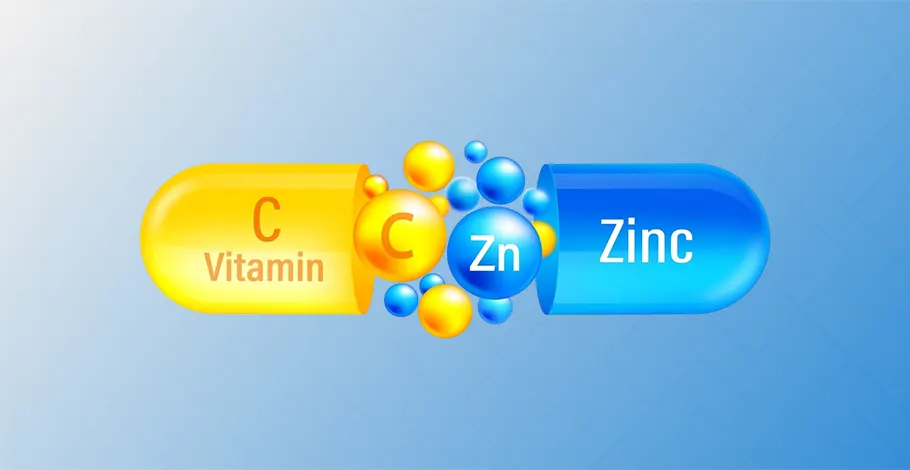
Both of these nutrients are well-known to help the immune system and are popular health supplements when we want to stay healthy or recover.
However, one question arises: Can you take Vitamin C and Zinc together? It is a valid concern, considering that the two nutrients carry out various actions in your body.
In this article, we are going to explore what each of them does, how they can be used together, and whether or not combining them is good or may lead to problems. So, let’s look at the facts and discover what is best for your health.
Understanding Vitamin C and Zinc
What Is Vitamin C, and Why Do You Need It?
First, Vitamin C. This is a water-soluble vitamin, which is your immune superhero. It keeps your body resistant to infections, aids faster wound recovery and even keeps your skin fresh. And because your body does not naturally produce Vitamin C, you either get it in your food or supplements.
You most likely are aware that some citrus fruits, such as oranges and lemons, contain high amounts of Vitamin C, but did you know that bell peppers, broccoli, and strawberries are excellent sources as well?
What About Zinc?
Next is Zinc. It is a mineral that is vital in many aspects of your body including supporting your immune system, healing wounds, and even helping your body create proteins and DNA. And, similar to Vitamin C, your body does not make zinc you acquire it either through foods such as meat, shellfish, legumes, seeds, and nuts, or take it in the form of supplements.
The Science Behind Combining Vitamin C and Zinc
Since you now know what these nutrients are and what they can do, it is time to discuss whether you can consume them together. The answer is yes, you can. As a matter of fact, Vitamin C and Zinc together can actually boost the effect of each other.
The reason is; Vitamin C can protect your cells against being damaged (it is an antioxidant), and Zinc is essential when it comes to activating your immune cells.
Therefore, when you have a combination of these two nutrients, they assist your body in combating infections better. Some research even implies that consuming the two can decrease the length and severity of a cold.
Potential Benefits of Taking Vitamin C and Zinc Together
Immune System Boost
Both Vitamin C and Zinc are great for boosting your immune system. Vitamin C increases the number of white blood cells used to combat infections and Zinc activates these immune cells. The combination of the two aids your body to fight against colds and flu, thus making a strong pair especially during the cold and flu season.
Studies have indicated that the use of both nutrients may shorten the lifespan of a cold by nearly 25%. So when you are sick this combination may bring you back on your feet quicker.

Benefits of Taking Vitamin C and Zinc Together
Skin Health
Did you know that healthy skin needs both Vitamin C and Zinc? Vitamin C aids in the production of collagen in the body which is important in maintaining the firmness of your skin, as well as its youthfulness. On the other hand, zinc promotes skin regeneration and healing.
Taken together, they can be associated with tighter skin, skin texture and wound healing. This combination could be perfect whether you have acne problems or simply want to improve the health of your skin in general.
Faster Recovery
Both Vitamin C and Zinc can accelerate your recovery in case you are recuperating after an illness or a wound. Vitamin C works on tissue repair, and Zinc on immune system support and tissue regeneration. Combined, they can assist you in recovering faster, be it from a cold, a burn or even a surgery.
Are There Any Risks or Side Effects of Taking Vitamin C and Zinc Together?
Although taking Vitamin C and Zinc together is usually safe in most individuals, it should not be overlooked to consider the dosage. As with anything, too much of a good thing has a few undesirable side effects.
Too Much Vitamin C
Most adults are recommended to take around 65-90 mg of Vitamin C per day. Although Vitamin C is soluble in water (i.e. your body will tend to excrete excess doses in the urine), excessively high doses can lead to stomach cramps, diarrhea, and nausea, just to name a few.
Doses of over 2,000 mg (extremely high amounts) have even been known to cause kidney stones, thus the importance of not going above the recommended range.
Too Much Zinc
Zinc may also be troublesome in excessive dosage. At high doses, you may get nausea, diarrhea, metallic taste in your mouth. Prolonged overdoses of Zinc may also disrupt the absorption of other crucial minerals such as copper. Most adults should get 8-11 mg of Zinc every day, and doses greater than 40 mg can be harmful.
How to Safely Take Vitamin C and Zinc Together?
If you want to take both Vitamin C and Zinc at the same time, here are some pointers to do it safely:
- Stick to Recommended Doses: To prevent side effects, take the recommended dosages of both Vitamin C (65-90 mg) and Zinc (8-11 mg) per day. Should you ever be in doubt, checking with your healthcare provider is not a bad idea.
- Choose High-Quality Supplements: In case you are using supplements, select those of high quality that your body can absorb with ease. In the case of Zinc, look for forms such as Zinc citrate or Zinc gluconate. In Vitamin C, ascorbic acid or Ester-C is a good alternative.
- Take With Food: Both Vitamin C and Zinc can sometimes upset your stomach, so it’s a good idea to take them with meals to reduce this risk.
- Consult a Healthcare Professional: In case you experience any medical issues or are using some medications, it is always wise to ask your medical professional to confirm that there are no risks involved in the new supplement regimen.
Alternative Ways to Get Vitamin C and Zinc
If you’d rather skip the supplements, you can also get these nutrients from food. Vitamin C is abundant in fruits and veggies, while Zinc is found in meat, shellfish, beans, and seeds.
- Vitamin C-rich foods: Oranges, lemons, strawberries, bell peppers, broccoli, and spinach.
- Zinc-rich foods: Beef, lamb, chicken, oysters, chickpeas, lentils, seeds, and nuts.
Eating a balanced diet that includes these foods can help you meet your Vitamin C and Zinc needs naturally
Conclusion
So, can you take Vitamin C and Zinc together? Absolutely. In fact, taking them together can enhance their immune-boosting and health benefits. The key is to stick to the recommended doses and make sure you’re not overdoing it with supplements.
By balancing your intake with both supplements and nutrient-rich foods, you can help support your immune system, skin health, and overall recovery. And as always, if you’re not sure about the best approach for your body, a quick chat with your healthcare provider can help you stay on the right track.
FAQs
Q: Can I take Vitamin C and Zinc together every day?
A: Yep, you can take Vitamin C and Zinc together daily without any issues, as long as you stick to the recommended amounts. They’re great for boosting your immune system and speeding up recovery.
Q: What happens if I take too much Zinc with Vitamin C?
A: If you take too much Zinc, it can cause things like nausea and upset your stomach. Plus, it can mess with the absorption of other important minerals like copper, so it’s best to stick to the recommended dose.
Q: Can I get enough Vitamin C and Zinc from food alone?
A: Definitely! Foods like oranges, strawberries, meat, and beans have plenty of Vitamin C and Zinc, so if you eat a balanced diet, you should be good to go.
Q: Will taking Vitamin C and Zinc together prevent me from getting sick?
A: While they help support your immune system, taking Vitamin C and Zinc doesn’t mean you’ll never get sick. But they might help reduce how long you feel under the weather and how severe the symptoms are.
Q: Can I take Vitamin C and Zinc on an empty stomach?
A: It’s better to take them with food to avoid stomach irritation, especially Zinc. Both are easier on your stomach when you’ve got something in there.
Was this article helpful?
8 Sources
We review published medical research in respected scientific journals to arrive at our conclusions about a product or health topic. This ensures the highest standard of scientific accuracy.
[2] A combination of high-dose vitamin C plus zinc for the common cold - PubMed https://pubmed.ncbi.nlm.nih.gov/22429343/
[3] Self-Care for Common Colds: The Pivotal Role of Vitamin D, Vitamin C, Zinc, and Echinacea in Three Main Immune Interactive Clusters (Physical Barriers, Innate and Adaptive Immunity) Involved during an Episode of Common Colds—Practical Advice on Dosages and on the Time to Take These Nutrients/Botanicals in order to Prevent or Treat Common Colds - PMC https://pmc.ncbi.nlm.nih.gov/articles/PMC5949172/
[4] Vitamin C and Skin Health | Linus Pauling Institute https://lpi.oregonstate.edu/mic/health-disease/skin-health/vitamin-C
[5] Vitamin C - Consumer https://ods.od.nih.gov/factsheets/VitaminC-Consumer/
[6] Zinc Deficiency - StatPearls - NCBI Bookshelf https://www.ncbi.nlm.nih.gov/books/NBK493231/
[7] Sources of Vitamin C https://www.news-medical.net/health/Sources-of-Vitamin-C.aspx
[8] Zinc - Health Professional Fact Sheet https://ods.od.nih.gov/factsheets/Zinc-HealthProfessional/









 This article changed my life!
 This article was informative.
 I have a medical question.
 This article contains incorrect information.
 This article doesn’t have the information I’m looking for.