
If you’re finding yourself yawning more often lately, you’re not alone. A full 42 percent of Americans get less than seven hours of sleep per night, which is the bare minimum recommended for maintaining good health. The optimal amount of sleep as you’ve no doubt heard is eight hours per night, and less than one-third of Americans are reaching this threshold.
The result?
Chronic sleep deprivation is linked to a whole slew of health problems, including heart disease, stroke, obesity and mental health issues like depression and attention deficit disorder. It also leads to a greater risk of accidental injury and death, especially when sleep deprivation is paired with a motor vehicle.
Drowsy Driving: An Epidemic of Deadly Proportions
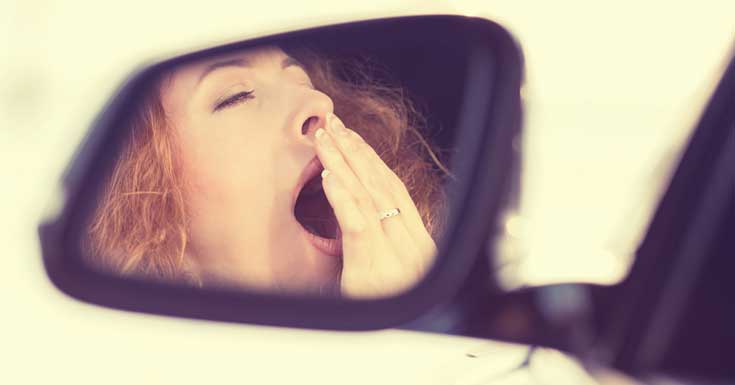
With so many Americans unable to get a good night’s sleep, it’s no surprise that more of us are getting behind the wheel feeling sleepy. This phenomenon is known as drowsy driving, and it can happen to anyone at any time though it’s more likely to affect people at night when driving is already more difficult due to dark roads.
Driving while you feel so tired that you’re struggling to keep your eyes open is as dangerous as driving under the influence of alcohol, and the effects are similar. According to the Centers for Disease Control and Prevention, drowsy drivers are less attentive to the traffic around them, less able to make decisions and suffer from a significantly reduced reaction time – all things that contribute to potentially deadly automobile accidents.
Drowsy driving accidents are astoundingly commonplace. An estimated 100,000 crashes are caused each year by drivers who doze off at the wheel, resulting in 1,500 deaths annually. Though almost half of Americans have admitted to falling asleep at the wheel at some point, only about 20 percent ever pull over for a nap when they feel tired. The rest try blasting cold air in their faces and turning up the radio, both ineffective methods for staying awake.
Changing Laws Help to Curb Drowsy Driving
In recent years, it has become blindingly obvious that drowsy driving is, indeed, deadly driving. Since 2003, when New Jersey became the first state to criminalize drowsy driving, there has been an increase in the number of laws and statutes passed to discourage getting behind the wheel while impaired by sleep deprivation.
Currently, there are nine states with law on the books specifically addressing driving while sleep-impaired: Arkansas, California, Florida, Massachusetts, New Jersey, New York, Pennsylvania, Texas and Utah. If your state isn’t in the list, rest assured that many others have brought bills to their legislative chambers, and change is in the air on this issue. Just like drunk driving and distracted driving, drowsy driving is reaching critical mass in the arena of public awareness.
Many of the proposed new laws are targeted specifically at teen drivers, who are at the highest risk for driving while sleep-impaired. Massachusetts, for example, recently changed its junior-operator laws to strictly limit the hours that teens can get behind the wheel. By keeping young drivers off the roads at night, the state has seen a 40 percent decrease in the number of serious injuries and fatalities in teen drivers.
Are You Driving While Drowsy? Check Yourself

If you’re one of the thousands of Americans who gets behind the wheel of a car even though you’re yawning and struggling to keep your eyelids from drooping, it’s time to change your habits before you become another statistic. Here are some commonsense steps you can take to keep yourself safe:
- Get more sleep – Skip the all-nighters, and try going to bed just a half hour earlier each night. The cumulative effect of the additional sleep will have you feeling more healthy and alert, and will reduce your risk of falling asleep at the wheel.
- Check your medications – Many medicines cause drowsiness and can make it dangerous to drive while under their influence. Make sure you know the side effects of all of your medications, and adjust your driving times accordingly.
- Give yourself a half hour to wake up – You’re the groggiest when you first get out of bed, but it can take up to 30 minutes to shake off your sleep and be ready to face the day. This is the worst time to get behind the wheel, so set your alarm early enough that you don’t have to jump directly from your bed to your car.
- See a sleep specialist – If you’re having trouble sleeping or are always yawning, see a doctor for help. You may have a sleep disorder, and getting it under control will help keep you safe.
- Take a break – Those long-distance drives can be numbing, so be sure to pull over for a rest every two hours. If you feel tired during your break, take a power nap or have a cup of coffee before getting back behind the wheel.
By following these tips, you aren’t just keeping yourself safe you’re protecting everyone else who comes in your path when you’re out on the road. Though we do it every day, driving is a major responsibility. After all, you’re in control of tons of steel moving at top speeds. Treat driving with respect, and make sure you’re fully alert when you slide into the driver’s seat.
Featured Image: Shutterstock
In-Post Images: Shutterstock