Medically Cited
When it comes to sex, stamina is more than just physical. Among the various factors that can contribute, yoga addresses several of them— stress, poor circulation, tight muscles, and a scattered mind.
Some yoga postures strengthen the core, improve flexibility, and promote the flow of blood; Yoga breathing and concentration can also help to soothe the busy or anxious mind. These benefits are not all immediate— they develop over time and are similar to some of the factors that promote healthy sexual function.
Key Takeaways
- Yoga supports sexual stamina indirectly, through better fitness, flexibility, and relaxation.
- The 9 poses in this guide support building strength, flexibility, balance, and calm.
- Sarvangasana and Dhanurasana require extra care and guidance to practice safely.
- The best way to use yoga is in conjunction with medical treatment for problems like erectile dysfunction, low sperm count, premature ejaculation, etc.
- Consistency and comfort are of more importance than intensity or speed.
Can Yoga Help Improve Sexual Stamina?
Yoga does not directly help with sexual stamina, but in more indirect ways. What it can do is help to support some of the underlying factors that affect stamina in the first place such as fitness level, flexibility and relaxation or awareness.
Practice regularly and you will benefit the physical endurance of your muscles as well as the flexibility of your muscles. After 16 weeks of regular yoga, you can see improvements in flexibility and strength in the lower body, with balance improvements also seen, according to a randomized controlled trial.
Yoga also develops the sense of body awareness, through the use of breath control and slow, deliberate movements, and this can translate to a greater sense of presence, or not being distracted. Many people experience sexual problems due to stress and anxiety and this is a possible indirect benefit that the yoga of relaxation provides.
Even though yoga is not a guaranteed remedy for fatigue, there is evidence that it can lead to measurable decreases in anxiety, especially when compared to other active interventions, according to a 2018 meta-analysis of randomized controlled trials.
9 Yoga Poses That May Support Sexual Well-Being
The poses below are grouped for their general physical benefits, not as a treatment plan. Think of them as a supportive addition to overall fitness rather than a fix for anything specific.
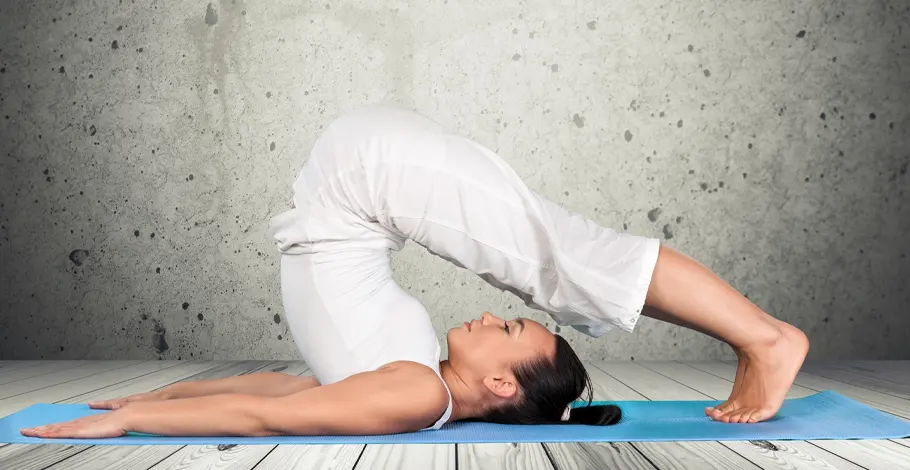
1. Sarvangasana (Shoulder Stand)
This inversion lifts the legs and hips overhead while the shoulders support your weight. It builds strength through the neck, shoulders, and core, and the shift in blood flow that comes with any inversion tends to leave people feeling more alert and settled afterward.
2. Uttanapadasana (Raised-Leg Pose)
Lying flat and slowly raising both legs works the entire abdominal region, building core strength through controlled movement rather than momentum. The slower you move, the more the lower abs and hip flexors have to engage.
3. Kandharasana (Shoulder Pose)
A gentle backbend where the hips lift while the feet and shoulders stay grounded. It opens the hips, strengthens the glutes and lower back, and works well as a warm-up before deeper backbends.

Kandharasana
4. Paschimottanasana (Seated Forward Bend)
Folding forward over extended legs stretches the hamstrings and the entire length of the spine. It is a naturally calming pose, often used to slow the nervous system down after more active sequences.
5. Gomukhasana (Cow Face Pose)
Seated with one leg stacked over the other and arms reaching behind the back, this pose deeply stretches the hips and shoulders at once. It is also useful for posture, since it counters the rounded shoulders many people carry from sitting.
6. Bhujangasana (Cobra Pose)
Pressing up from a lying position, this backbend strengthens the spine and opens the chest. Regular practice tends to improve overall back mobility and can ease some of the stiffness that builds up from long periods of sitting.
7. Dhanurasana (Bow Pose)
Grabbing the ankles and lifting the chest and thighs off the floor creates a deep, full-body stretch. It strengthens the back and legs at the same time it opens the chest and shoulders, making it one of the more demanding poses on this list.
8. Brahmacharyasana
This arm-balancing pose takes its name from the yogic concept of self-restraint and discipline. Beyond its traditional meaning, it demands real core and arm strength along with steady balance and focus.
9. Garudasana (Eagle Pose)
Standing on one leg with the arms and legs wrapped around each other, this pose challenges balance and coordination in a way few others do. It builds leg strength and requires enough focus that the mind tends to quiet down while holding it.
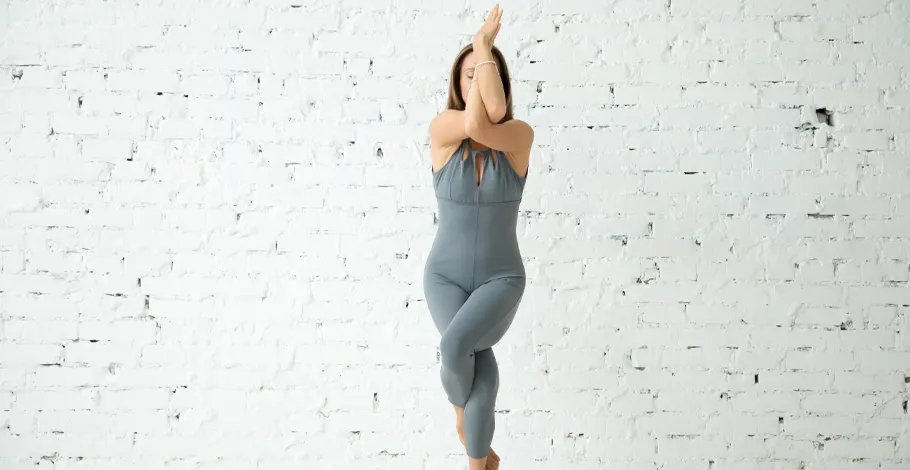
Garudasana
How to Practice These Poses Safely
Try not to hold the breath in each posture, instead breathe evenly throughout the posture, as it is easier to create tension with the cessation of breathing. Relax into the stretch and don’t overstretch on the first day.
It is important to learn to distinguish between a stretch and pain when practicing safely. The stretch should be one of gentle tension, and if it goes into pain, either move the position or step back so that it remains easy and sustainable. Poses such as Sarvangasana and Dhanurasana are more challenging — require intense stretching of the neck and spine, and should therefore be learned only with guidance, particularly if you’re a beginner.
Can Yoga Treat Premature Ejaculation or Other Sexual Problems?
Yoga works best as a complement to medical care rather than a replacement for it. It offers real support for relaxation, fitness, and stress management, all of which play a role in overall well-being, though it is not a proven treatment for premature ejaculation, erectile dysfunction, or infertility on its own.
If sexual difficulties are persistent or causing distress, seeing a doctor is the appropriate next step. Yoga can sit alongside that care, not substitute for it.
Tips for Using Yoga to Support Sexual Well-Being
Consistency matters more than intensity. A short, regular practice tends to do more over time than occasional long sessions.
Concentrate on breathing during the entire activity and work up to it at a comfortable speed, not at the point of pain. Yoga is not a cure-all, but should be seen as a component of a healthy lifestyle, which also involves getting a good night’s sleep, exercising regularly and keeping stress levels low.
FAQs
Q: Can yoga really improve sexual stamina?
A: Yoga supports it indirectly, through better fitness, flexibility, and relaxation, though it is not a guaranteed way to boost stamina on its own.
Q: How often should I practice these poses?
A: A few times a week is generally enough to notice benefits in flexibility and relaxation. Consistency matters more than how long or how often any single session runs.
Q: Are any of these poses unsafe for beginners?
A: Sarvangasana and Dhanurasana put more strain on the neck and spine and are best learned with guidance or after some yoga experience. Simpler poses like Paschimottanasana or Bhujangasana are easier starting points.
Q: Can yoga replace medical treatment for sexual dysfunction?
A: Yoga works well alongside medical care, but persistent sexual health issues are best evaluated by a doctor rather than addressed through yoga alone.
Q: Do I need to be flexible to start?
A: No, flexibility develops with practice. Most of these poses can be modified for beginners, and forcing a deep stretch too early tends to cause more harm than good.
Conclusion
Yoga is a long-term, supportive practice rather than a cure and is best suited to that purpose. What it can do is support fitness, flexibility and relaxation principles to the health and well-being, sexual and otherwise.
These exercises should not be viewed as a standalone solution but as a component of a healthy lifestyle program, and should be discussed with a doctor for any pain or symptoms that last longer than daily stress or stiffness.
Was this article helpful?
2 Sources
We review published medical research in respected scientific journals to arrive at our conclusions about a product or health topic. This ensures the highest standard of scientific accuracy.
[2]The effects of a yoga intervention on balance and flexibility in female college students during COVID-19: A randomized controlled trial : https://pubmed.ncbi.nlm.nih.gov/36947533/








 This article changed my life!
 This article was informative.
 I have a medical question.
 This article contains incorrect information.
 This article doesn’t have the information I’m looking for.