Medically Cited
What Is Schizophrenia?
Schizophrenia is a chronic mental health condition that can affect how a person thinks, feels, behaves, and understands the world around them.

People living with schizophrenia may sometimes experience a changed perception of reality. This can include hearing or seeing things that others do not, having unusual beliefs, feeling suspicious or unsafe, or struggling to organize their thoughts clearly.
For some people, the line between what is real and what feels real can become difficult to separate. This may make everyday activities, such as going outside, shopping for groceries, or interacting with others, feel confusing, stressful, or overwhelming.
Because of these challenges, some people with schizophrenia may withdraw from social situations or prefer to spend more time alone. With proper care, treatment, and support, many people with schizophrenia can manage their symptoms and improve their quality of life.
Symptoms of Schizophrenia
Schizophrenia usually begins in late adolescence or early adulthood, and symptoms differ from one person to another. They are typically classified into three categories: positive, negative and cognitive.
Positive Symptoms
Positive symptoms include experiences added to the individual’s ordinary perception of reality.
These may include:
- Hearing voices or seeing things which are not there
- Delusions about false beliefs that persist in spite of the evidence.
- Issues with paranoia/suspiciousness.
- Difficulty organizing thoughts and words in speech.
- Abnormal or erratic behavior
Negative Symptoms
Negative symptoms are a decrease or absence of typical functions or behaviors.
-
Common examples include:
- Social withdrawal
- Reduced emotional expression
- Lack of motivation
- Difficulty experiencing pleasure
- Lack of interest in everyday routines
- Poor personal hygiene
Cognitive Symptoms
Cognitive symptoms impact on memory, focus, and thinking.
-
These may include:
- Difficulty concentrating
- Problems processing information
- Impaired decision-making
- Trouble organizing thoughts
- Memory difficulties
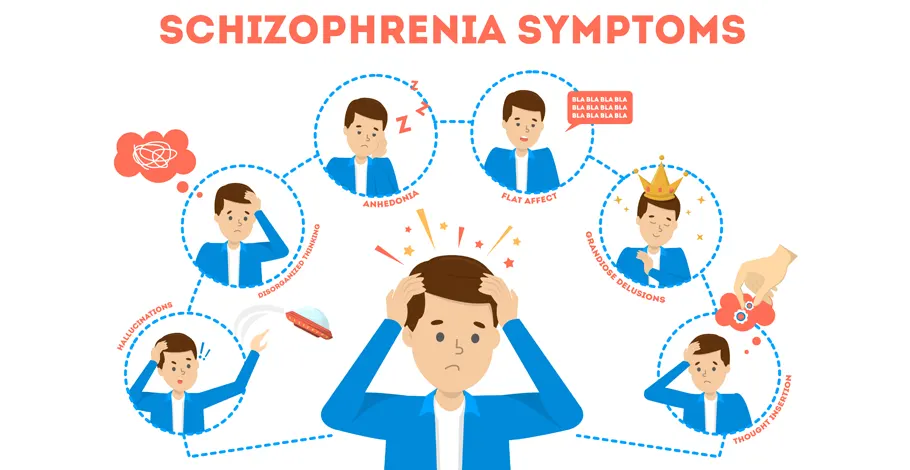
Symptoms of Schizophrenia
Early Warning Signs of Schizophrenia
The early signs of schizophrenia may develop gradually and can sometimes be difficult to recognize.
Common warning signs include:
- Social withdrawal
- Increased suspiciousness or fearfulness
- Worsening of personal hygiene
- Reduced ability Inability to express emotions
- Crying or laughing at unusual times
- Depression
- Sleeping too much or insomnia
- Inability to concentrate
- Confused, unusual, or disorganized speech
Causes of Schizophrenia
The exact cause of schizophrenia remains unknown. Researchers believe that a combination of genetic, biological, and environmental factors contributes to the development of the disorder.
Several factors may affect brain structure, brain chemistry, and communication between nerve cells, increasing the risk of schizophrenia.
Risk Factors for Schizophrenia
Certain factors may increase the likelihood of developing schizophrenia, including:
- Family history of schizophrenia or other psychotic disorders
- Exposure to viral infections or toxins before birth
- Pregnancy or birth complications
- Differences in brain development
- Increased immune system activity
- Advanced paternal age
- Use of psychoactive substances during adolescence or young adulthood
- High levels of stress in susceptible individuals
Having one or more risk factors does not necessarily mean a person will develop schizophrenia.
Tests and Diagnosis For Schizophrenia
When a person is suspected to have schizophrenia, a thorough medical and psychiatric history is obtained followed by physical examination.
Then, medical and psychological tests like any of the following will be conducted:
Tests And Screenings: A complete blood count (CBC) or other blood tests may be used in order to rule out other conditions that have similar symptoms. Screening for drugs and alcohol may also be done and in some cases, imaging studies like an MRI or CTI scan may be needed.
Psychological Evaluation: A specialist or mental health provider will determine the mental status of the patient through observation and a thorough interview.
However, there is no single test that confirms schizophrenia. Tests are usually done to rule out other conditions that may cause similar symptoms.
Treatments and Medications for Schizophrenia
Treating schizophrenia is complicated and requires lifelong treatment even when the symptoms disappear. The common treatment is a combination of antipsychotic medication/s and psychological therapy.
During severe symptoms, hospitalization is needed to ensure the safety and health of the patient.
An experienced psychiatrist usually guides treatment but a psychologist, psychiatric nurse, social worker, and case manager may also be needed.

Treatments and Medications for Schizophrenia
Medications
Medications are a cornerstone of schizophrenia treatment and can help reduce symptoms such as hallucinations, delusions, and disorganized thinking. However, some individuals may find it difficult to continue taking these medications because of potential side effects. Working closely with a healthcare provider can help identify the most suitable medication and dosage.
Antipsychotic medications are the primary treatment for schizophrenia. They work by affecting neurotransmitters in the brain, particularly dopamine and serotonin, to help manage symptoms.
Common atypical (second-generation) antipsychotics include aripiprazole, asenapine, clozapine, lurasidone, iloperidone, olanzapine, risperidone, and quetiapine.
Common typical (first-generation) antipsychotics include fluphenazine, chlorpromazine, perphenazine, and haloperidol.
Psychological Interventions
Once psychosis decreases, psychological and psychosocial interventions are needed in addition to the intake of medication. These include any of the following:
- Individual Therapy: It helps cope with stress and identify early warning signs of a relapse.
- Social Skills Training: This is primarily for improving communication and the ability to interact socially.
- Family Therapy: It is for providing support and education to family members of the patient.
- Vocational Rehabilitation and Employment Support: This helps people with schizophrenia build work-related skills, find suitable employment, and maintain a stable source of income.
Precautions and Self Care
Even people with schizophrenia need continued treatment since it will relapse. Again, treating mental disorders is a lifelong process that requires a combination of medications and psychological interventions.
There are support groups for people with schizophrenia and family members affected by the condition. Take note that stress management is important since stress is the top trigger for the different symptoms of schizophrenia.
Complications of Untreated Schizophrenia
When schizophrenia symptoms are left untreated, they may make daily life more difficult over time. A person may struggle with work, studies, relationships, personal hygiene, sleep, and regular routines. Symptoms such as hallucinations, delusions, or disorganized thinking can also affect communication, decision-making, and the ability to manage responsibilities.
Untreated symptoms may increase social withdrawal and make it harder for the person to ask for help or stay connected with family and friends. Some people may also turn to alcohol or drugs to cope, which can make symptoms worse and interfere with recovery.
Schizophrenia can be managed with proper treatment and support. Early diagnosis, medication, therapy, family support, and rehabilitation services can help reduce symptoms, improve functioning, and support a better quality of life.
Must Watch – Schizophrenia: Overview & Symptoms
Frequently Asked Questions
Q: What are the first signs of schizophrenia?
A: Early signs of schizophrenia may include social withdrawal, reduced motivation, trouble concentrating, changes in sleep, unusual thoughts, suspiciousness, or difficulty expressing emotions. Some people may also begin hearing or seeing things that others do not, or develop strong beliefs that do not match reality. These signs can vary, so a mental health evaluation is important.
Q: Can schizophrenia be cured?
A: Schizophrenia usually cannot be “cured” in the traditional sense, but it can often be managed with proper treatment. Medication, therapy, family support, lifestyle routines, and rehabilitation services can help reduce symptoms and improve daily functioning. Many people experience better stability and quality of life when they receive ongoing care and follow a treatment plan.
Q: Is schizophrenia hereditary?
A: Schizophrenia can run in families, but it is not caused by one single gene. Having a family member with schizophrenia may increase risk, but it does not mean a person will definitely develop the condition. Genetics, brain chemistry, life experiences, substance use, and environmental factors may all play a role in its development.
Q: What triggers schizophrenia symptoms?
A: Symptoms may be triggered or worsened by stress, lack of sleep, substance use, stopping medication, major life changes, or difficult emotional experiences. In some people, drugs such as cannabis or other psychoactive substances may increase the risk of psychotic symptoms. Triggers can be different for each person, so treatment often includes identifying and managing them.
Q: Can people with schizophrenia live normal lives?
A: Yes, many people with schizophrenia can live meaningful and productive lives with the right treatment and support. This may include medication, therapy, social support, employment assistance, and regular follow-up care. Some people may need long-term support, while others are able to work, study, maintain relationships, and manage daily responsibilities more independently.
Conclusion
Schizophrenia is a serious mental health condition that can affect how a person thinks, feels, behaves, and understands reality. Symptoms may include hallucinations, delusions, disorganized thinking, reduced motivation, social withdrawal, and difficulty with daily functioning.
While the exact cause is not fully known, schizophrenia may be linked to a combination of genetic, brain chemistry, environmental, and life stress factors. Diagnosis usually involves a detailed medical and psychiatric evaluation, along with tests to rule out other possible causes.
With early intervention, proper treatment, and ongoing support, schizophrenia can be managed. Medication, therapy, rehabilitation, lifestyle support, and family involvement can help reduce symptoms and improve daily life. Many people with schizophrenia are able to build stable routines, maintain relationships, and improve their quality of life with the right care.
Was this article helpful?
3 Sources
We review published medical research in respected scientific journals to arrive at our conclusions about a product or health topic. This ensures the highest standard of scientific accuracy.
[2] Early signs, diagnosis and therapeutics of the prodromal phase of schizophrenia and related psychotic disorders : https://pubmed.ncbi.nlm.nih.gov/20662758/
[3] Psychosocial and psychological interventions for relapse prevention in schizophrenia: a systematic review and network meta-analysis : https://pubmed.ncbi.nlm.nih.gov/34653393/









 This article changed my life!
 This article was informative.
 I have a medical question.
 This article contains incorrect information.
 This article doesn’t have the information I’m looking for.