Medically Cited
Prohormones have circulated in strength-training circles for decades, marketed as a “legal” shortcut to the muscle and strength gains associated with anabolic steroids. They surged in popularity through the late 1990s and early 2000s, largely disappeared from store shelves after federal bans, and still show up today in a narrower, more regulated form.
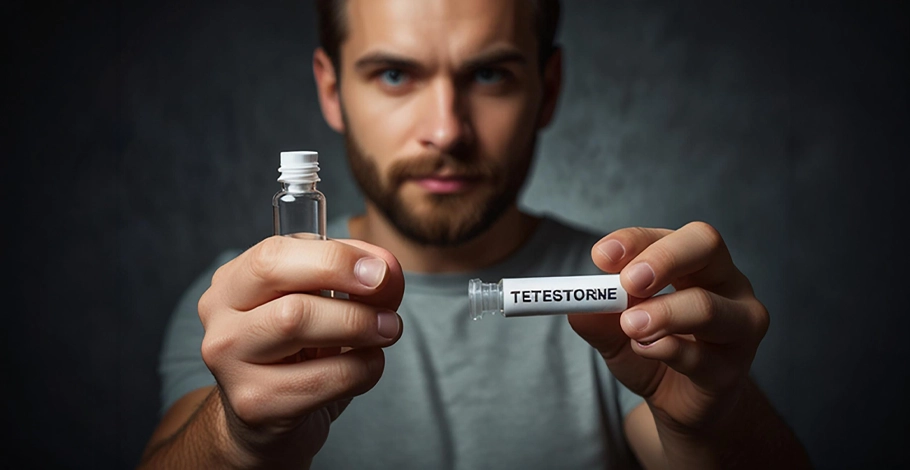
This guide breaks down what prohormones actually are, how they work in the body, the main compound categories lifters encounter, their claimed benefits, their documented side effects, how they stack up against anabolic steroids, and evidence-based alternatives that don’t carry the same hormonal risk. The goal isn’t to promote or discourage use — it’s to give you an accurate, well-sourced picture so any decision you make is an informed one, ideally alongside a doctor.
What Are Prohormones?
The term was first used to refer to compounds that were not anabolic steroids themselves but became functional hormones once they were metabolised within the body, typically by the liver, or compounds that were precursors of anabolic steroids but not listed in previous anabolic steroids laws.
In bodybuilding parlance, prohormones are hormones that are relatively nonactive in their own right but become active when converted into other hormones within the body, and are usually precursors to anabolic-androgenic hormones such as testosterone, which are sold for their muscle-building, strength-enhancing and athletic performance properties.
The main difference to anabolic steroids is that prohormones are inactive substances that need to be converted by enzymes in the body into active hormones, typically in the liver; in contrast, steroids are already active hormones when taken. It is also the reason that prohormones were once considered to be milder.
Types of Prohormones
Prohormone products generally fall into a few structural families, each converting toward a different end hormone:
- 1-Andro (1-Androsterone / 1-DHEA): A structural isomer of DHEA that the body can potentially convert toward 1-testosterone. It remains one of the few prohormones still legally available in the U.S. after the 2014 federal ban, since it follows a two-step conversion pathway rather than a direct one. Even so, independent research on its effects is limited (see Side Effects, below).
- 4-Andro (4-Androstenediol): A precursor that converts toward standard testosterone. It was one of the original “andro” compounds popularized in the late 1990s before the first wave of federal restrictions.
- Epi-Andro (Epiandrosterone): Often included in prohormone stacks less for direct anabolic effect and more as a supporting compound; it’s sometimes marketed as a “cutting” agent with a comparatively milder hormonal profile.
- 19-Nor (Nandrolone precursors, e.g., 19-Nor-Andro): Converts toward compounds structurally related to nandrolone rather than testosterone. This family carries a distinct side-effect profile, including different impacts on progesterone-related pathways, and is generally considered among the more potent categories.
Compounds that undergo methylation (a chemical modification that increases oral bioavailability) are generally regarded as carrying higher liver-related risk than non-methylated versions, because methylation enhances a compound’s bioavailability but can also increase its toxicity, leading to greater liver stress and adverse side effects, while non-methylated versions are metabolized differently and are generally considered to carry lower liver-related risk.
The rapid rise of prohormones led to major concerns among lawmakers, anti-doping agencies, and health professionals, with reports of hormonal imbalances, liver toxicity, cardiovascular risks, and unexpected side effects drawing attention from the FDA and DEA.That regulatory attention is directly responsible for why most of the compounds above are either banned outright or exist in a narrow, still-scrutinized legal category today.
Benefits of Prohormones
The claimed benefits of prohormones follow directly from what elevated androgen levels do in the body: supporting protein synthesis, recovery, and training capacity. Commonly cited (and marketed) benefits include:

Benefits of Prohormones
- Muscle growth support – by temporarily raising circulating androgen levels, which can support the muscle-protein-synthesis environment during resistance training.
- Strength gains – often reported by users during short cycles, particularly with compounds converting toward more androgenic end hormones.
- Improved recovery – some users report reduced recovery time between intense training sessions.
- Increased training capacity – higher perceived energy and work capacity during a cycle.
It’s important to be direct about the evidence gap here: independent, well-controlled human research on finished prohormone products is scarce, and what research does exist is often unflattering.
A 2006 review in the Journal of the International Society of Sports Nutrition found minimal evidence that testosterone prohormones actually improved performance, while noting adverse effects on lipid profiles and hormone balance. Most of what’s reported as “benefits” comes from anecdotal user reports and manufacturer marketing rather than controlled clinical trials — a gap worth weighing heavily against the risks below.
Side Effects of Prohormones
This is the section that deserves the most scrutiny, because the risk profile of prohormones is better documented than their benefits.
- Hormone suppression: Introducing an external androgen precursor signals the body’s hypothalamic-pituitary-gonadal (HPG) axis to reduce its own natural testosterone production. This suppression can persist after a cycle ends and is the primary reason “post-cycle therapy” exists as a concept in this community — though PCT protocols themselves carry their own risks and are not something to self-direct without medical guidance.
- Liver stress and toxicity: This is one of the most consistently documented risks. A published case series described two deployed U.S. service members who developed drug-induced liver injury after using prohormone supplements containing anabolic-androgenic steroids — one presenting with cholestatic jaundice after 10 weeks of use, the other with asymptomatic liver toxicity and marked dyslipidemia after just 21 days.
- Cardiovascular risk: Reduced HDL cholesterol and increased LDL are commonly reported with andro-type compounds, shifting lipid profiles in a direction associated with higher long-term cardiovascular risk.
- Acne and skin changes: Elevated androgen activity increases sebum production, a well-documented driver of acne in users of androgenic compounds generally.
- Hair loss: Compounds that convert toward DHT-related pathways can accelerate androgenic alopecia (male pattern hair loss) in genetically predisposed individuals.
- Mood changes: Users and case reports describe irritability, mood swings, and aggression during use, alongside potential mood disturbances during the hormone-suppressed post-cycle period.
Other reported effects include prostate swelling and gynecomastia (breast tissue enlargement) in some users, depending on how a given compound interacts with estrogenic pathways.
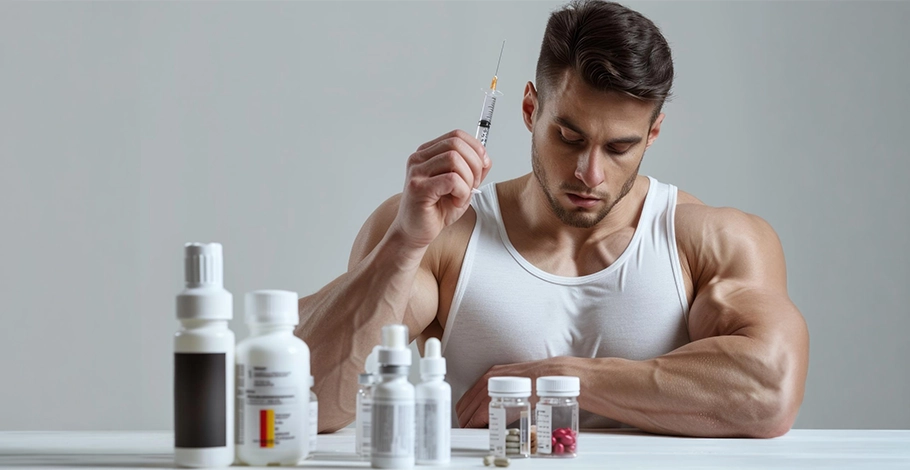
Alternatives to Prohormones
Natural Alternatives to Prohormones
For most lifters, the muscle, strength, and recovery goals that draw people to prohormones can be meaningfully supported by approaches with far more robust safety data and, in several cases, decades of research behind them:
- Creatine monohydrate – one of the most-studied sports supplements available, consistently shown to support strength, power output, and lean mass gains in resistance-trained individuals.
- Whey protein – supports muscle protein synthesis when total daily protein intake is adequate; convenient for hitting protein targets around training.
- Progressive overload training – gradually increasing training volume or load over time remains the single most reliable driver of long-term strength and hypertrophy.
- Adequate total nutrition – a sustained caloric surplus (for growth) or a moderate deficit with sufficient protein (for recovery during a cut) does more for body composition than any supplement layered on top of poor nutrition basics.
- Sleep and recovery management – testosterone and growth hormone release are both closely tied to sleep quality; under-recovery undermines training adaptations regardless of supplementation.
None of these carry the hormone-suppression or liver-toxicity risks documented above, and all have a much larger body of independent research behind them than finished prohormone products do.
Frequently Asked Questions
Q: Do prohormones increase testosterone?
A:Some prohormones are formulated to be converted to testosterone or other androgens after they enter the body, and their users frequently experience a boost in strength and training ability when using the product. But research done independently has shown that there is minimal evidence of a significant enough performance enhancement and the conversion process also causes a suppression of the body’s natural production of testosterone, which can last after use is discontinued.
Q: Are prohormones legal?
A: It depends on the specific compound. Most of the potent prohormones from the 1990s–2000s era are now classified as Schedule III controlled substances under U.S. federal law, following bans in 2004 and 2014. A narrow category of two-step-conversion compounds, like 1-Andro, remains legally sold in some markets, but regulations vary and can change — always verify current status before purchasing.
Q: Are prohormones safer than steroids?
A: Not conclusively. Prohormones must be converted to the active hormone and are frequently less potent per dose, but there are documented cases of liver injury, negative cholesterol profile changes and suppression of hormones with the use of prohormones alone. But the safety margin between prohormones and steroids is not as great as the initial marketing would lead you to believe.
Q: Can prohormones damage the liver?
A: Yes. Liver injury, including cholestatic jaundice, and elevated liver enzymes have been documented in users after a few weeks of prohormone use, especially those containing a methyl group. In such instances, liver enzyme normalization occurred several weeks after discontinuation of use.
Conclusion
Prohormones occupy a very complex position as they are neither anabolic steroids nor are they the same, but they are sufficiently similar in their effects and risks that regulators have been trying to shrink the distance between anabolic steroids and prohormones for 20 years.
The purported effects of muscle gain, strength, quicker recovery make sense in terms of mechanism, but are poorly substantiated by independent clinical trials, and the documented side effects hormone suppression, liver stress, unfavorable cholesterol effects, and more have been well documented in case reports and small clinical studies.
If you are a typical individual looking for long-term strength and physique development, then the basics that have been proven to be effective in the long run have a far higher risk-reward ratio creatine, sufficient protein, progressive training, and recovery. So if you’re still thinking about using a prohormone, the next best thing to do is to talk with a doctor who can see your bloodwork and health history before you make that decision, rather than reading the label on the supplement.
Was this article helpful?
3 Sources
We review published medical research in respected scientific journals to arrive at our conclusions about a product or health topic. This ensures the highest standard of scientific accuracy.
[2] Recent Perspectives Regarding the Role of Dietary Protein for the Promotion of Muscle Hypertrophy with Resistance Exercise Training : https://pmc.ncbi.nlm.nih.gov/articles/PMC5852756/
[3] HDL cholesterol : https://www.ncbi.nlm.nih.gov/books/NBK618439/





 This article changed my life!
 This article was informative.
 I have a medical question.
 This article contains incorrect information.
 This article doesn’t have the information I’m looking for.