Medically Cited
Mindfulness is the act of being aware of what is happening right here right now without making a judgment about it. It can be practiced by slow breathing, meditating for a few minutes, by walking mindfully, by focusing on the act of eating, or by journaling.
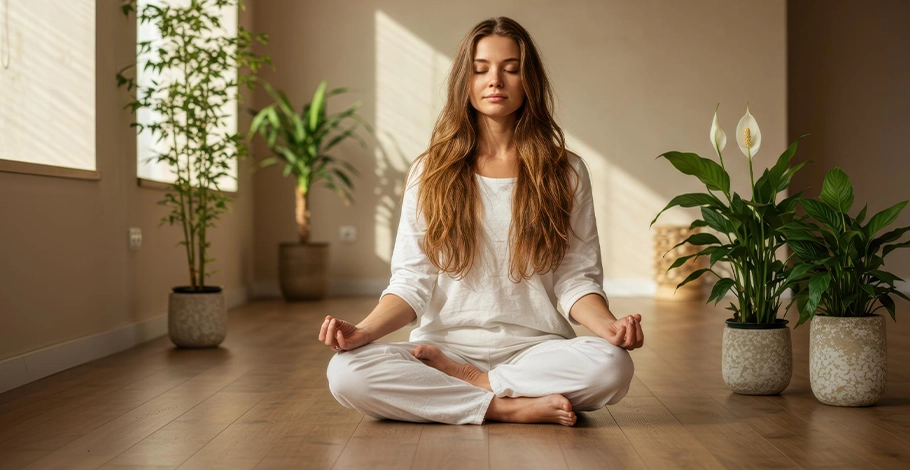
Just a couple of minutes a day can help create awareness, balance the emotions and help make stressful moments more manageable.
There are so many people that go through the day on Auto Pilot. They eat while they are on their phones, talk about tomorrow, and complete tasks without recalling much.
Mindfulness can provide a moment of pause and reconnect with what is happening right now. It is a way of acknowledging thoughts, feelings, sensations, and surroundings, but with a curious (not critical) attitude.
This article provides an explanation of what is meant by being ‘mindful,’ the potential benefits of mindfulness, and subtle daily practices for its cultivation.
Key Takeaways
- Mindfulness is defined as being in the moment without judgement.
- Learning to meditate is an example of practicing mindfulness, but not the only method.
- Brief, frequent sessions are easier to be maintained than occasional long sessions.
- It’s okay for your mind to wander and it’s not a sign of failure.
- Mindfulness can help with managing stress, focus, and emotions.
What Is Mindfulness?
Mindfulness is a conscious focusing on one’s current experience. This can be anything from your breathing, thoughts, emotions, body sensations, sounds or surroundings.
The goal is not to stop thinking or force yourself to feel calm. Rather than that, mindfulness involves mindfully attending and recognizing an experience, rather than immediately judging it as good or bad.
Mindfulness and meditation are interwoven, yet they are distinct and separate. Mindfulness is a way of paying attention throughout the day. Meditation is an intentional activity which may reinforce that skill.
What is the significance of Mindfulness in Health & Wellness?
Being mindful can establish a space between the stimulus and the reaction. That break can help you identify that you are stressed, triggered or acting automatically, before you respond.
Mindfulness based practices also have some potential to help reduce stress, anxiety, depression, and pain for some people, according to the National Center for Complementary and Integrative Health. Results vary, so mindfulness should not be presented as a cure.
With regular practice you may be able to become more aware of tension earlier, refocus more quickly and respond more thoughtfully to emotions.
A Guide to Mindfulness in everyday life.
There is no need to dedicate a lot of your waking hours to being mindful. Try one realistic technique and practice it on a frequent basis.
Practice Mindful Breathing
Sit in a comfortable, relaxed posture with your shoulders relaxed. Remind yourself to let your breath experience its natural flow, without forcing it. Take in mind the air going into your nose, the chest rising, or the stomach expanding.

Practice mindful breathing
When your mind wanders, gently return to your breathing. Avoid beating yourself up. A natural part of the practice is to realize that you are being distracted.
Start with 1-3 minutes. Take a break when you need it or if you get overwhelmed.
Try Mindfulness Meditation
Sit in a quiet space, comfortably. Close your eyes, or see to the ground. Pay attention to breath, to body sensations or to sounds in the immediate environment.
Just notice thoughts as they arise and don’t get attached to them. You could consider using the silent command “thinking” while going back to your chosen focus.
Use a timer and begin with 5 minutes. If meditation leads to ongoing anxiety and/or distress, do not continue and consult a professional.
Practice Mindful Walking
Walk at a pace that is comfortable for you and pay attention to the way your feet land. Focus on how you are moving, standing and breathing.
Next, look around and note the details. Pay attention to the color, sound, motion and temperature. Slow walking is not necessary. The aim is to remain in the moment and not lost in worry, planning, or on your phone.
Eat Mindfully
Mindful eating involves paying attention to the food.
Pay attention to your food’s appearance and odors. Eat each chunk and notice how it feels, tastes, and feels in your mouth. Take a break before eating more.
Stop for a moment while eating and observe the state of your hunger – are you still hungry, just satisfied, or eating because food is still there? Mindful eating isn’t a diet. This is a technique to pay attention to habits and physical cues.
Keep a Mindfulness Journal
Journaling may help you become aware of patterns and thoughts that can be hard to catch on a hectic day.

Keep a mindfulness journal
Write for 5 minutes about what you are thinking, feeling or sensing. Keep grammar and style simple.
Use suggestions like:
- What do I observe at the moment?
- What am I holding onto?
- What emotion is present?
- What is required at this point?
A Simple Mindfulness Routine for Beginners
Here’s a five- to 10-minute exercise you can do once a day:
- Sitting comfortably, breathe slowly three times.
- Take 2 minutes to become aware of breathing.
- Make a scan of the body and notice any tension.
- Identify the primary thought or feeling that is present.
- Pay attention to three sounds.
- Breathe deeply once more and make a conscious decision about your next step.
This routine doesn’t have to be calming. The goal is just to observe what you are feeling and come back to the present moment.
Common Challenges When Practicing Mindfulness
My mind wanders all day.
This is normal. You’re practicing attention when you notice and return each time.
“I cannot relax.”
It is okay for there to be relaxation, but it is not the primary objective. Don’t suppress restlessness; just notice it.
“I’ve got no time.”
Do a one-minute practice session in the waiting room, at your desk, or just before you go to bed.
“Difficult thoughts seem more powerful.”
Reduce duration of the session, maintain an open eye or concentrate on external sounds. Don’t forget to reach out to others for support if mindfulness is a long-term source of distress.
Here are some tips that will help you make mindfulness a part of your everyday life:
- Select a feasible time and location. A couple of minutes a day is better than a long session sporadically.
- Link mindfulness to another routine, like brushing your teeth or drinking your morning coffee, or turning off your computer.
- Bring mindfulness into ordinary moments. Fully listen during one conversation, or take 3 breaths and open an email, or walk without checking your phone.
Conclusion
The ability to open up and pay attention mindfully to the present moment is a learning skill. You can do it while you breathe, meditate, walk, eat, journal or even just focus more on daily happenings.
The practice does not require a blank mind or complete calm. There will be distractions and gently bringing your focus back to the task is where learning occurs.
Practicing mindfulness on a regular basis can help improve stress management, self-awareness, and focus – but should not be used as a substitute for medical or psychological care. Begin by starting with a few minutes then gradually increase the amount.
Frequently Asked Questions
How much time should I devote to mindfulness as a beginner?
Begin with 1 – 5 minutes daily. Gradually extend the length as it becomes more comfortable.
Can Mindfulness really prevent any negative thinking?
Mindfulness doesn’t necessarily stop thoughts. It can help you notice them without automatically believing or reacting to them.
Does Mindfulness Mean Meditation?
No. Meditation is a structured exercise that can develop mindfulness. Mindfulness can also be done while walking, eating, listening or working.
What is the best time to practice mindfulness?
The most ideal time is one that you can be consistent with. There are many individuals who practice after waking, before going to sleep, or after taking a break.
Could Mindfulness be an Alternative to Therapy or Medicine?
No. Mindfulness does not take the place of prescribed medicine, therapy or medical advice.
Was this article helpful?
2 Sources
We review published medical research in respected scientific journals to arrive at our conclusions about a product or health topic. This ensures the highest standard of scientific accuracy.
[2] Mechanisms of Mindfulness Training: Monitor and Acceptance Theory (MAT): https://pmc.ncbi.nlm.nih.gov/articles/PMC5195874/








 This article changed my life!
 This article was informative.
 I have a medical question.

 This article contains incorrect information.
 This article doesn’t have the information I’m looking for.