Medically Cited
Overview
Remember those dinner table battles with your parents insisting on the importance of ‘eating your greens’? It turns out, those seemingly endless negotiations over your plate of broccoli were rooted in profound health wisdom.
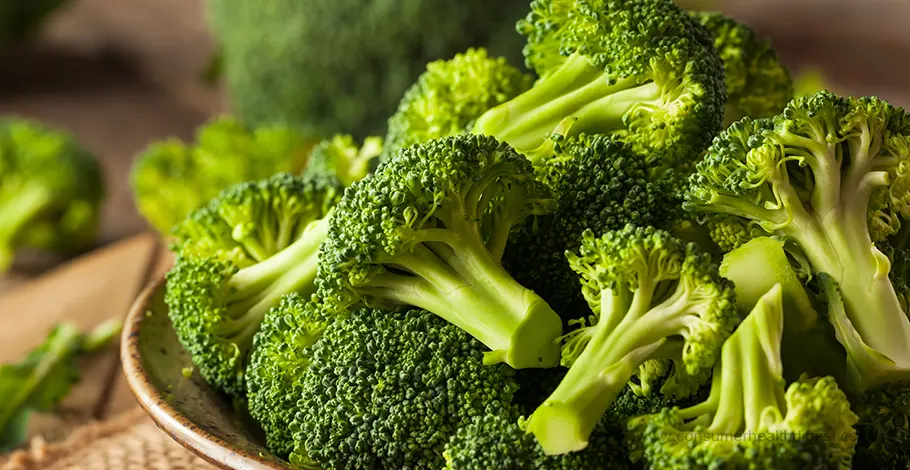
Broccoli, a crown jewel among cruciferous vegetables like cauliflower and Brussels sprouts, isn’t just another item on the dietary checklist; it’s a powerhouse of nutrition and therapeutic benefits. This green marvel shines brightest with its high concentration of vitamin C, surpassing its cousins in both amount and the efficiency with which it supports the body’s ability to recycle this vital nutrient.
Additionally, broccoli is rich in carotenoids, including beta-carotene, lutein, and zeaxanthin, which further amplify its healthful properties. Its role in providing essential folate and hosting a plethora of beneficial compounds makes it not just a recommended addition to our diets for general health, but a strategic ally in battling conditions such as psoriasis.
Deep into the specifics of how broccoli aids in managing inflammation, supports skin regeneration, and contributes to DNA repair showcases the broader implications of incorporating this vegetable into one’s daily regimen for improved wellness and chronic condition management. [1]
1. Carotenoids
Are any class of mainly yellow, orange or red fat soluble pigments, including carotene, which give color to plant parts. Carotene is an important factor in the diet as a precursor for Vitamin A
- Lutein
- Zeaxanthin
- Beta-Carotene
This is a compound necessary for our healthy vision. highly concentrated in the macula of the eye, with smaller amounts found in the retina, lens and optic nerve.it further states that together with other high-potency antioxidants, lutein helps block out visible blue light, one of the major causes of light induced damage to the eyes. Take note that this powerful carotenoid also helps ward off vision loss and more specifically helps to prevent macular degeneration. [2]
works together with lutein to protect eye health.
According to WebMD Beta Carotene is used to decrease asthma symptoms caused by exercise, to prevent certain cancers, heart disease, cataracts and age related macular degeneration. Furthermore it has been used to treat AIDS, alcoholism, Alzheimer’s disease, depression, epilepsy, headache, heartburn, high blood pressure, infertility, Parkinson’s disease, Rheumatoid Arthritis, Schizophrenia, and skin disorders including psoriasis. [3]
As broccoli has a higher than average content of Beta-Carotene, it is classified as one of the world’s healthiest foods. Broccoli has an unusually strong combination of both vitamin A (in the form of Beta Carotene) and vitamin K.
2. Anti-cancer properties
Broccoli, a key member of the cruciferous vegetable family, is renowned for its potential anti-cancer benefits. This green powerhouse is packed with glucosinolates, unique compounds that, when ingested, the body can transform into cancer-fighting substances. These properties highlight broccoli’s significance not only as a nutritious dietary choice but also as a potential ally in cancer prevention efforts.
3. Alcoholism
The vitamin A that is carried in Beta Carotene has been used to supplement alcoholic patients.
4. Alzheimer’s Disease
Broccoli is said to help against the deterioration of the cells in our brain and keep it sharp because of a special chemical present called Sulforaphane. It is said to help the antioxidant mechanisms in our body in order to prevent our brain cells from being attacked by free radicals.
5. Depression
Antioxidants and Vitamin C found in broccoli are said to help fight depression.
6. Epilepsy
Vitamin B5 found in significant amounts in broccoli – is known as the anti-stress vitamin. Stress can cause seizures in epileptic patients.
7. Headache
A co-enzyme known as CoQ10, present in broccoli, has proven migraine fighting properties.
8. Heartburn
While broccoli itself has been linked to the cause of heartburn, the beta-carotene and other antioxidants and vitamins found in broccoli have also been found to alleviate symptoms.
9. High Blood Pressure
Scientific studies have demonstrated that broccoli is one of nature’s most valuable health promoting foods. This in relation to all the vital nutrients and antioxidants which aid in the prevention of high blood pressure.
10. Infertility
According to a study published in Fertility and Sterility, vitamin C enriched foods are highly essential for those who are planning to conceive. [4]
11. Parkinson’s Disease
It’s important for those with Parkinson’s disease to consume ample amounts of fiber. Broccoli is said to have almost 4 grams of dietary fiber per serving!
12. Rheumatoid Arthritis
Two years ago, reports were surfacing stating that consuming foods high in sulforaphanes (such as broccoli) could help osteoarthritis patients. It is stated that this study was led by the University of East Anglia (UEA). The study used cell and tissue tests to show that sulforaphane blocked cartilage destroying enzymes by intercepting a molecule that causes inflammation. This was the first major study to show sulforaphane may influence joint health. [5]
13. Schizophrenia
In another study, 10 outpatients with schizophrenia were recruited and given Sulforaphane (also known as SFN). The result of the study suggested that SFN has the potential to improve cognitive function in patients with schizophrenia. [6]
14. Skin Disorders Including Psoriasis
It’s become increasingly clear that natural dietary choices hold a significant place in managing chronic conditions, including skin disorders like psoriasis. Specifically, broccoli, a cruciferous powerhouse, is garnering attention for its potential benefits beyond basic nutrition. Packed with beta-carotene, vitamin C, and folate, these components are not just ancillary nutrients; they’ve been identified as key players in alleviating the symptoms associated with psoriasis.
The role of beta-carotene, a precursor to vitamin A, is particularly noteworthy. It’s lauded for its anti-inflammatory properties, which can soothe the inflammation characteristic of psoriasis.
Likewise, vitamin C, a potent antioxidant, aids in repairing damaged skin cells and promotes the growth of healthy skin tissue. Folate, essential for DNA repair and cell growth, further complements this nutrient-rich profile. Thus, incorporating broccoli into one’s diet offers a holistic approach to managing psoriasis—leveraging the anti-inflammatory, antioxidant, and cell-regenerative capabilities inherent to these nutrients.
15. Source of Vitamin K & A
An interesting area of research involves the metabolism of Vitamin D. According to World’s Healthiest Foods, ‘broccoli is not a source of this vitamin,’ however, ‘it is an excellent source of Vitamins K and A.’ Throughout the studies it has been regarded that perhaps broccoli may play a particular role in balancing the set of events that is required for Vitamins K and A to be digested through our system properly, which in turn may help those with Vitamin D deficiencies.
16. Rich in Kaempferol
Broccoli is good for your bone health because it contains high levels of both calcium and Vitamin K.
We never mentioned Kaempferol – a type of flavonoid (remember that flavonoids help your system metabolize). Research has shown the ability of kaempferol to lessen the impact of allergy-related substances on our body. [7]
Additionally, broccoli has significant amounts of Omega 3 fatty acids, which are well known to carry anti-inflammatory compounds.
With all these benefits of broccoli, it is important to consider incorporating broccoli into your daily diet. Keep reading for advice on how to cook this leafy green for optimal effects:
The site further states that both cooked and raw broccoli can make ‘excellent additions to your meal plan’, mentioning that raw broccoli sprouts appear to provide special stomach support with respect to unwanted overgrowths of bacterium and otherwise.
Don’t Like Broccoli?
Try chopped florets and stalks in a cheesy omelet.Dip the florets in ranch dressing for a tasty mid-day snack – or anytime! Steam it, then cook into a casserole –Be mindful that while broccoli is good for you either way, it is better when less cooked. Try to find recipes that allow you to barely steam the vegetable before consumption.
Call your parents, remind them to eat their leafy greens too – remember the effects on Alzheimer’s disease and otherwise. You should be recommending broccoli to all your friends and family at this point!
Conclusion
The extensive list of health benefits associated with broccoli makes it clear why this cruciferous vegetable should be a staple in everyone’s diet. From aiding in the fight against chronic diseases like Alzheimer’s and Parkinson’s to its role in managing symptoms of conditions like psoriasis and high blood pressure, broccoli stands out as a versatile superfood. Its rich content of vital nutrients, including carotenoids like beta-carotene, lutein, and zeaxanthin, alongside essential vitamins such as Vitamin C, K, and A, underscores its importance in promoting overall health and wellness.
The remarkable ability of broccoli to support eye health, combat depression, and even aid in managing diseases like schizophrenia further amplifies the imperative to incorporate this green powerhouse into our daily nutrition. Whether you enjoy it steamed, raw, or as part of a delicious recipe, embracing broccoli in your diet signifies a proactive step towards a healthier, more vibrant life.
Was this article helpful?
7 Sources
We review published medical research in respected scientific journals to arrive at our conclusions about a product or health topic. This ensures the highest standard of scientific accuracy.
[1] Liu X, Chang Y, Li Y, Zhang X, Li F, Song J, Shi H, Chen X, Cui J. Prospective cohort study of broccoli consumption frequency and all-cause and cause-specific mortality risks. Front Nutr. 2024 Jan 8;10:1286658. doi: 10.3389/fnut.2023.1286658. PMID: 38260084; PMCID: PMC10800680.[2] Syed RU, Moni SS, Break MKB, Khojali WMA, Jafar M, Alshammari MD, Abdelsalam K, Taymour S, Alreshidi KSM, Elhassan Taha MM, Mohan S. Broccoli: A Multi-Faceted Vegetable for Health: An In-Depth Review of Its Nutritional Attributes, Antimicrobial Abilities, and Anti-inflammatory Properties. Antibiotics (Basel). 2023 Jul 7;12(7):1157. doi: 10.3390/antibiotics12071157. PMID: 37508253; PMCID: PMC10376324.
[3] "BETA-CAROTENE: Overview, Uses, Side Effects, Precautions, Interactions, Dosing and Reviews." 22 Apr. 2024, www.webmd.com/vitamins/ai/ingredientmono-999/beta-carotene.
[4] Fisd. (2024). Vitamins to help with fertility. Fertility Institute of San Diego. Retrieved from https://fertilityinstitutesandiego.com/vitamins-to-help-fertility/#:~:text=Vitamin%20C%20improves%20hormone%20levels,potatoes%2C%20tomatoes%2C%20citrus%20fruit.
[5] Broccoli lovers wanted for osteoarthritis trial. (2024, April 22). Retrieved from https://www.uea.ac.uk/about/news/article/broccoli-lovers-wanted-for-osteoarthritis-trial
[6] Shiina A, Kanahara N, Sasaki T, Oda Y, Hashimoto T, Hasegawa T, Yoshida T, Iyo M, Hashimoto K. An Open Study of Sulforaphane-rich Broccoli Sprout Extract in Patients with Schizophrenia. Clin Psychopharmacol Neurosci. 2015 Apr 30;13(1):62-7. doi: 10.9758/cpn.2015.13.1.62. PMID: 25912539; PMCID: PMC4423155.
[7] Alam W, Khan H, Shah MA, Cauli O, Saso L. Kaempferol as a Dietary Anti-Inflammatory Agent: Current Therapeutic Standing. Molecules. 2020 Sep 7;25(18):4073. doi: 10.3390/molecules25184073. PMID: 32906577; PMCID: PMC7570692.





 This article changed my life!
 This article was informative.
 I have a medical question.
 This article contains incorrect information.
 This article doesn’t have the information I’m looking for.