Medically Cited
Style, confidence, and a polished look are often why high heels get chosen in the first place. But when heels are worn frequently, or for long periods, they may increase health risks beyond simple foot discomfort.
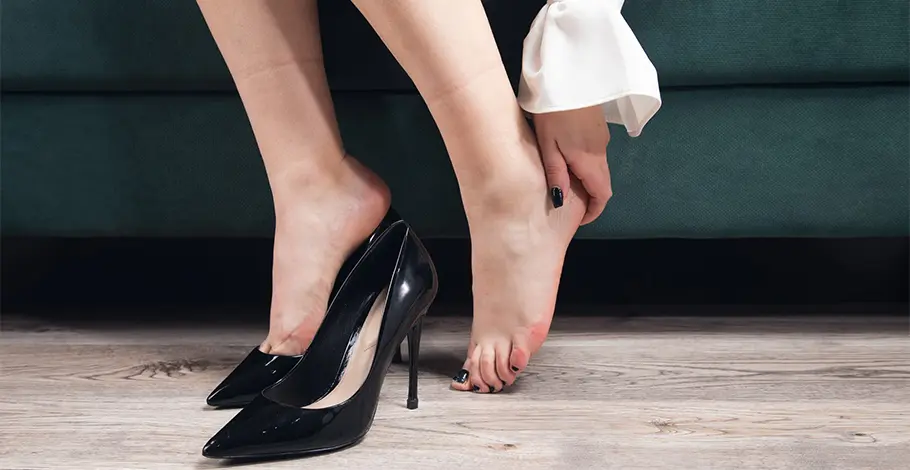
Because heels raise the back of the foot, they shift body weight forward. This changes how the feet, ankles, knees, hips, and lower back work together to keep you balanced and moving.
Over time, this added pressure may contribute to foot pain, tight calf muscles, ankle instability, knee strain, and lower back discomfort. The risk can become higher with taller heels, narrow toe boxes, thin soles, and long hours of standing or walking.
Wearing supportive footwear most of the time and keeping heel height in check can help reduce pressure on the feet and lower body.
In this article, we will explain how high heels affect the body and cover ten health risks worth knowing.
Key Takeaways
- High heels shift your body weight forward — and that’s what puts more pressure on the forefoot.
- Regular heel use can affect posture, the way you walk, and your balance.
- Heels may contribute to calf tightness — Achilles tendon strain, and ankle instability too.
- Lower heels, wider toe boxes, supportive soles, and limited wear time are what actually help reduce the risk.
How High Heels Affect Your Body
High heels affect the body by changing the natural position of the foot. When the heel is lifted, weight shifts forward toward the forefoot, especially the padded area behind the toes. This increases pressure on a smaller part of the foot instead of spreading weight more evenly.
This change does not stop at the feet. To stay balanced, the ankles, calves, knees, hips, and lower back may adjust their position. Over time, these small adjustments can place extra stress on muscles, joints, and tendons.
A systematic review published in BMC Public Health found that high-heeled shoes can affect walking mechanics, foot and ankle movement, knee loading, and balance control. This is why frequent heel use may lead to discomfort beyond the feet, including knee strain, calf tightness, lower back pain, and changes in gait.
10 Health Risks of Wearing High Heels
High heels may not affect everyone in the same way, but wearing them frequently or for long hours can place extra stress on the feet and lower body. The risk usually increases with taller heels, narrow toe boxes, thin soles, and shoes that offer little support.
1. Increased Pressure on the Front Part of the Feet
When the heel is raised, body weight shifts forward toward the forefoot, especially the padded area behind the toes. This can overload the metatarsal region and cause aching, burning, or soreness. A PubMed-indexed plantar pressure study found that high-heeled shoes increased pressure under specific forefoot areas compared with running shoes.
2. Bunions and Toe Deformities
Many high heels have narrow or pointed toe boxes that press the toes together — and that crowding, honestly, is what tends to worsen bunions, hammertoes, or toe alignment problems over time, especially for people already prone to foot changes.
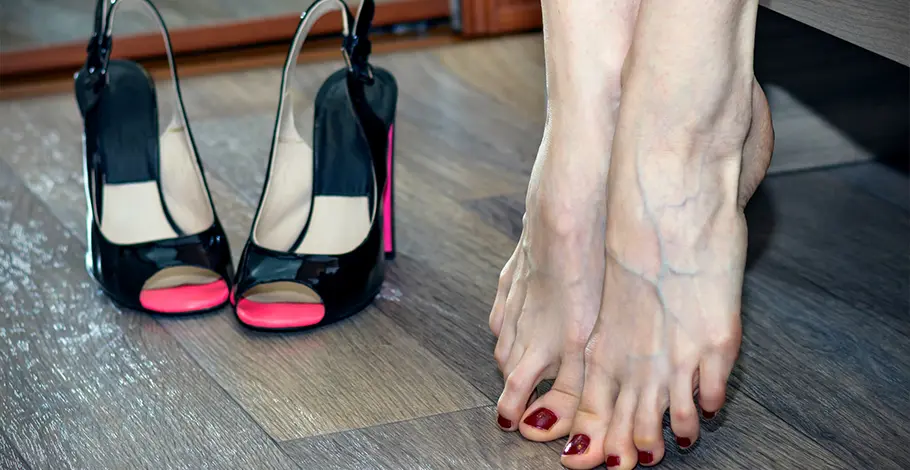
Bunions and toe deformities
3. Tight Calf Muscles and Achilles Tendon Changes
High heels keep the ankle lifted — and that’s what places the calf muscles and Achilles tendon in a shortened position while the shoes are worn. And when this happens often, the calves are the ones that end up feeling tighter, with ankle movement becoming more limited, too. Over time, that’s what makes stretching, walking, and flat-shoe comfort feel genuinely more difficult.
4. Ankle Sprains and Reduced Stability
High heels reduce the stable contact area between the foot and the ground. Thin heels, elevated soles, and slippery surfaces can make balance harder, especially on stairs or uneven flooring. Research on high-heel-related emergency department visits linked heel use with injuries such as ankle sprains, falls, and foot trauma.
5. Knee Pain and Increased Joint Stress
Because high heels push body weight forward, the knees often work harder to stabilize movement. This may increase joint stress during standing, walking, or climbing stairs. A systematic review and meta-analysis reported that high-heeled shoes can affect knee loading and lower-limb biomechanics.
6. Lower Back Pain
When the feet are placed at a steep angle, the rest of the body has to adjust to stay upright — and some people compensate through the pelvis and lower back, which can add to the discomfort after long wear. And that’s really why back pain can show up even when the main pressure starts at the feet.
7. Changes in Walking Pattern, or Gait
Walking in high heels changes the way your feet and legs move. Your steps may become shorter, your ankles may move less freely, and your muscles may work harder to keep you steady. Over time, this altered walking pattern can lead to tired feet, reduced balance, and extra strain on the lower body.
8. Corns, Calluses, and Nerve Compression
Tight heels can create repeated pressure and friction on the skin and soft tissues. This may lead to corns, calluses, burning sensations, or numbness in the forefoot. Cleveland Clinic notes that high heels and narrow, pointed shoes may worsen Morton’s neuroma symptoms by increasing pressure around the nerves between the toes.
9. Foot Pain and Muscle Fatigue
Heels can make the small muscles of the feet and lower legs work harder to keep the body steady — and after several hours, that’s what leads to tired, sore, or heavy-feeling feet. The discomfort tends to get worse when shoes lack cushioning, arch support, or enough space for natural toe movement.
10. Long-Term Impact on Foot Health
The biggest concern isn’t occasional heel use — it’s the repeated stress that builds up over months or years. And frequent wear can contribute to ongoing pain, reduced flexibility, toe crowding, tendon strain — and lower-body discomfort too. Choosing lower heels, wider toe boxes, cushioned soles, and supportive footwear most days is what actually helps reduce these risks.
Conclusion
High heels can definitely be stylish, sure — but wear them a lot and that’s what starts putting extra pressure on the feet, ankles, knees, hips, and lower back too. And honestly, how bad it gets really comes down to a few things — heel height, toe-box shape, cushioning, support, and just how many hours the shoes stay on your feet.
And you don’t have to give up heels completely. A more practical approach? Wear them less often, choose lower and wider heels, steer clear of tight pointed shoes, and lean on supportive footwear most of the time. Small footwear choices — they are what actually make the difference in comfort, balance, and long-term foot health.
FAQ
Are high heels bad for your feet?
Frequent high heel use may increase pressure on the forefoot and contribute to pain, bunions, corns, calluses, or toe crowding.
What heel height is safer for daily wear?
Lower heels are generally easier on the feet. Many people may feel more comfortable choosing heels around two inches or less.
Can high heels cause back pain?
High heels can change posture and body alignment. For some people, this may contribute to lower back discomfort after prolonged wear.
How can I reduce the risks of wearing heels?
Choose lower heels, wider toe boxes, cushioned soles, and supportive footwear. Limit long wear time and switch to flats when walking more.
Was this article helpful?
4 Sources
We review published medical research in respected scientific journals to arrive at our conclusions about a product or health topic. This ensures the highest standard of scientific accuracy.
[2] Change of In-Shoe Plantar Pressure According to Types of Shoes: Flat Shoes, Running Shoes, and High Heels — PubMed : https://pubmed.ncbi.nlm.nih.gov/35685969/
[3]High-Heeled Shoe-Related Injuries in the United States, 2002 to 2012 — PubMed: : https://pubmed.ncbi.nlm.nih.gov/24456691/
[4]Morton’s Neuroma: Causes, Symptoms and Treatment — Cleveland Clinic: https://my.clevelandclinic.org/health/diseases/15118-mortons-neuroma





 This article changed my life!
 This article was informative.
 I have a medical question.
 This article contains incorrect information.
 This article doesn’t have the information I’m looking for.