Medically Cited
The key to regular exercise is not the will to do it, but the habit to do it. If you have realistic expectations, pick the exercises you like, schedule fitness into your day, monitor your efforts, and hold yourself accountable, you’ll make a habit of fitness more easily.

While exercise can be good for health, consistency is key and many find it difficult. Getting started with a new workout routine can be exciting, but that excitement can diminish when life gets busy, results don’t come quickly enough, or the workout starts to get old.
There are people who appear to make exercising look easy. They turn up to the gym, go for regular walks, fitness classes or never miss a workout. While it might appear that they are more disciplined, in most cases they’ve just established a routine that works for them.
The bright side is that it’s possible for any individual to develop a workout routine with the proper method. There’s no need to begin with extensive exercises, costly gear or an ideal schedule. You must have something in place that is feasible, adaptable, and even fun to follow. Here are 10 healthy habits you can use to keep you motivated to work out regularly.
Key Takeaways
- It’s better to be consistent than to do ‘perfect’ or ‘intense’ workouts.
- It is easier to maintain and avoid frustration when objectives are realistic.
- Fun workouts are more likely to be done repeatedly over the long term.
- Monitoring progress will help you to identify improvements you may not see in the mirror.
- Having accountability from friends, trainers, classes, or apps can motivate you to stick to a workout plan.
1. Schedule Your Workouts Like Important Appointments
One of the best ways to exercise regularly is to plan your workouts before the week begins. If you wait until you “feel like it,” exercise can easily get pushed aside by work, errands, family responsibilities, or fatigue.
Choose a time that fits your lifestyle. Some people enjoy morning workouts because they like starting the day with movement. Others do better during lunch breaks, after work, or in the evening. The best time is the one you can repeat.
Treat your workout like an appointment with yourself. Put it on your calendar, set a reminder, and prepare what you need ahead of time. Even a 20-minute session counts when it helps you build consistency.
2. Set Realistic and Achievable Goals
Many people get demoralized because they set goals that are too big and too early. A desire for speed is natural, but if you’re hoping for big changes in a few days or weeks, you’ll likely be disappointed.
Set simple and attainable objectives. For instance, rather than commit to exercising daily for an hour, try the first step of walking four days this week for 20 minutes. You don’t just have to measure weight loss – you can set targets such as increased stamina, strength, flexibility, or the ability to run up and down stairs without having to struggle.
SMART goals can help. That means your goal should be specific, measurable, achievable, relevant, and time-based. A beginner-friendly goal could be: “I will do a 25-minute strength workout every Monday, Wednesday, and Friday for the next four weeks.”
3. Choose Exercises You Actually Enjoy
You are more likely to stick with exercise when it does not feel like punishment. Not everyone enjoys running, lifting weights, or going to the gym, and that is completely fine.
Try different activities until you find something that feels right for you. Walking, cycling, swimming, dancing, yoga, Pilates, hiking, strength training, kickboxing, and group fitness classes are all valid forms of movement.
The existing article makes a useful point: you should not feel stuck with one type of exercise. Trying different styles can keep your routine fresh and help your body move in new ways. Over time, exercise may begin to feel less like a task and more like something you look forward to.
4. Start Small and Build the Habit Gradually
A fitness habit does not form overnight. This requires time, repetition and patience. The old 21-day rule for habit formation is incorrect. Habit formation in real life is different for everyone, and is influenced by the habit, the timing of the habit, and the environment in which it occurs.
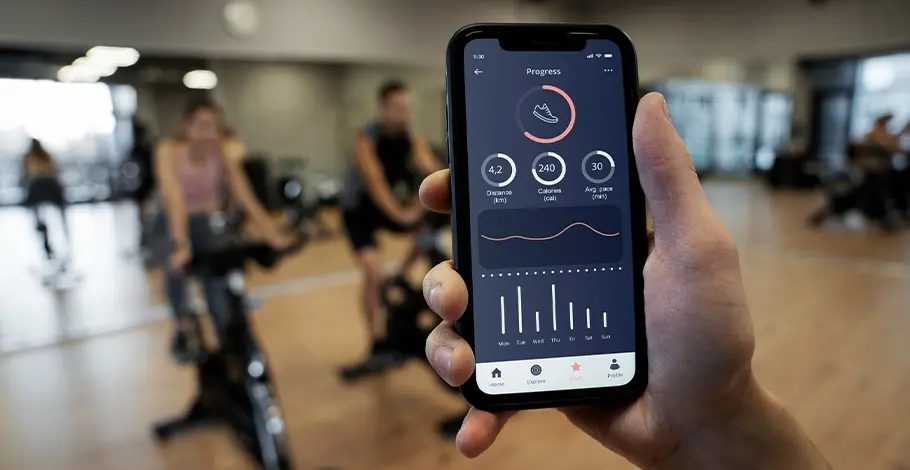
Track your progress
Begin with exercises that are not too strenuous. Even 10 to 15 minutes of exercise can be a good start if you are new to exercise. Once your body adapts you can gradually increase your workout time, intensity, or the number of workout days.
This is also a way to prevent burnout. It is better to do a few repetitions of a short exercise rather than take a difficult workout that makes doing more difficult.
5. Track Your Progress
It can be a great motivator to see how far you’ve come; you feel that your hard work is paying off. Weight loss and appearance are not the only measures of progress. It might also be long-distance, weightlifting, sleeping better, feeling more energetic or bounce back better after exercise.
Record your exercise in a notebook, fitness app on your smartphone, spreadsheet or a fitness device. Keep it simple. Record how long you exercised, what activities you were doing and how you felt afterwards.
It is good to look at one’s past to boost one’s motivation on some days. It’s a reminder that consistency is the key to results, even when they seem to come slowly.
6. Find an Accountability Partner or Community
Support can make exercise feel easier to maintain. The original article mentioned fitness clubs and group environments, and that idea still holds up. Being around people with similar goals can help you stay encouraged.
You can work out with a friend, join a fitness class, hire a trainer, or participate in an online fitness community. A trainer can be especially helpful if you are unsure about proper form or how to create a routine. Even a few sessions may give you more confidence and direction.
Accountability does not have to be complicated. It can be as simple as texting a friend after your workout, joining a walking group, or signing up for a class where people expect to see you.
7. Remove Barriers That Make Exercise Difficult
Convenience matters. The more complicated the exercise is, the less likely that you will do it. Make it as easy as possible to start your routine.
Prepare workout clothes the night before. Have shoes near the door. Select a gym that is near you or your place of employment. Set up a mini gym at home if it’s challenging to get to the gym. Keep some quick exercise routines handy in case you need to look for one at the last minute.
The current article is correct – it’s a great idea to use your home as your workout area. It doesn’t have to be flawless. A mat, comfortable clothes, and enough room to move can be enough for bodyweight exercises, stretching, yoga, or online workouts.
8. Use Technology to Stay Motivated
Technology can make exercise more engaging. Fitness apps, smartwatches, step counters, workout reminders, and online challenges can help you monitor activity and stay accountable.
For some people, seeing daily steps, calories burned, workout streaks, or heart rate data adds motivation. Others enjoy guided workouts, music playlists, or virtual classes.
The key is to use technology as a helpful tool, not as pressure. If tracking starts to feel stressful, simplify it. Focus on one or two useful numbers, such as workout days per week or total steps.
9. Reward Yourself for Reaching Milestones
Rewards can help keep motivation alive, especially when you are building a new habit. The reward does not have to be expensive or food-related. It should simply feel meaningful.
You might buy new workout gear, schedule a massage, take a relaxing bath, download a new playlist, try a new fitness class, or plan a fun outdoor activity. These small rewards can make progress feel more enjoyable.
The important thing is to celebrate effort, not just results. Showing up consistently for three weeks is worth recognizing, even if your long-term goal is still ahead.
10. Avoid Burnout and Focus on Long-Term Consistency
One common mistake is trying to do too much too soon. Pushing hard every day may feel motivating at first, but it can lead to soreness, fatigue, frustration, or injury.

Avoid Burnout and Focus on Long-Term Consistency
A better approach is to build a routine that you can maintain. Include rest days, vary your workouts, and listen to your body. If you feel unusually tired, sore, or unwell, it is okay to take a lighter day or rest.
Fitness is not about proving how hard you can push yourself for one week. It is about creating habits that support your health for months and years. Slow progress is still progress.
Conclusion
Staying motivated to exercise regularly is not about being perfect. It’s about establishing a schedule that works and is attainable for you and maintaining it. If you programme workouts, make goals attainable, select activities that you like, keep monitoring progress and have support, exercising will be easier to repeat.
Take one little step at a time. Walk, stretch, sign up for a class or schedule the first workout of the week. After you start, concentrate on keeping it consistent, not on trying to go too hard. These little decisions can become a powerful fitness routine to help you feel stronger, more confident and healthy.
Frequently Asked Questions
How can I stay motivated to exercise every day?
Stay motivated by keeping exercise simple, planned and fun. Pick activities you enjoy, plan workouts in advance, monitor progress and set realistic targets. It’s okay if you don’t work hard every day. You can also keep your movements in line with light movement, stretching, walking, or recovery workouts.
What should I do if I lose motivation to work out?
Losing motivation is normal. Don’t give up, decrease the stress. Do a smaller amount of activity, change it up, run with a buddy, or go back to your original goal. Occasionally motivation comes back after you make one small step. Remember to get started rather than to do the perfect workout.
How long does it take to build an exercise habit?
Everyone doesn’t have a definite time frame. These habits can start to develop after approximately two months, although this varies depending on the individual, the habit and the routine. The most important thing is repetition. Keep it small, do something you’re already doing, and make it simple to do again.
Are fitness apps effective for staying motivated?
There are many reasons why fitness applications can be beneficial to some people, including tracking progress, providing reminders, providing guided exercises and making activity visible. But when they align with your objectives without putting pressure on you, they’re best suited. Select an app that is easy to use and encouraging.
Is it okay to miss a workout occasionally?
Yes, missing a workout occasionally is completely normal. There is no loss of progress in one session. The main thing is to get back to your normal as soon as possible without feeling guilty. Rest, travel, illness, and busy days happen. Often a flexible plan is more sustainable than an all-or-nothing plan.
Was this article helpful?
4 Sources
We review published medical research in respected scientific journals to arrive at our conclusions about a product or health topic. This ensures the highest standard of scientific accuracy.
[2] Time to Form a Habit: A Systematic Review and Meta-Analysis of Health Behaviour Habit Formation and Its Determinants: https://pmc.ncbi.nlm.nih.gov/articles/PMC11641623/
[3]Consistent exercise timing as a strategy to increase physical activity: A feasibility study - PMC : https://pmc.ncbi.nlm.nih.gov/articles/PMC10722958/
[4]The use of mobile apps and fitness trackers to promote healthy behaviors during COVID-19: A cross-sectional survey - PMC : https://pmc.ncbi.nlm.nih.gov/articles/PMC9931267/








 This article changed my life!
 This article was informative.
 I have a medical question.
 This article contains incorrect information.
 This article doesn’t have the information I’m looking for.