Medically Cited
Vagina tightening exercises really focus on your pelvic floor muscles; they won’t permanently change the size or shape of your vagina. With steady practice, they build muscle tone, improve support for your pelvis, give you better bladder control, and make it easier to notice sensations during sex.
Don’t expect overnight changes; improvements stack up over time. If you have pain or your muscles already feel too tight, it’s best to check with a specialist before doing repeated Kegels.
Key Takeaways
- Pelvic floor exercises don’t just help the vagina; they support your bladder, uterus, and bowel too.
- Kegels target the pelvic floor directly, while exercises like squats, pelvic tilts, and planks train muscles that work with that area.
- Doing these regularly might help your bladder control and sex life, but bodies react differently.
- Don’t overdo it; an extra-tight pelvic floor can be just as uncomfortable as one that’s too weak.
A lot of women look up vagina-tightening exercises after having a baby, around menopause, or when they start noticing their bladder control or sexual sensations changing.
The thing is, those exercises won’t make your vaginal tissue smaller or tighter forever, but they absolutely can help you strengthen, coordinate, and relax your pelvic floor. That’s the real goal.
A strong, healthy pelvic floor can boost your confidence, comfort, bladder control, and sexual well-being. It’s all about learning to engage the right muscles without tensing them up all the time.
What Are Vagina Tightening Exercises?
Honestly, a better name for these is pelvic floor strengthening exercises. You’re really targeting the muscles that stretch across the bottom of your pelvis.
They hold up your bladder, uterus, bowel, and vagina. They help you with urination and bowel movements, keep everything supported, and play a role in sexual sensation.
Lots of things can weaken these muscles: pregnancy, childbirth, aging, operations, heavy coughing, constipation, or carrying extra weight. Kegels help you activate the pelvic muscles.
Then you’ve got moves like squats, pelvic tilts, and planks that also focus on your core, hips, and glutes, all of which team up with the pelvic floor every time you move.
Do Vagina Tightening Exercises Really Work?
Short answer: yes, when weak pelvic muscles are the problem and you do the exercises right. They make your muscles stronger and better coordinated, but they don’t “tighten” the vagina itself.
There’s some good news from recent research: one 2024 study found that pelvic floor exercises helped with arousal, orgasm, satisfaction, and overall sexual function.
What you get out of these exercises depends on what’s causing your symptoms, how you do the moves, and how regularly you practice. Women with a tight or overactive pelvic floor may need relaxation and physical therapy rather than more strengthening.
Benefits of Vagina Tightening Exercises
When performed correctly and consistently, pelvic floor strengthening exercises may improve more than muscle tone. They can support several everyday functions connected to pelvic health, comfort, and sexual wellness.
1. Improved Pelvic Floor Strength
These exercises help the pelvic floor muscles contract, relax, and respond more effectively. Stronger muscles provide better support for the bladder, uterus, bowel, and vagina.
2. Better Bladder Control
Pelvic floor training may reduce mild urinary leakage caused by coughing, sneezing, laughing, or exercising. It is commonly recommended for women experiencing stress urinary incontinence.
3. Greater Pelvic Support
A stronger pelvic floor may help support the pelvic organs and reduce feelings of weakness or heaviness. However, exercises may not be enough to treat moderate or severe pelvic organ prolapse.
4. Increased Muscle Awareness
Regular practice helps women recognise when their pelvic floor is contracting or relaxing. This awareness can improve coordination during exercise, everyday movement, and sexual activity.
5. Possible Improvements in Sexual Function
Better muscle strength and control may support sexual sensation, arousal, satisfaction, and orgasm for some women. Results vary because sexual wellness is also influenced by hormones, comfort, stress, medications, and relationship factors.
5 Vagina Tightening Exercises for Better Sex
1. Kegel Exercises
Kegels are the classic strengthening exercises. The trick is finding the right muscles: picture stopping yourself from passing gas or holding in urine—feel that gentle lift around your vagina and back passage? That’s it.
How to do a Kegel:
- Go to the bathroom first and relieve your bladder.
- Get comfy sitting or lying down.
- Gently squeeze and lift those pelvic floor muscles.
- Hold the squeeze for about three seconds, keep breathing normally.
- Release completely for three seconds.
- Do 5–10, and as you get stronger, try for longer holds and quicker pulses.
Let your belly, thighs, and buttocks stay relaxed, and keep breathing. Don’t use stopping your pee midstream as an exercise (just to figure out which muscle to activate) as doing that too much can mess with your bladder.
2. Squats
While squats are nothing new, women have been doing them regularly to help tone their buttocks and upper thighs for years. These exercises can also help to strengthen muscles around the vagina and more importantly, can help to increase the blood flow down there.
It is common for women to take longer to become aroused and to increase their heart rates and blood flow. Performing several sets of these can help. The best way to perform this exercise is to stand on the floor with your feet spread apart.
With your arms extended, slowly push off from your heels as you stand. Then slowly lower yourself back to a sitting position, while always leaving your feet flat on the floor. Experts recommend doing several sets of these regularly.
Not only will you improve your circulation in that sensitive area, but other muscles will also receive the benefits of this workout.
3. Pelvic Tilts
This exercise helps to strengthen the muscles that help to prevent lower back pain. A high majority of women suffer from lower back pain, and this can dramatically affect a woman’s sex life.
This muscle pain can cause some sexual positions to become too painful and it can also lower a woman’s desire.
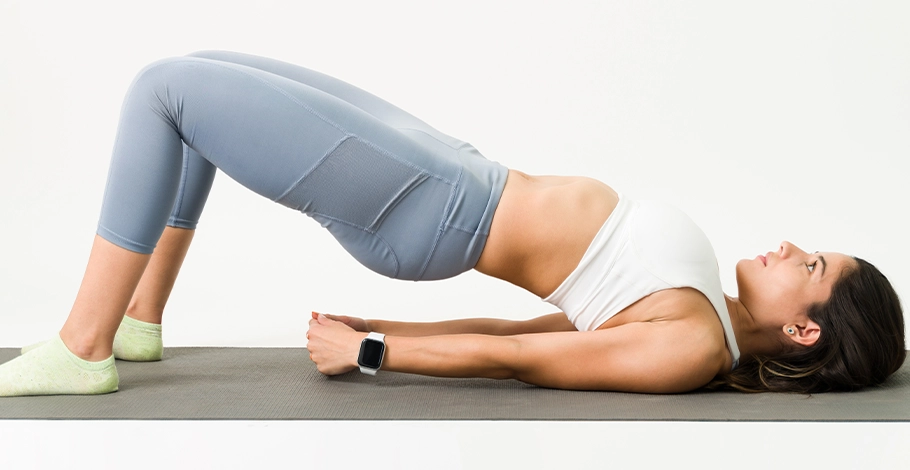
Pelvic tilts will not only help to strengthen these back muscles but can also help strengthen the core muscles. While lying on your back, bend your knees with your feet still flat on the ground.
While raising your pelvic area straight up, hold your abdominal muscles in while at the same time pushing your thighs together. Not only will your abs look great, but your pelvic and lower back region will feel stronger and pain-free.
4. Plank Pose
This exercise is designed to strengthen a woman’s core. This yoga-style move works the main group of muscles that women use when they are engaged in sexual positions that require a bit of upper body strength and support.
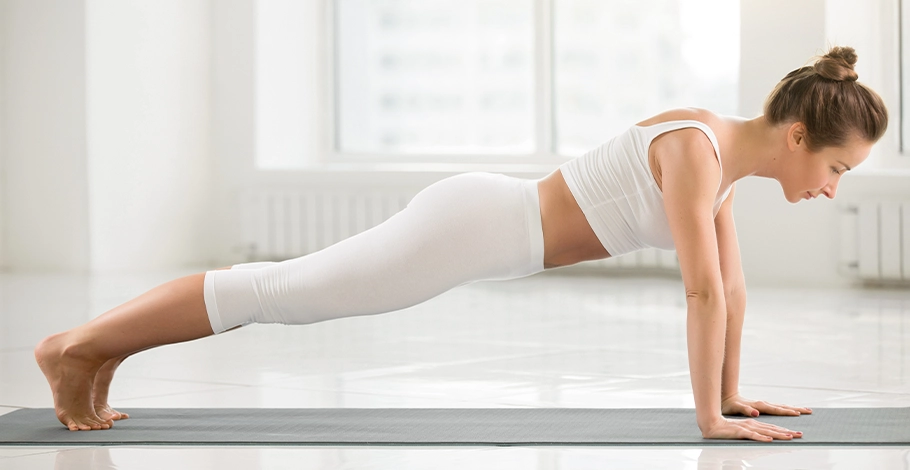
Plank pose
The Plank pose concentrates on a woman’s upper arms, thighs, buttocks, abdominal muscles, and obliques. This exercise can help give a woman the confidence for sexual positions that require her on top or braced on all fours.
Lay face down with your palms on the floor and your forearms also placed flat on the floor. By using your forearms as support, slowly raise your body off of the floor in an even, straight line.
Your weight should be resting on not only your arms but your palms and balls of your feet as well. Hold the position for 10 seconds before repeating.
5. Happy Baby Pose
This exercise can not only strengthen muscles but also help to loosen and stretch them as well. Many women have found that they enjoy sex more when they are limber enough to easily get into any sexual position.
To help loosen the lower back muscles and hamstrings, lay on your back with your legs up, and your knees bent towards your chest cavity. Holding on the outside of each ankle, slowly begin applying pressure.
It should be felt in the lower back and in your hamstrings. After holding the pose for three minutes, slowly let your muscles relax.
Not only are these exercises part of a healthy exercise routine, but they can also help to dramatically improve a woman’s sex life. Strengthen key muscles, and loosen tight, strained ones. All so you can enjoy happier and healthier sex life.
Tips to Get the Best Results From Vagina Tightening Exercises
Be consistent, not hardcore. Short, focused practice works better than doing multiple reps. Make sure to give your muscles time to relax between contractions. Always breathe; don’t hold your breath or grip anywhere else in your body.
Good form matters! Get your squats, planks, and pelvic tilts right. If you want to level up, add a few more reps or hold a little longer, but never push through pain or pressure.
Support your pelvic floor with good habits, too: manage any constipation issues, avoid straining to go to the bathroom, manage any chronic cough, and keep up a level of physical activity that feels good.
Give it time. Results can take a few weeks or sometimes a few months, depending on your starting symptom.
Common Mistakes to Avoid
There are a few mistakes that can slow down results.
Don’t:
- Squeeze your butt, thighs, or abs instead of the pelvic floor
- Hold your breath when contracting the muscles
- Push down instead of pulling up
- Do a bunch of Kegels while stopping your pee flow (just do that once or twice to find the muscles)
- Overdo Kegels without resting in between
- Ignore pain, pressure, or symptoms getting worse
- Expect your anatomy to magically change overnight
If you’re not sure you’re working the right muscles, a pelvic floor physical therapist can watch your technique and help.
Who Can Benefit From Vagina Tightening Exercises?
Pelvic floor exercises may help women with mild urinary leakage, weakness following pregnancy or childbirth, age-related muscle changes, or reduced pelvic muscle awareness. They even sometimes help women with symptoms of prolapse or changes in sexual function.
Research shows supervised, trained pelvic floor work can support sexual function after menopause in some women, but everyone’s results are personal and can vary.
Most women can start these after childbirth, but if you had significant tearing, surgery, birth complications, pain, or pressure, check with your doctor first.
These exercises aren’t for every problem. If sex is painful, you have trouble peeing, constipation, or your pelvic floor feels locked up, it may indicate an overactive pelvic floor that needs relaxation rather than strengthening.
When to See a Doctor
Get a professional opinion from a gynecologist, urogynecologist, or pelvic floor physical therapist if you experience:
- Ongoing urine or stool leaks
- Pelvic or vaginal pain
- Pain during sex
- Heaviness or a bulge
- Bladder or bowel emptying troubles
- Worsening symptoms when you exercise
- Trouble knowing if you’re exercising the right muscles
If you stick to these exercises and nothing changes, it’s worth having someone check what’s really going on. They can tell if your muscles are weak, too tight, working out of sync, or if there’s another cause.
Frequently Asked Questions
Do Vagina Tightening Exercises Really Work?
They strengthen a weak pelvic floor and improve support, control, and muscle coordination. They won’t make your vagina permanently “tighter” or fix major prolapse or injuries.
How Long Until I See Results?
Some women notice better awareness or less leaking in a few weeks. Longer-lasting change can take a few months. Technique, consistency, and what’s causing your symptoms all matter.
Can I Do These Exercises Every Day?
Short daily Kegels are usually fine; just let the muscles fully relax between squeezes. If you start having pain, pressure, or trouble peeing, stop and get professional advice.
Are They Safe After Childbirth?
Usually, yes, but recovery is personal. If you had complications, tearing, surgery, or lasting pain, wait for approval from your healthcare provider.
Can These Exercises Improve Orgasms?
They can help muscle awareness, control, and strength, supporting better orgasms for some women. There’s evidence for potential benefits, but orgasms also depend on hormones, emotional comfort, relationships, medications, stress, and health.
Conclusion
Vagina tightening exercises strengthen and coordinate the pelvic floor rather than permanently altering vaginal anatomy. They don’t change your anatomy, but with regular Kegels, squats, tilts, planks, and stretching, you can build strength, awareness, and sometimes improve sensation.
Practice consistently, breathe normally, and allow the muscles to relax between contractions. When symptoms include pain, pressure, leakage, or difficulty using the muscles correctly, professional assessment is safer than simply doing more Kegels. Overall, when these exercises are performed safely, they can provide a wide range of benefits over time.
Was this article helpful?
3 Sources
We review published medical research in respected scientific journals to arrive at our conclusions about a product or health topic. This ensures the highest standard of scientific accuracy.
[2] Yoga For Musculoskeletal Disorders: A Review of Prospective Clinical Studies: https://pmc.ncbi.nlm.nih.gov/articles/PMC12638676/
[3]Pelvic Floor Muscle Training Effect in Sexual Function in Postmenopausal Women: A Randomized Controlled Trial: : https://pubmed.ncbi.nlm.nih.gov/34187758/





 This article changed my life!
 This article was informative.
 I have a medical question.
 This article contains incorrect information.
 This article doesn’t have the information I’m looking for.